Text
Anh Nguyen
Photo
Le Hiep
How does your day usually begin?
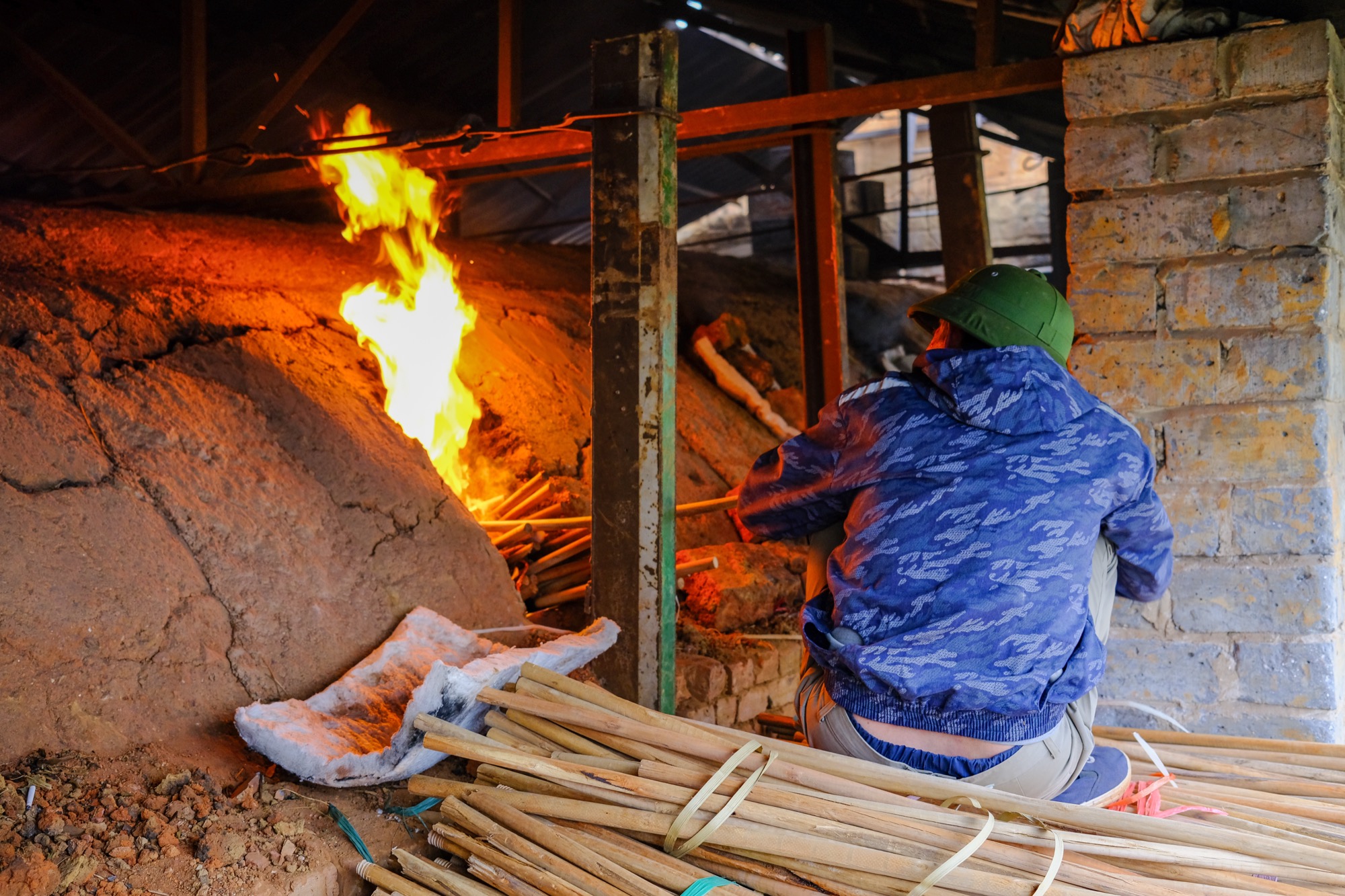
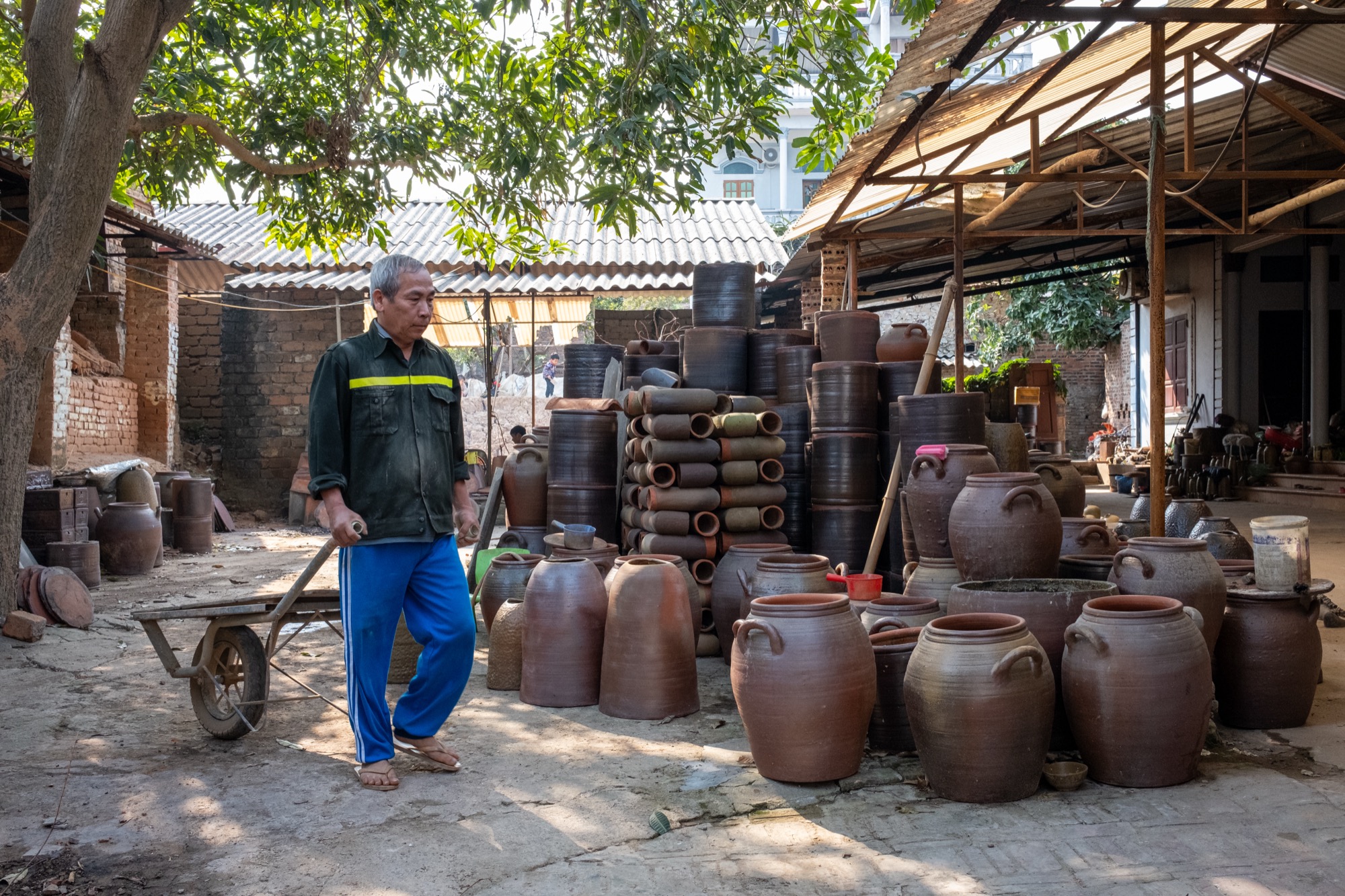
Pham Van Thang (PVT): Most of the time I stay close to the kiln (lồ), and when I do wander, it’s never far, just within the village. Many people call it a kiln, but here we use the word lồ.
The lồ you mentioned, especially the one where we’re sitting now. How was it built, and how old is it?
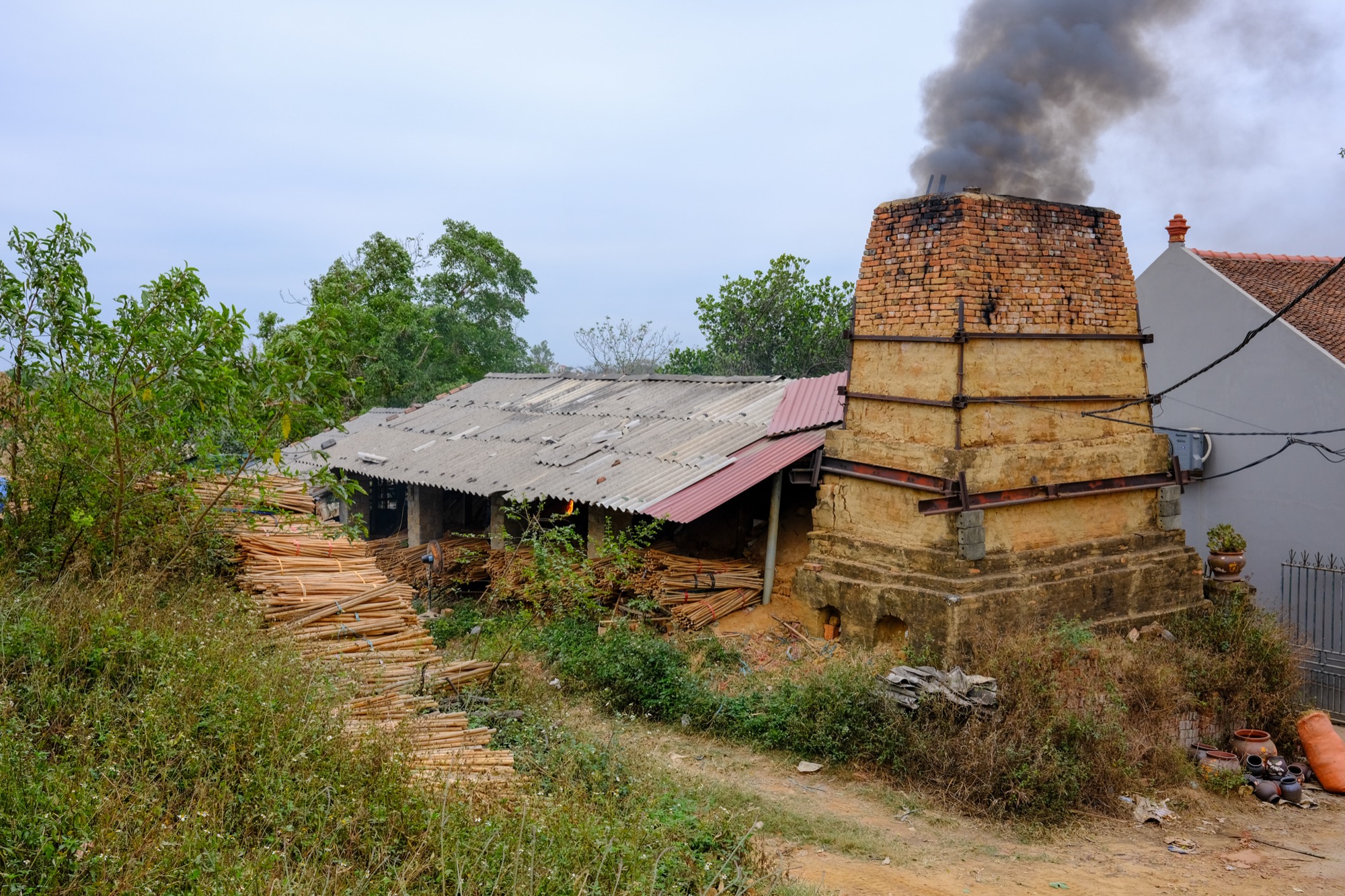
PVT: This type of kiln is often known as a dragon kiln or a coiled kiln. My family built this lồ in the early 1960s, and later it was upgraded with support from the State Science Committee. In earlier generations, when production volumes and object sizes were smaller, the lồ was also modest, with a flat roof resembling the ceiling of a concrete house. Over time, researchers and technical experts came to advise us on transitioning to a domed form. That shift expanded the firing capacity, improved fuel efficiency, and made maintenance more straightforward, extending the life of the kiln.
Is the lồ built from bricks?
PVT: Yes, the entire structure is made from bricks using clay sourced locally to keep construction affordable. The exterior is usually coated with earth, which helps strengthen and protect it over time.
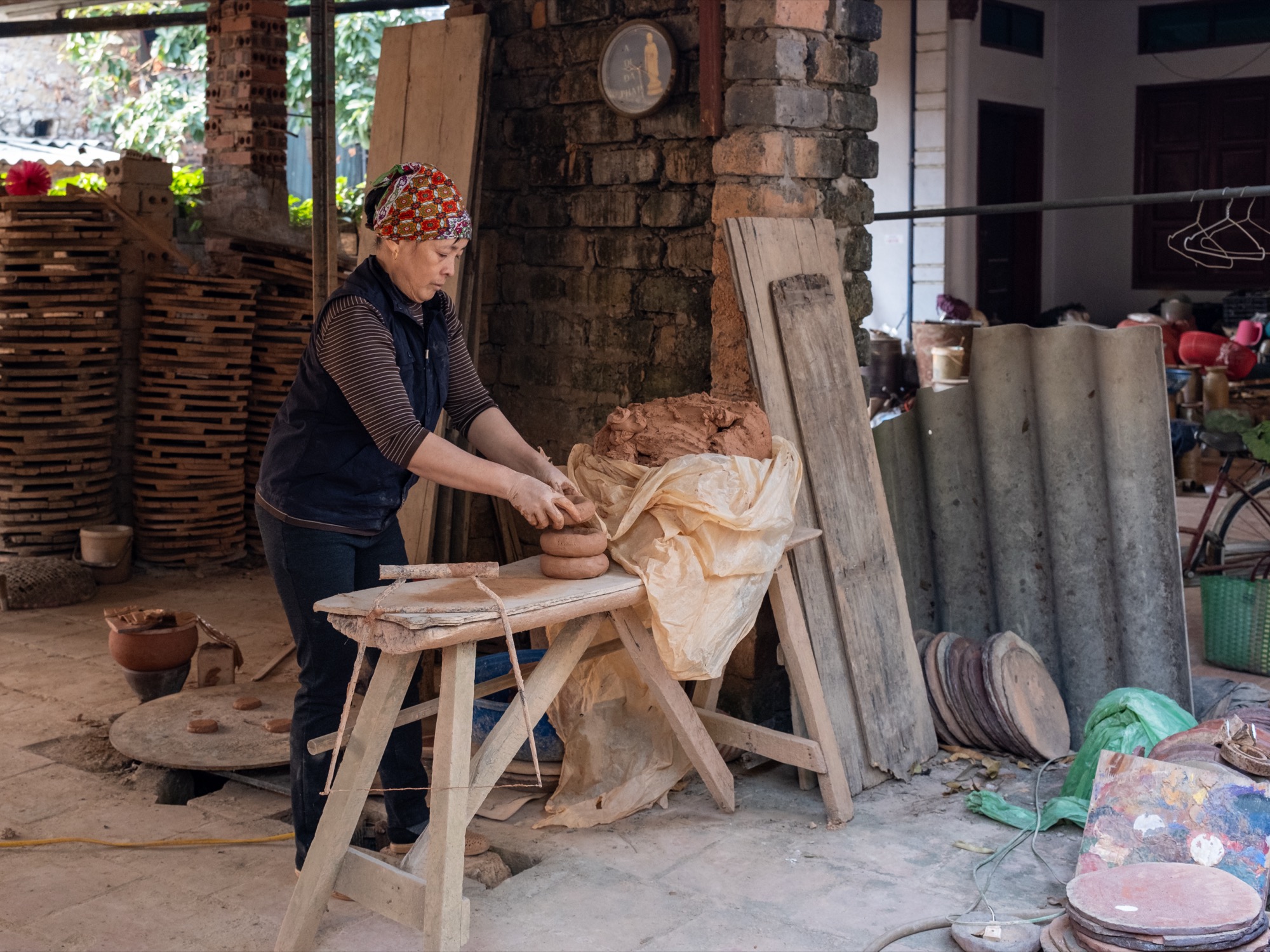
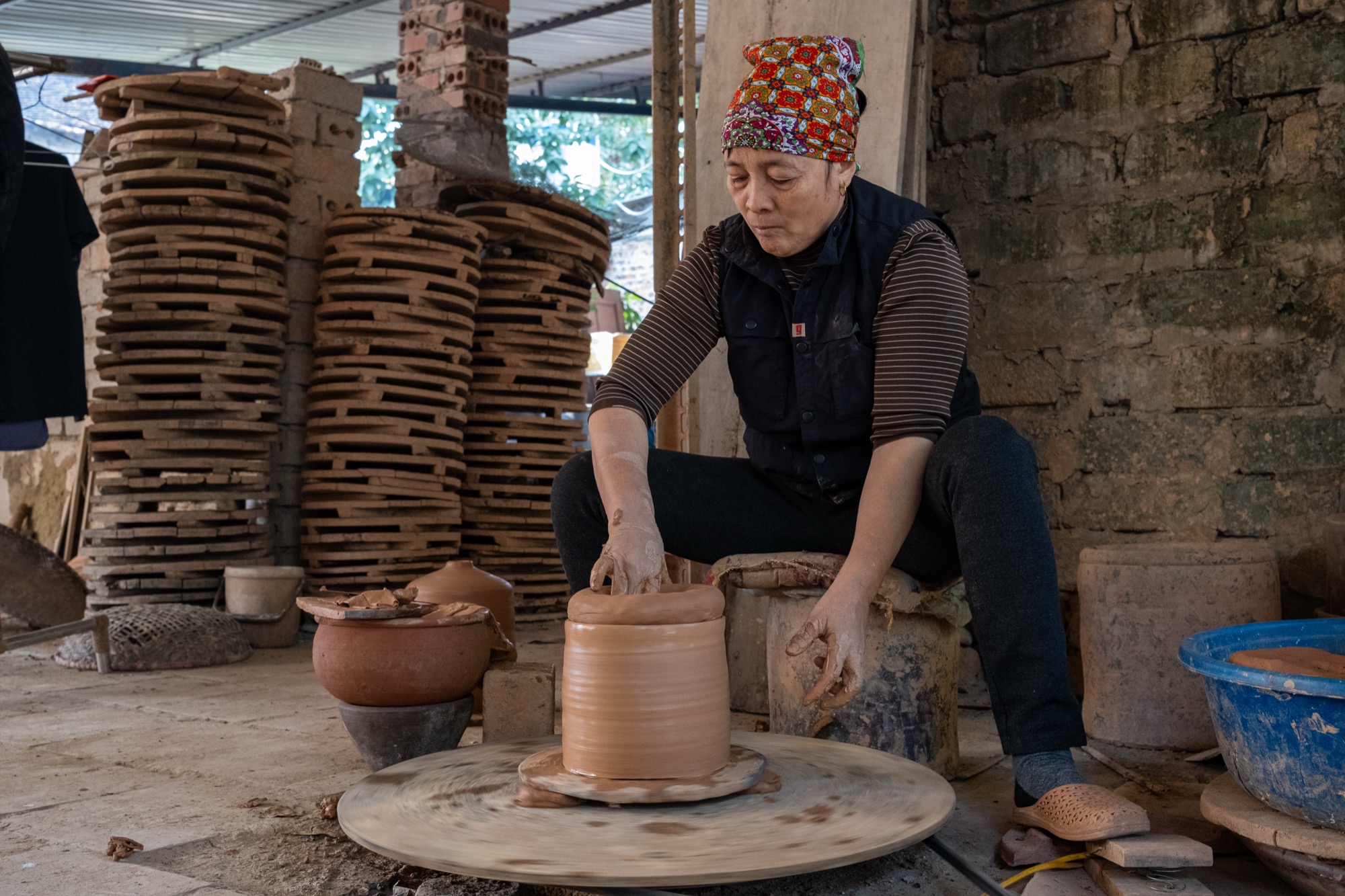
What are the basic steps involved in firing a batch of ceramics?
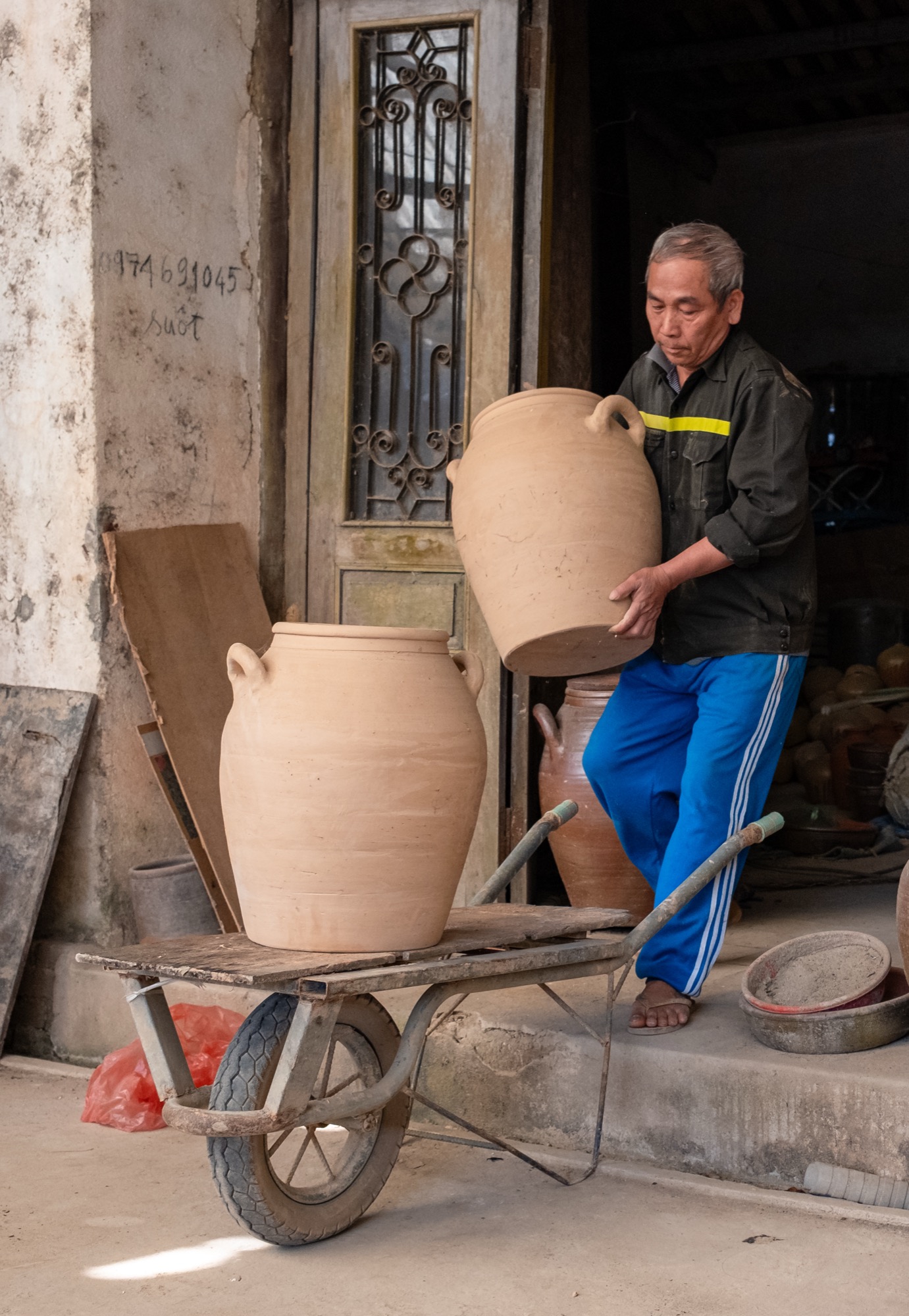
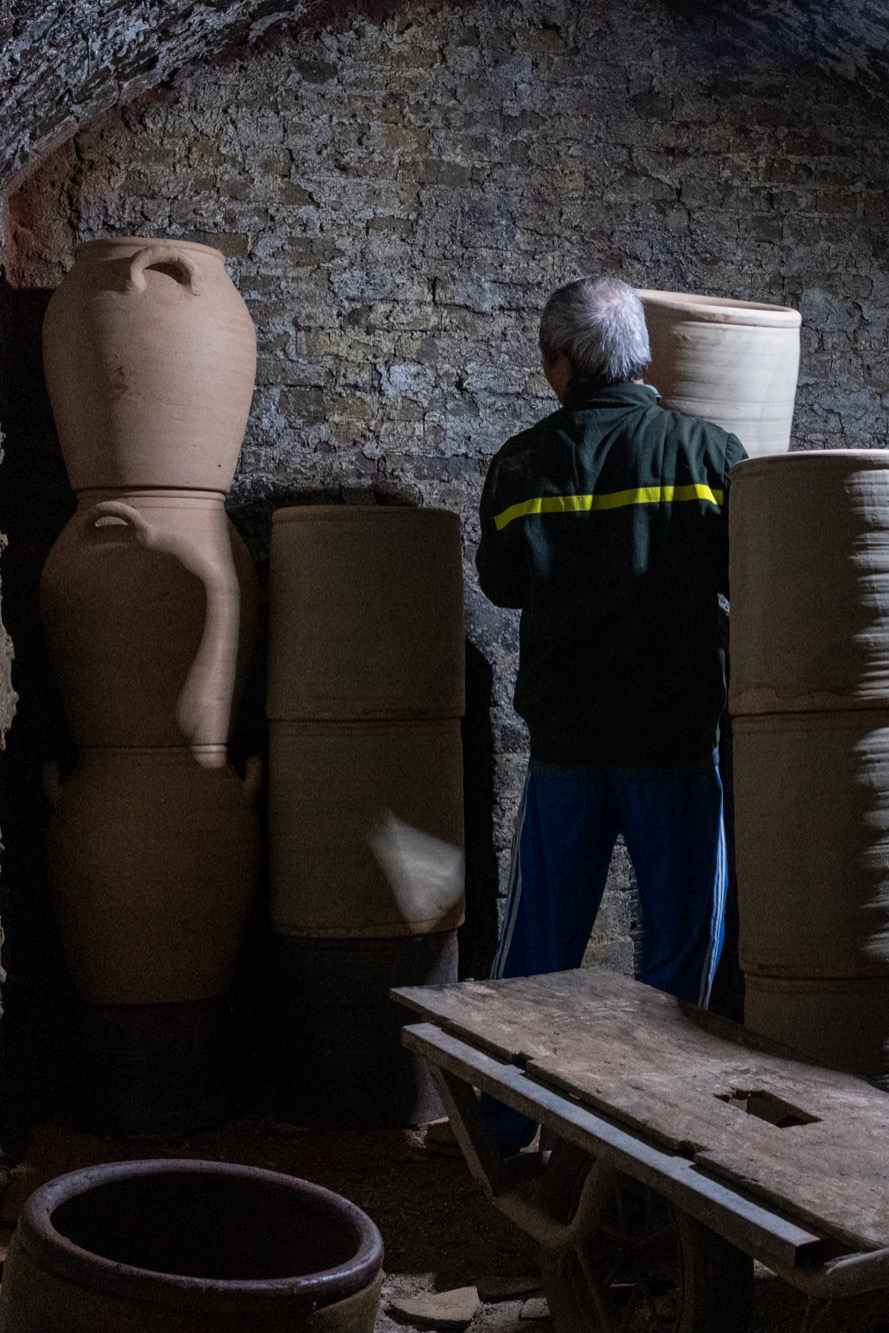
PVT: The process begins with loading the ceramics into the lồ. This stage is entrusted to skilled hands, usually the assistant kiln master, who oversees the firing. The way the pieces are arranged inside is crucial: a well-considered layout maximizes both the quantity and the quality of the ceramics, while a careless arrangement can result in serious losses for the kiln owner.
Contrary to what many assume, firewood is not placed directly alongside the products. What truly matters is how the flame will move through the kiln. Understanding this “flow” is an art in itself, carried almost entirely by experience and intuition, handed down through generations without written manuals or fixed formulas. Only those who work at the kiln day after day know how to read it. Once the placement is complete, the entrance of the lồ is closed with bricks and sealed with earth, marking the end of the loading stage and the beginning of the long wait for the fire to do its work.
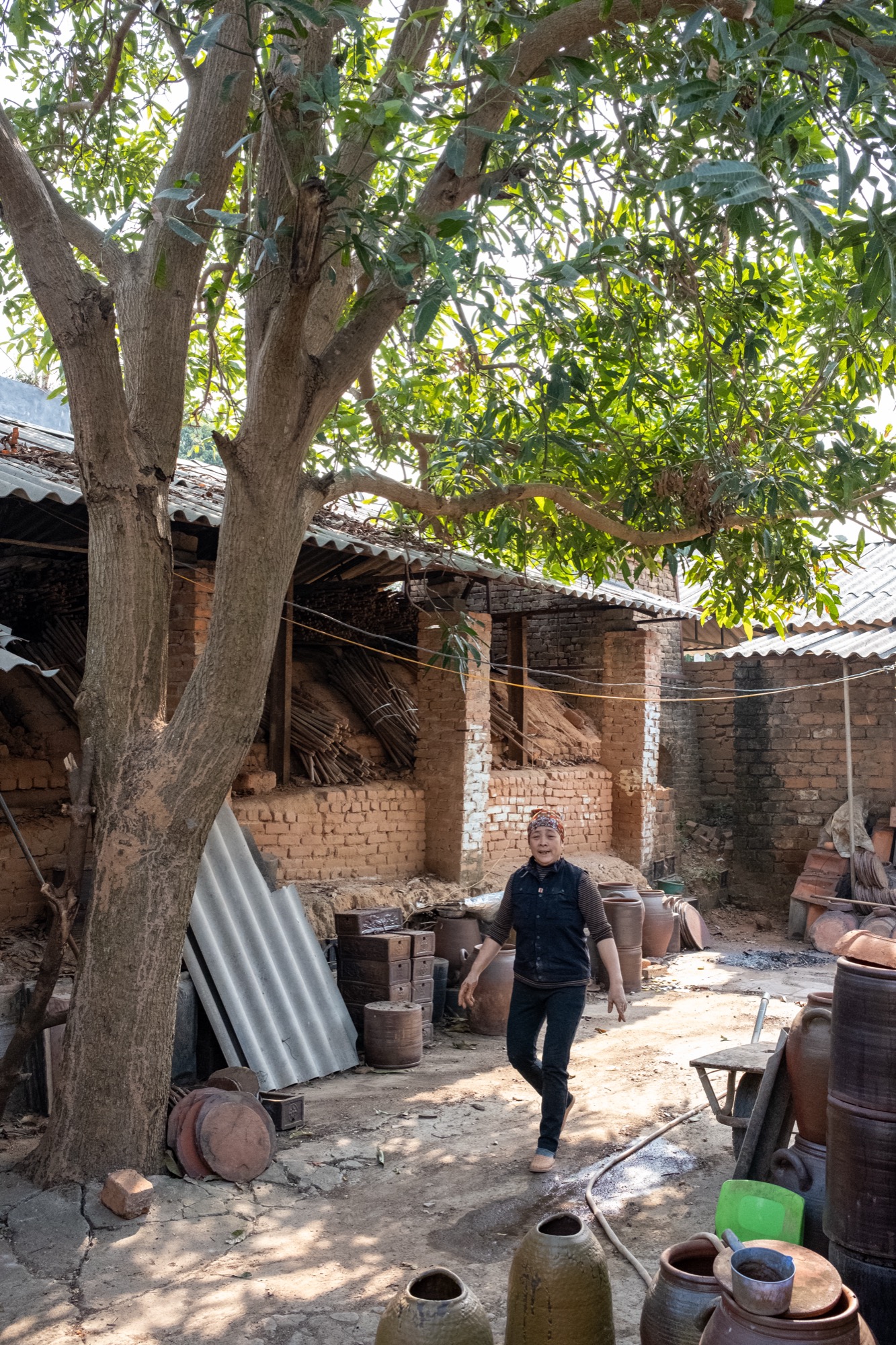
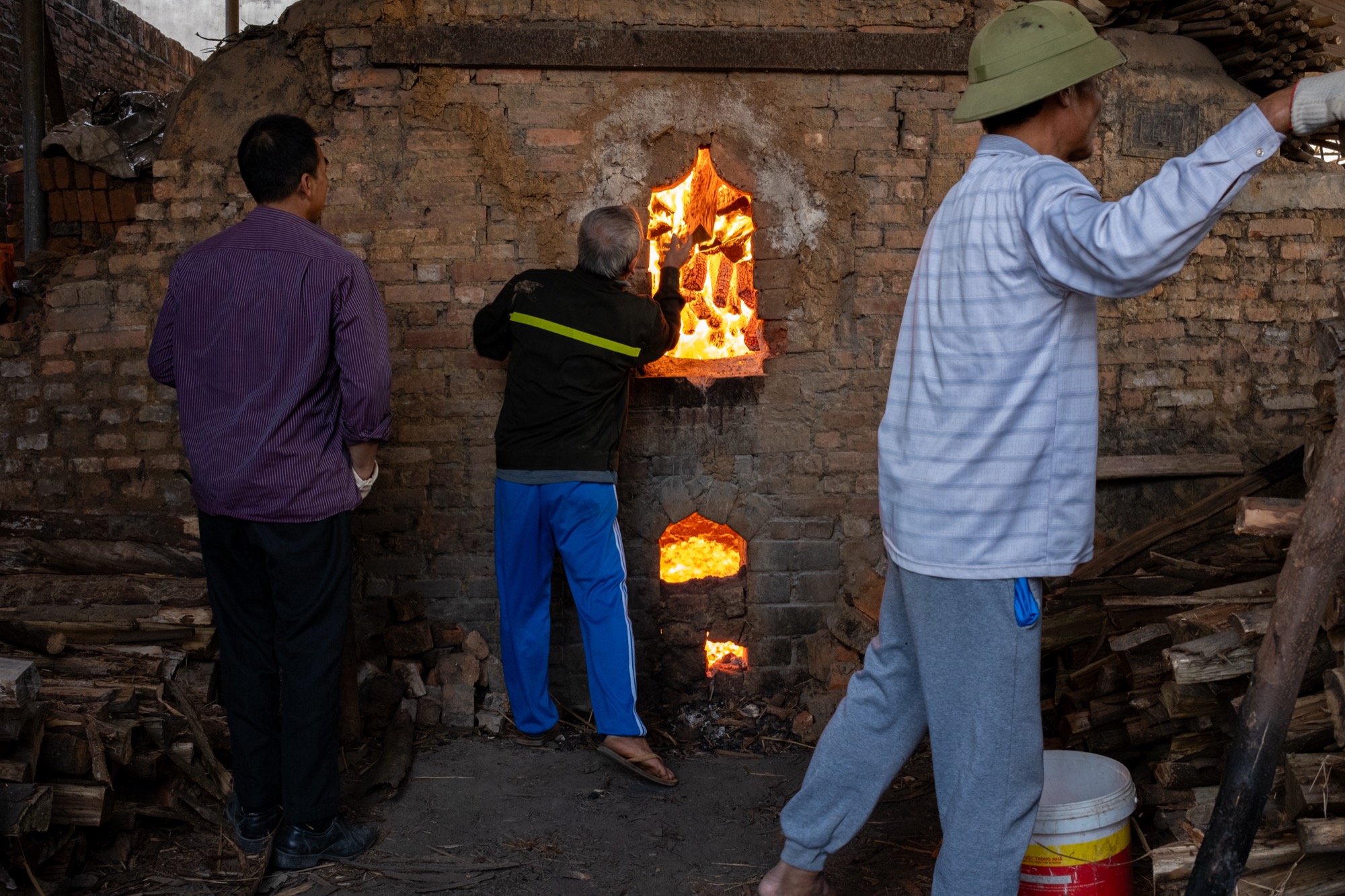
The firing process unfolds in three main stages. The first is the drying phase, when the fire is kindled at the mouth of the lồ to gently remove residual moisture from the clay. This is followed by the heating phase, where the flames are stoked more intensely to drive the heat deeper into each piece. At this point, the principle that “fire generates wind” comes into play: the flames sweep through the length of the lồ and rise upward, until the entire chamber glows red.
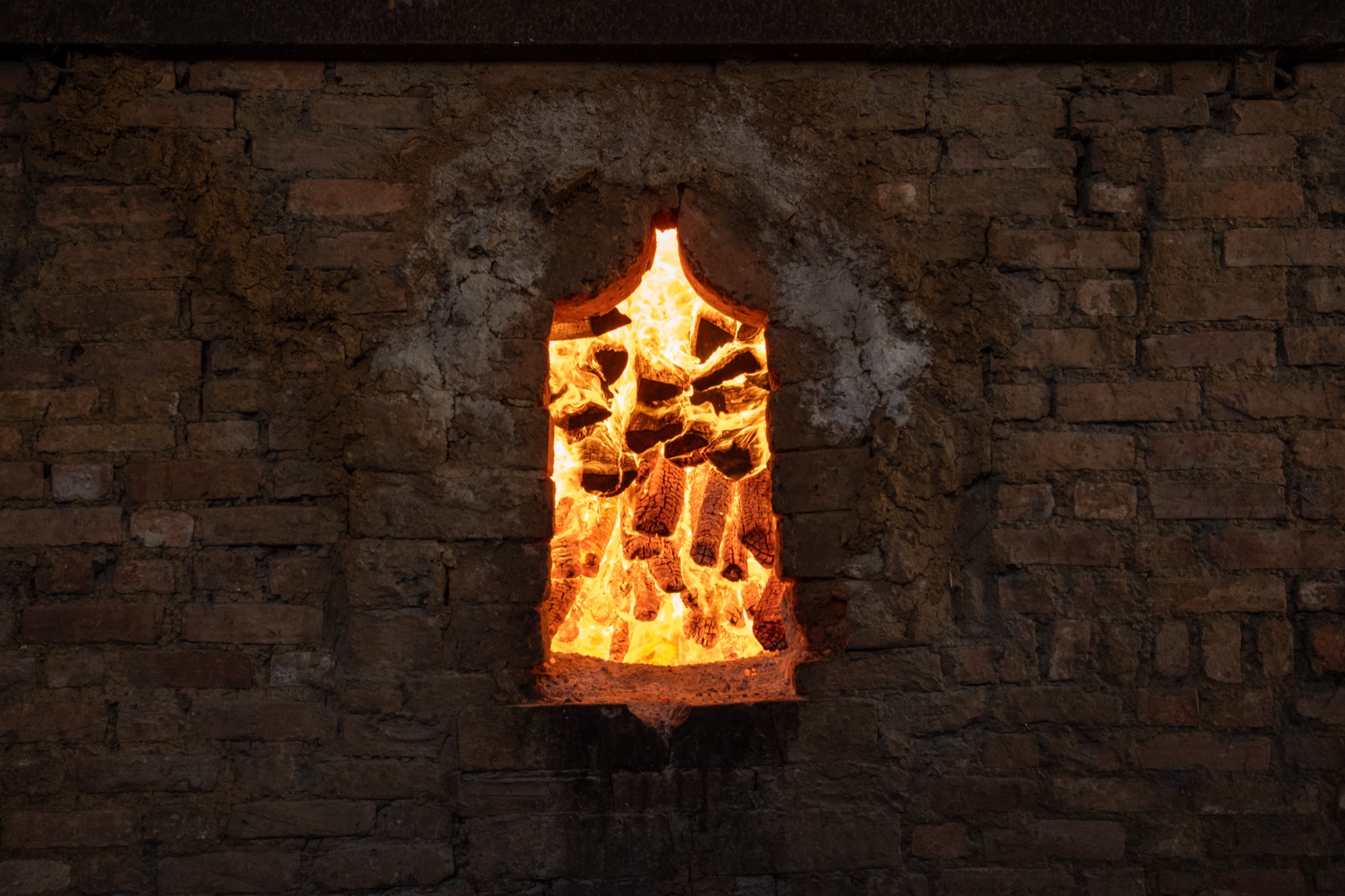
The final stage is the great fire, the most decisive moment of the process. Here the temperature is pushed to its peak, often reaching 1,200°C, to ensure that every piece inside is fully matured. Through the kiln’s small viewport, the blaze appears as blinding as the sun, a spectacle that signals the artisan has reached the critical threshold.
The entire cycle lasts about three days, from ignition to cooling. When it is complete, the pieces must hold their shape, the clay must have hardened to perfection, and the glaze must reveal the intended color. A simple test tells the truth: when struck, the ceramic should ring with a clear resonance, like the sound of a temple bell.
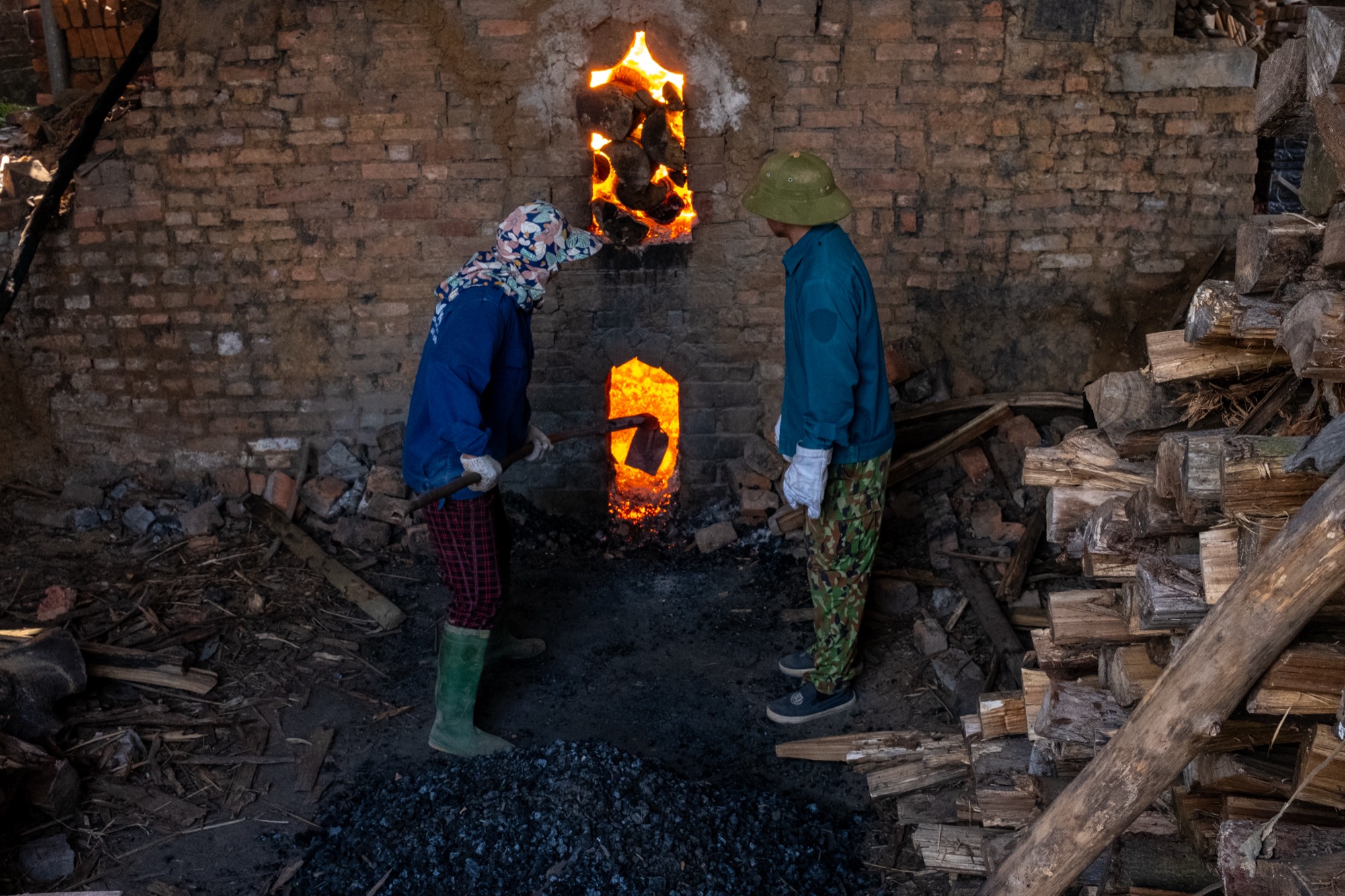
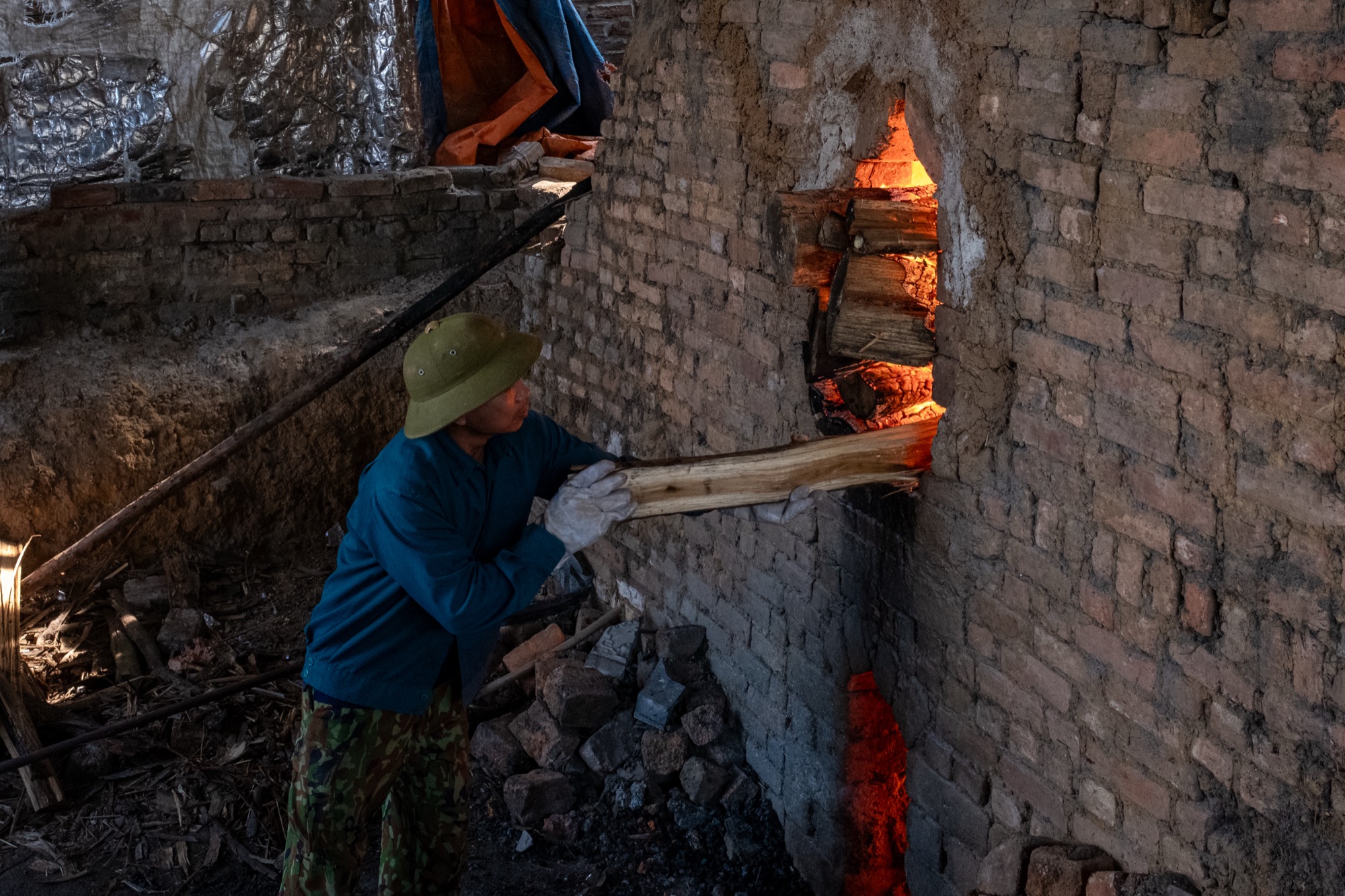
What is the function of the viewports (eyes) along the body of the lồ?
PVT: These “eyes” allow artisans to observe the firing process and feed firewood into the kiln, which is essential given its length. Returning to the loading stage I described earlier, the placement of ceramics and the strategic use of these openings are closely linked. The artisan must know how to channel the fire and manage the flow of heat through each aperture so that the entire batch is fired evenly and emerges with both structural integrity and aesthetic beauty.
Are there other factors that influence the firing process of the lồ?
PVT: Weather plays a major role, directly affecting the length of time required for firing. In the past, when only a handful of households owned a kiln, neighbors would pool their ceramics and fire them together to save time and fuel. Under those conditions, a batch could be completed in about two days. The kiln was often unloaded as soon as the firing ended, without waiting for a full day of cooling.
Today, every household has its own lồ, so each family controls the rhythm of its production. A single firing now typically takes around three days, and some families let the kiln cool for an additional two or three days before unloading. Entering a hot kiln is extremely dangerous, as it can cause severe burns. Personally, I often make use of the residual heat inside the lồ to dry or roast foods. Over time, this practice led my family to create something of a local specialty: dried sticky rice bananas, a simple yet delicious dessert born from the heat of the kiln itself.