
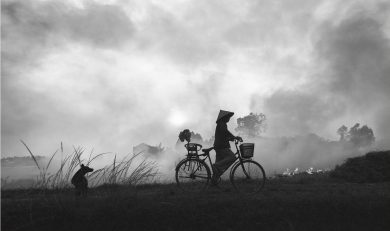
Text: Tố Uyên
Time: Sep 2025
Photo: Đồng Hiếu
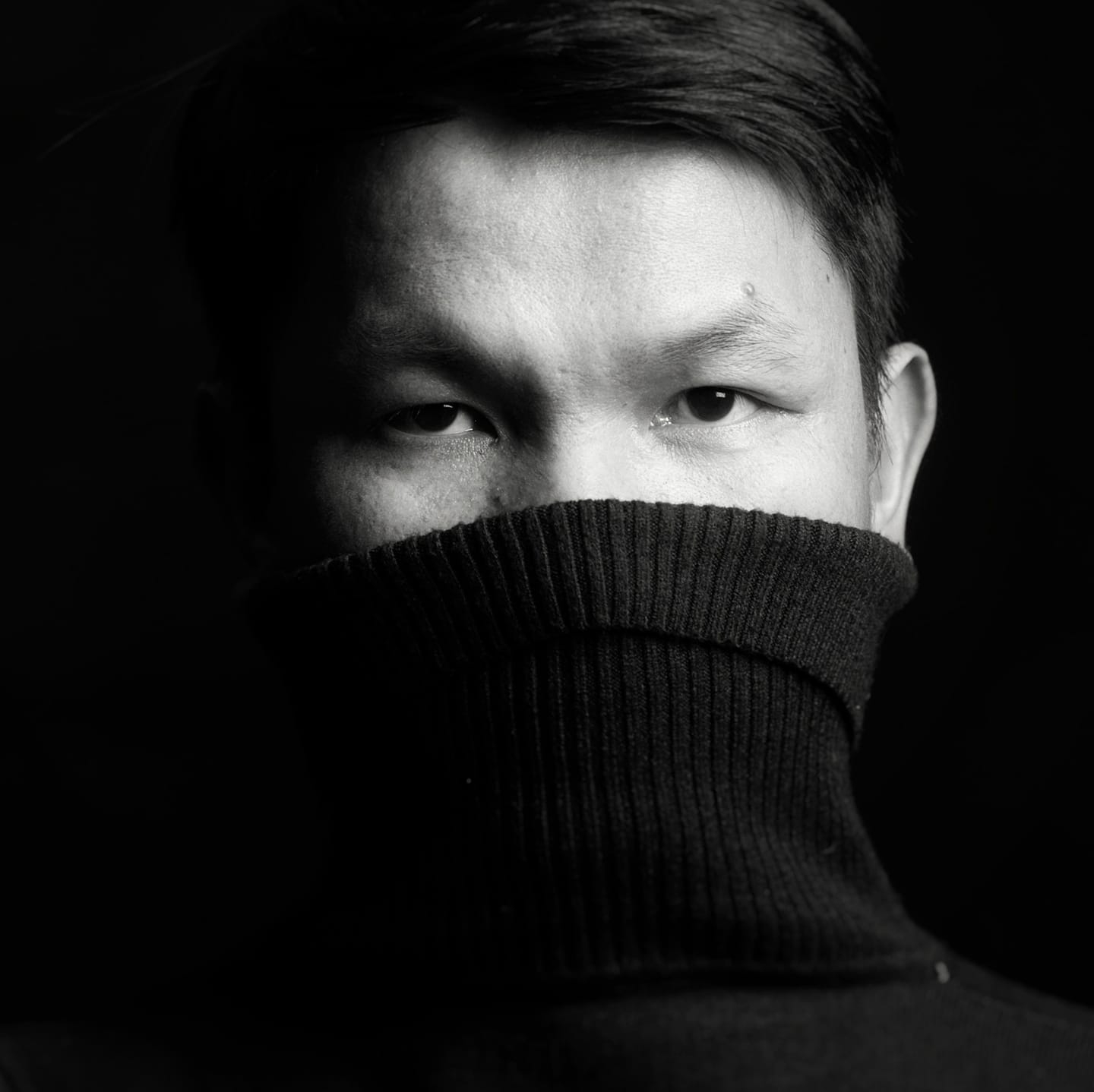
Source: Đồng Hiếu’s SNS
In Việt Nam contemporary photography, Đồng Hiếu is a name synonymous with evocative dailylife images. Not only a photographer, he is also a lecturer, teaching generations of students at the Hà Nội Academy of Theatre and Cinema. Meeting and conversing with him, we encounter not just a storyteller through light, but also a listener who connects emotions through imagery.
This interview was conducted in the form of a friendly conversation, as per his recommend, so that photography is not only conveyed through words but also through richly evocative stories.
Photography cultivates the human spirit
How much of your life does photography occupy?
Đồng Hiếu: A lot. I currently serve as Head of the Art Photography Department at the Hanoi Academy of Theatre and Cinema, where my primary focus is on teaching. Guiding students at different stages of their creative journey has become both a responsibility and a source of inspiration for my own practice.
Alongside teaching, I remain actively engaged with the broader photography community. I frequently participate as a judge in national competitions, such as those organized by the Journalists’ Association and Nhân Dân Newspaper… and collaborate on various photography projects. From time to time, I also work with brands seeking commissioned images, often for the launch of new devices or campaigns that explore the intersection of technology and visual storytelling.
While these professional engagements keep me connected to the evolving landscape of photography, education continues to be at the heart of what I do. It is through teaching that I find the most meaningful dialogue between image-making and human experience.
When did you start with photography? Which photo do you consider your first work?
Đồng Hiếu: My journey with photography began more than twenty years ago, when I entered the Photography Department at the Hanoi Academy of Theatre and Cinema. At that time, I wasn’t especially drawn to photographing daily life. But as I continued studying and working, the environment around me gradually shaped my perspective. I found myself picking up the camera more often, and over time, my practice evolved into what people now recognize as my approach to lifestyle photography.
I have never seen photography as merely the act of taking pictures. To me, it is a form of storytelling. There’s a line by the poet Trần Dần that has always stayed with me: “Time is an endless journey, and the camera lens, in that infinite flow, captures a single moment of pause.” That thought defines how I see my work. Every photograph is a fragment of time, a quiet story suspended within it. I take pictures every day, not because I aim to create great works, but because I feel moved by certain moments – by joy, sadness, or a fleeting sense of connection with life. Each image is a way of holding on to those feelings, however briefly.
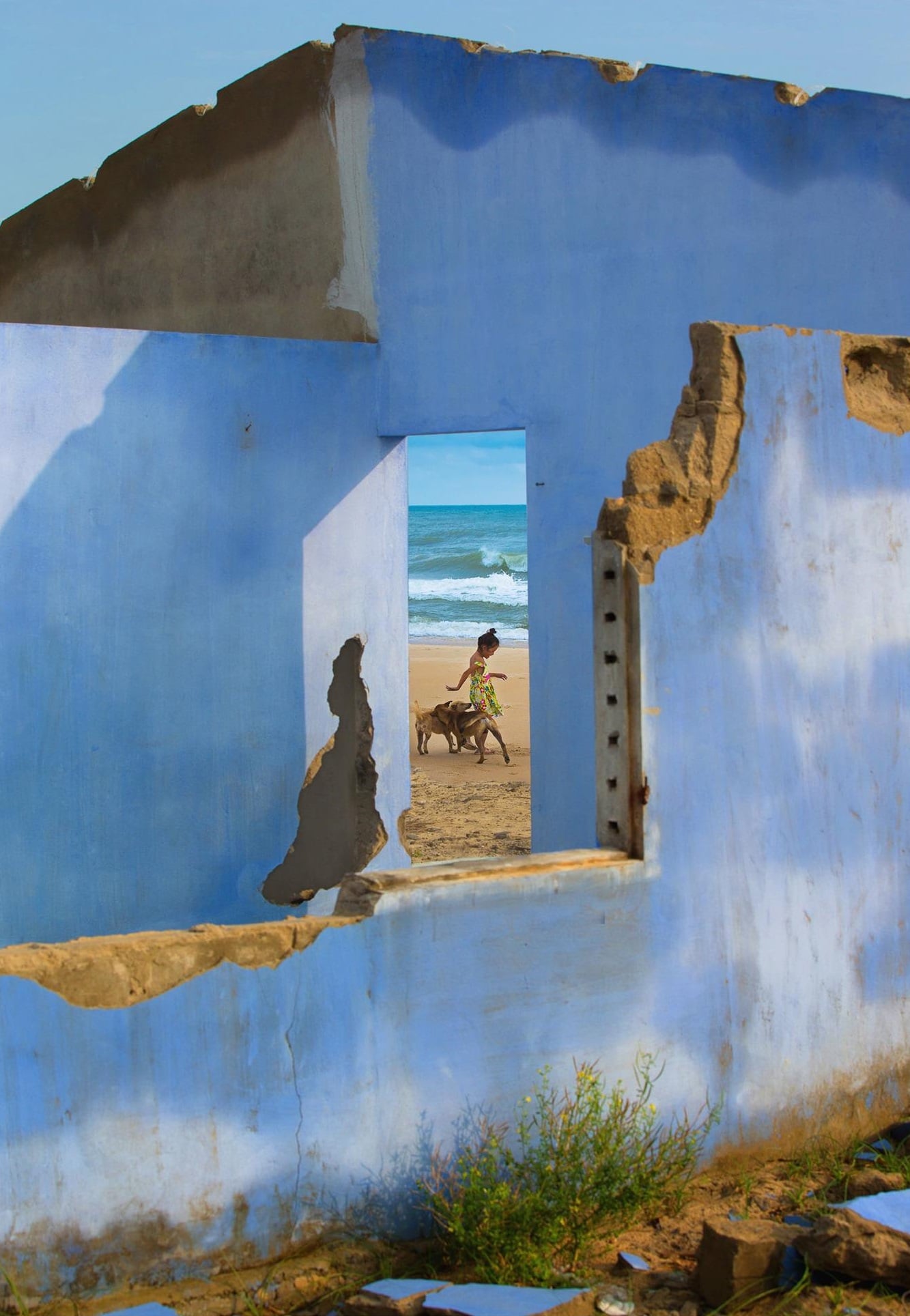


Your photography captures the everyday with a unique allure, seizing overlooked moments with a perspective that’s both dramatic and humorous, while also rich in artistry through your use of light and composition. Can you share how you create the stories within each photo?
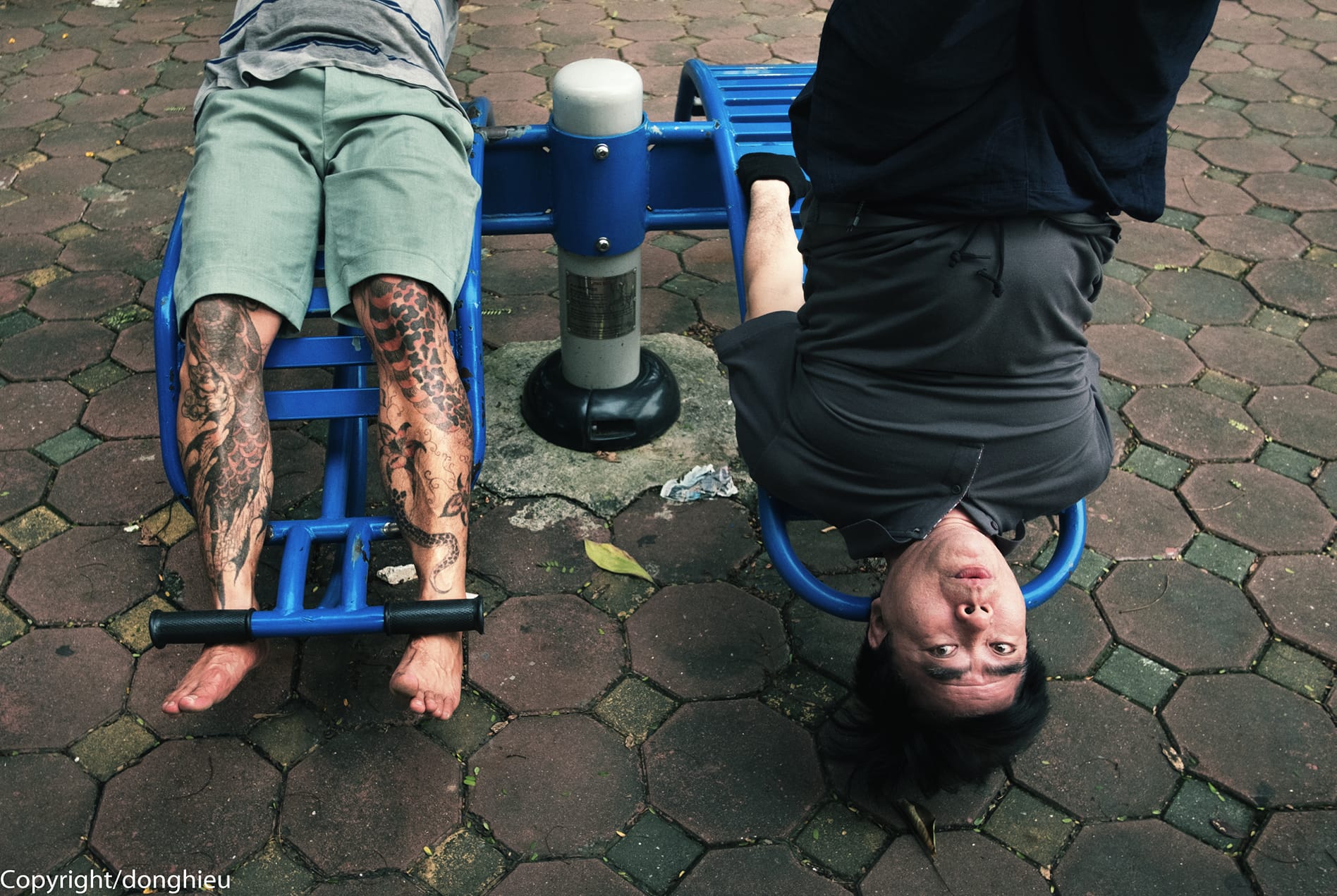
Đồng Hiếu: To me, photography is not about documenting but about creating. I don’t simply record what is in front of me; I select a moment, a fragment within the vastness of life, to shape into a story. Light, color, and composition are my tools to express emotion and intention. What matters most is sincerity, each time I press the shutter, I translate what I genuinely feel. That honesty keeps my photographs alive and prevents them from becoming repetitive.
Has a story you told through a photo ever been misunderstood?
Đồng Hiếu: The beauty of photography lies in its openness to interpretation. A photograph contains its story within the frame; it never attempts to reproduce the entirety of reality. Much like a painter who constructs an image on canvas, I choose a viewpoint, a fleeting moment, and transform it into a space that exists only within the photograph. That space is where imagination begins and where the viewer’s own story takes shape.
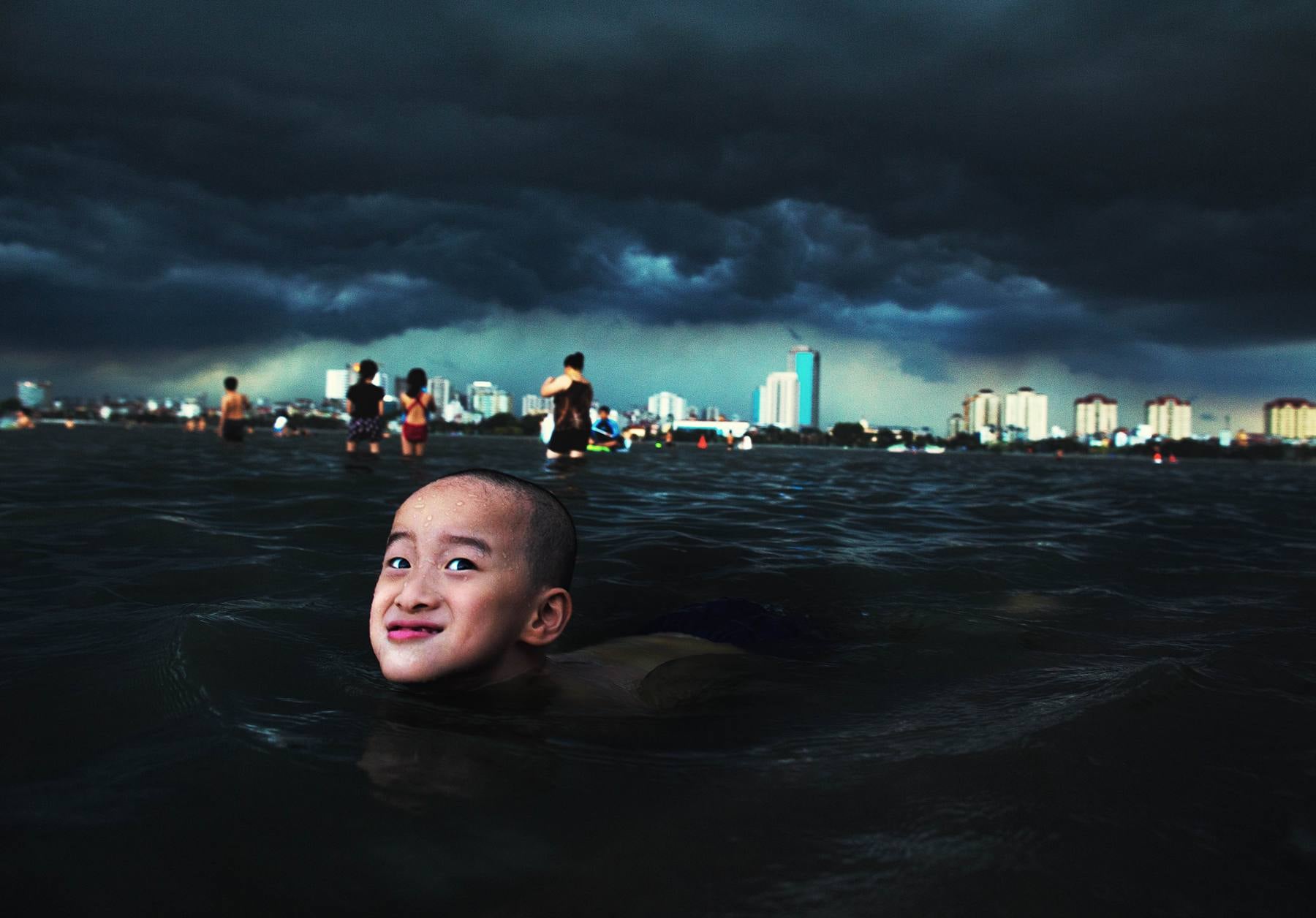
Did you pursue everyday photography from the start, or did it develop through your experiences?
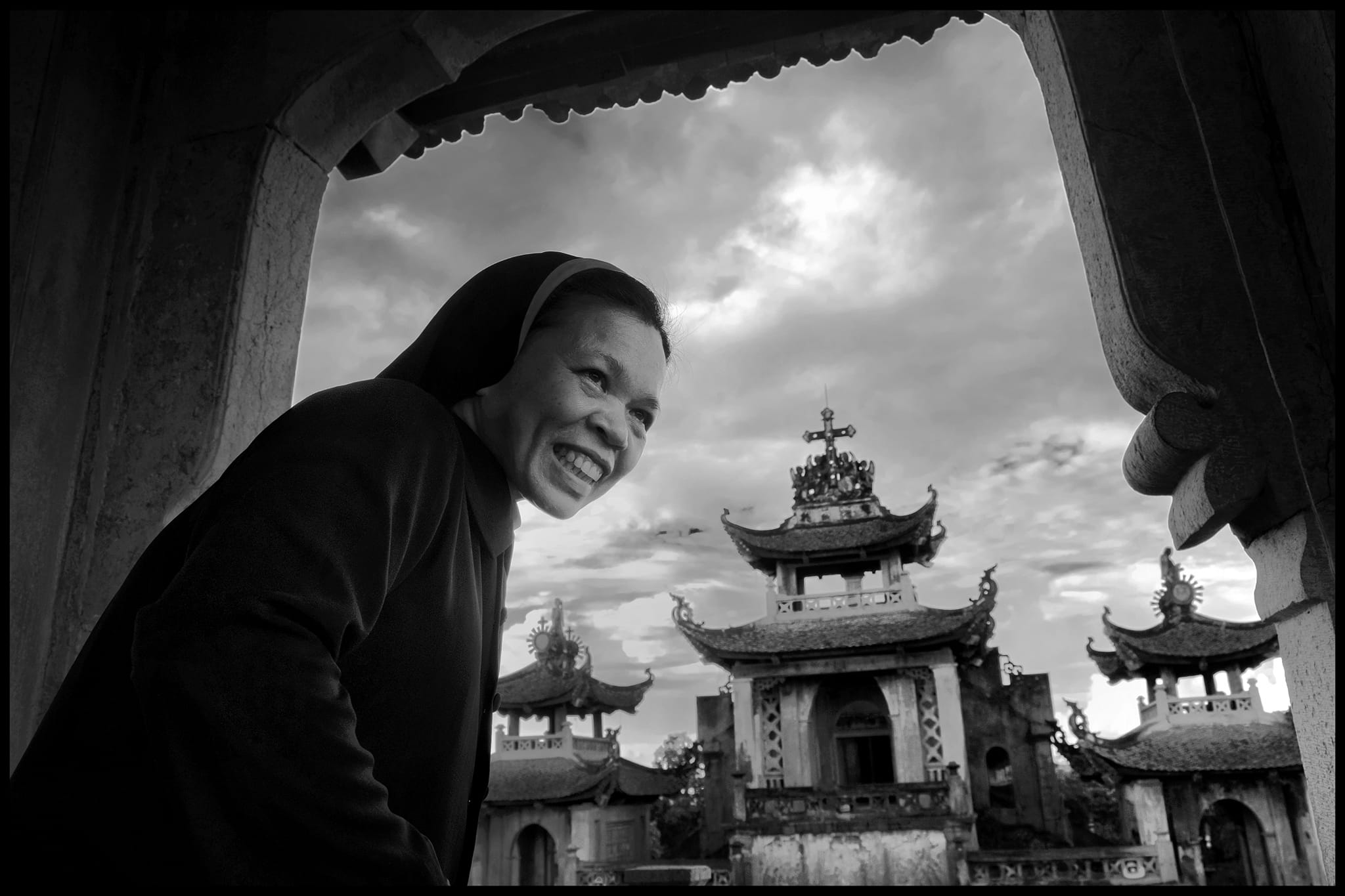
Đồng Hiếu: During my time at the academy, I was introduced to many branches of photography as advertising, fashion, portrait, still life. I experimented with them all. But it wasn’t until I began teaching and photographing regularly that I realized how inexhaustible the everyday could be. Daily life offers endless material; it doesn’t demand elaborate setups or complex concepts, only attentiveness and empathy. When I take a photograph, I’m not merely a person holding a camera. I become part of the story, feeling the subject’s joys and sorrows. That emotional presence is what gives the image its soul.
Photography, in turn, shapes the photographer. If you don’t open your heart, if you don’t learn to sense space, people, and their gestures, you end up clicking the shutter like a machine, without emotion, without narrative. A photograph must carry feeling and story. Over the years, this understanding has allowed me to connect deeply with others. As a lecturer for more than a decade, I’ve encountered countless students and witnessed many lives through my lens. Each encounter, each emotion, joy or sorrow, becomes part of the creative well I draw from.
I’m very impressed by how you talk about empathy in photography. Can you share a memorable experience from one of your shoots?
Đồng Hiếu: Once, I took my students on a field trip to Phù Lãng, a pottery ancient village in Bắc Ninh province, Việt Nam. During lunch at a temple, I met an elderly woman, over seventy years old, who told me about her child who had been missing for many years. I felt compelled to help. Though we couldn’t find her child immediately, I photographed her and shared her story on social media. Within twenty-four hours, the post was shared widely, and her child was found. Many people even donated money to help her take her child for medical care. That experience made me realize that photography is not only about creating beautiful images; it also carries the power to touch lives and bring people together.
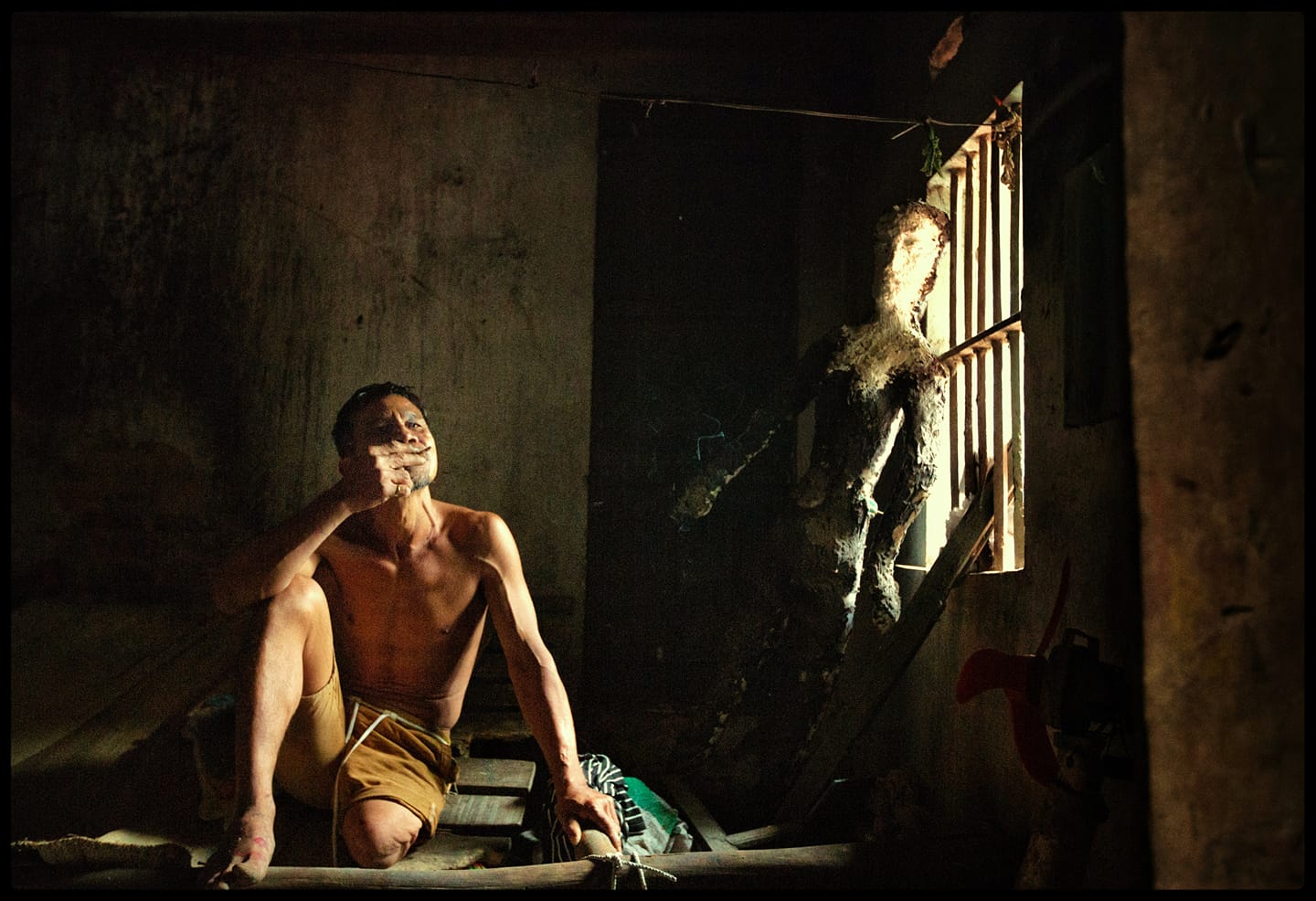
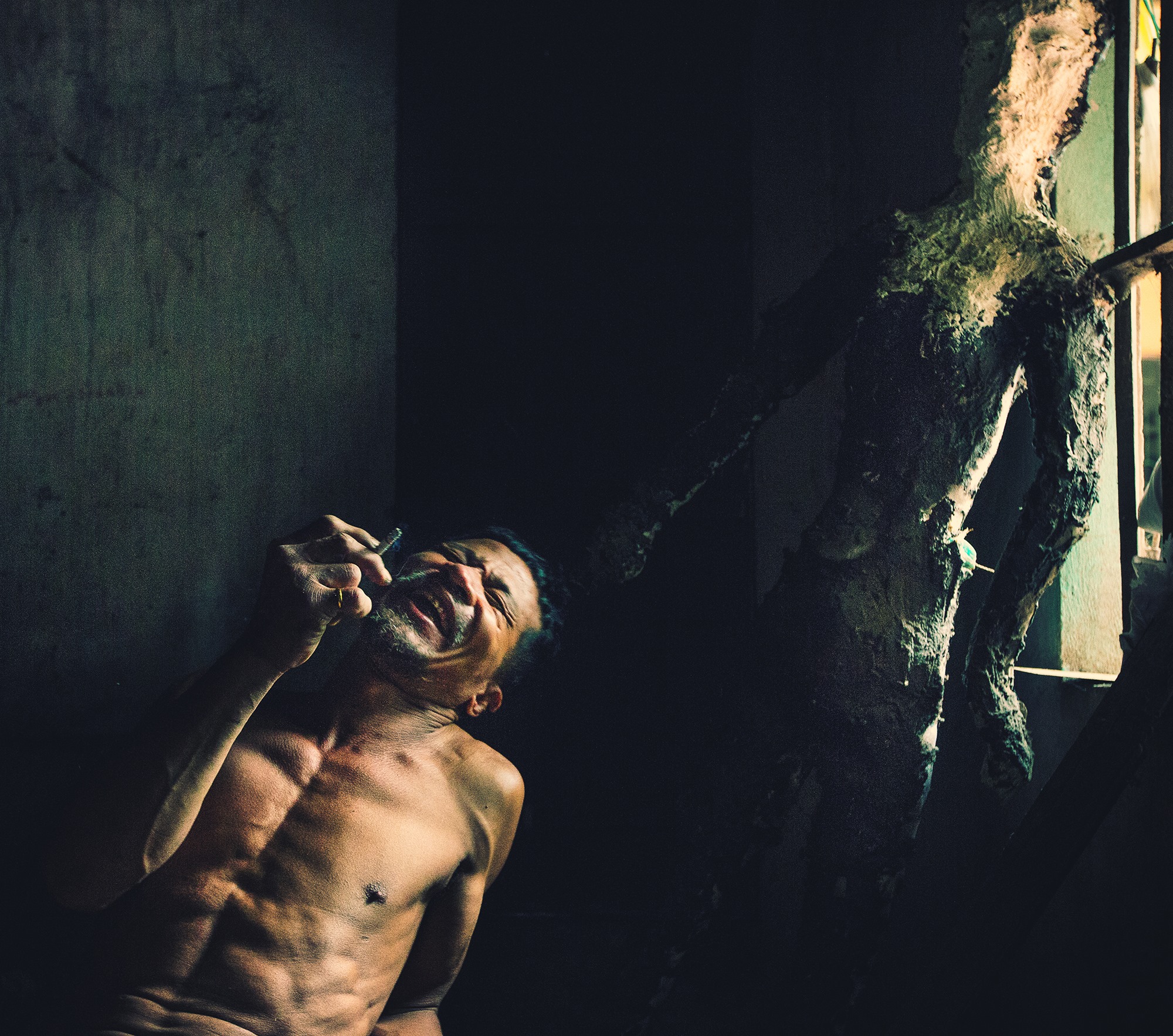
Another story that has stayed with me is about a man named Ý, a familiar figure to many at the Việt Nam University of Fine Arts. He was a gifted artist who had endured a life filled with hardship. Ý had lost a leg in an accident, and both of his wives had left him. Still, he lived surrounded by art, haunted by love and memory. He would hang his paintings on the ceiling and lie beneath them, gazing upward. During one of my visits, I photographed him laughing, reminiscing about his past loves, while beside him stood a mannequin representing one of them.
Sometime later, a Vietnamese-Canadian man reached out to me. He said that this photograph brought him a sense of hope and healing after the death of his wife, and he wished to buy it to hang in his home. I was moved and wanted to give it to him as a gift, but he insisted on paying, to honor the photographer’s work. In the end, I sold the photo for a symbolic one dollar. Half an hour later, he sent me an envelope with that single dollar and two bottles of wine. Encounters like these remind me that photography can transcend aesthetics, it can connect hearts, heal, and restore faith in humanity.
Can you share more about how you connect photography with your teaching work?
Đồng Hiếu: Photography, to me, is more than the act of creating images; it is a means of connecting people. Lately, I’ve noticed that many of my students struggle with psychological and emotional pressures that are common among today’s younger generation. When I look at their everyday photographs, I can often sense who is carrying an invisible weight. Their emotions reveal themselves through the frame, each photograph becomes a mirror of their inner world.
In one semester, I gave my students an assignment on still-life photography with the theme “keepsakes.” Each object had to represent a personal memory, a story of joy, loss, or longing. Before taking their photographs, the students had to present their ideas to me. Many of them broke into tears as they spoke, finally expressing emotions they usually kept hidden. Through this process, they learned more than technical skills. They learned to face their feelings. And after these sessions, I saw them becoming gentler, more understanding with one another. Photography became a way for them to tell stories, to listen, and to connect on a deeper, human level.
Not only do your photographs create impact, but your teaching also brings about meaningful change. Do you see yourself as an emotional connector between artists, their work, and the audience?
Đồng Hiếu: I believe photography forms a triangle between the artist, the work, and the viewer. The artist must feel inspired and emotionally open to breathe life into their work. When the image carries that energy, the viewer can sense it instinctively. Even in the saddest photographs, I always try to preserve a glimmer of light – a trace of hope. I never want my images to dwell entirely in sorrow, because I believe that within every moment of sadness, there is still the quiet pulse of life.
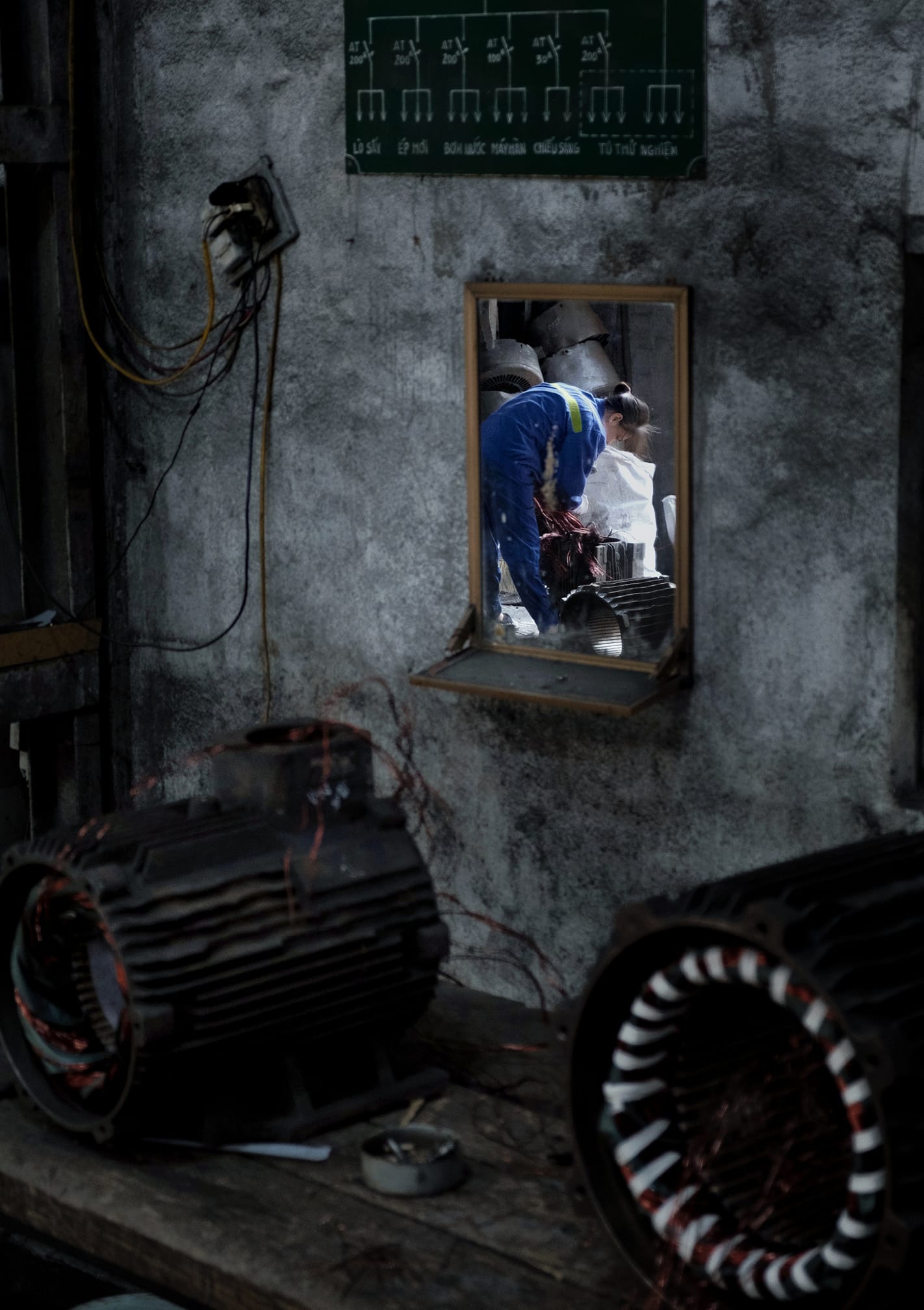
I’m very curious about how you approach capturing everyday moments. When you raise your camera, how do you ensure your subjects aren’t affected by your presence and still retain their natural emotions?
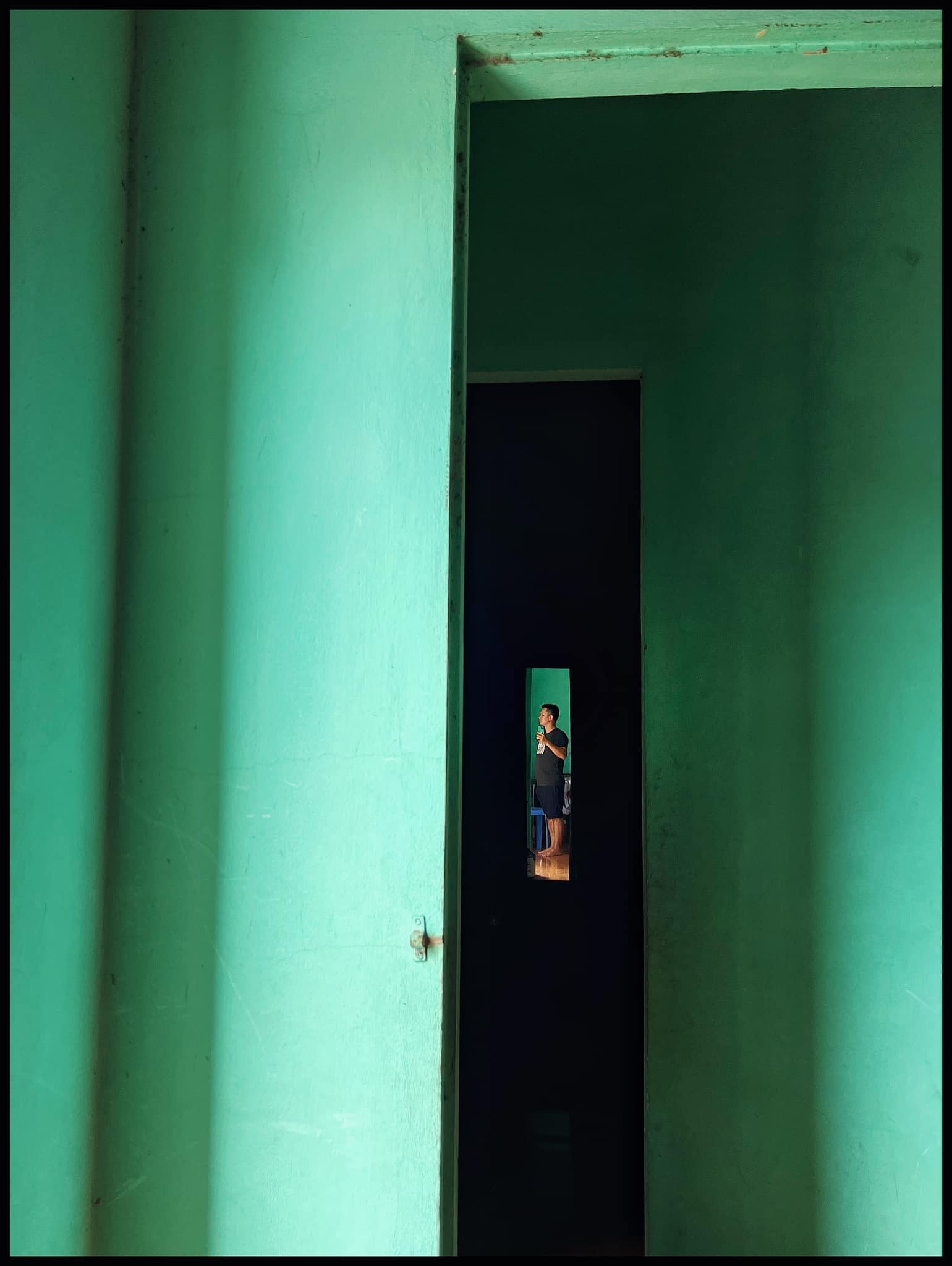
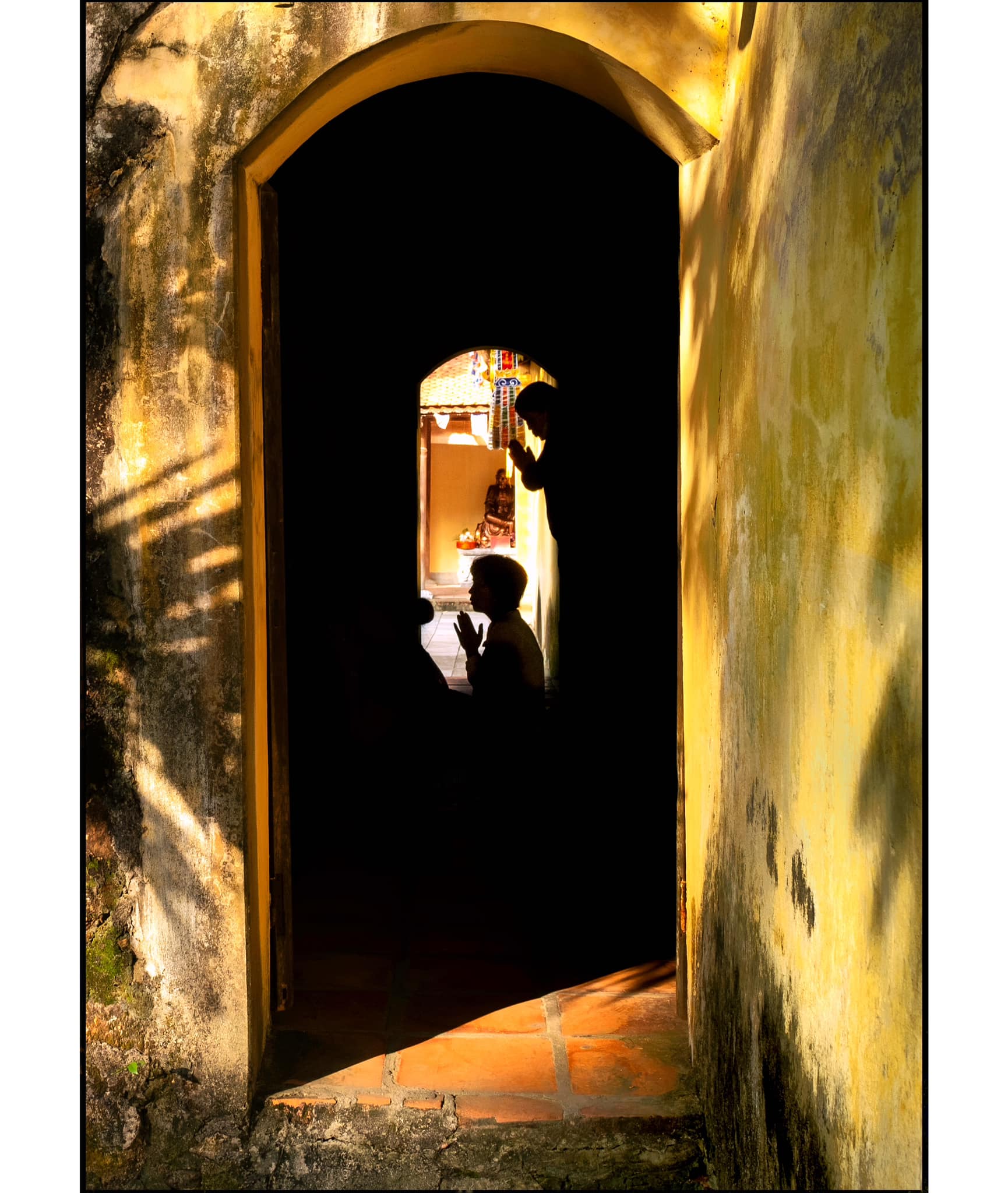
Đồng Hiếu: My process is a quiet one. I often photograph alone because solitude allows me to sense life more clearly. When I’m by myself, I can fully listen to what’s happening around me, the light, the sounds, the rhythm of people’s movements. There are no distractions, only the slow unfolding of moments. In those times, I see myself as an observer rather than a participant, allowing life to reveal itself naturally.
Some moments pass in an instant, so I have to act quickly. Years of practice have trained me to anticipate what might happen next. I can often sense which direction a person will walk or how they might gesture, allowing me to frame the image before it occurs. It’s almost like directing a scene, except instead of orchestrating, I wait and choose the right moment to let it happen.
Communication with the subject is just as important. Sometimes I talk and share stories to make people comfortable, to the point where they forget I’m holding a camera. For certain projects, I’ve spent days, even a week, living with a subject as observing, listening, and quietly documenting their life. There’s a saying I deeply believe in: “If your photos aren’t good enough, you’re not close enough.” But closeness doesn’t only mean physical distance; it means emotional proximity – understanding and empathy.
Among your photographs, is there one that makes you happiest when you look back on it?
Đồng Hiếu: I don’t have a particular photograph that makes me happiest. I prefer not to dwell on what I’ve already created. Each image has its own destiny, living on in the hearts of those who see it. Once I finish a photograph, I tend to let it go, not because I don’t value it, but to preserve a sense of purity, so that every new shoot feels fresh. When I revisit old works, I see them as pages from a diary, each recording an emotion or a moment of empathy. That is enough for me.
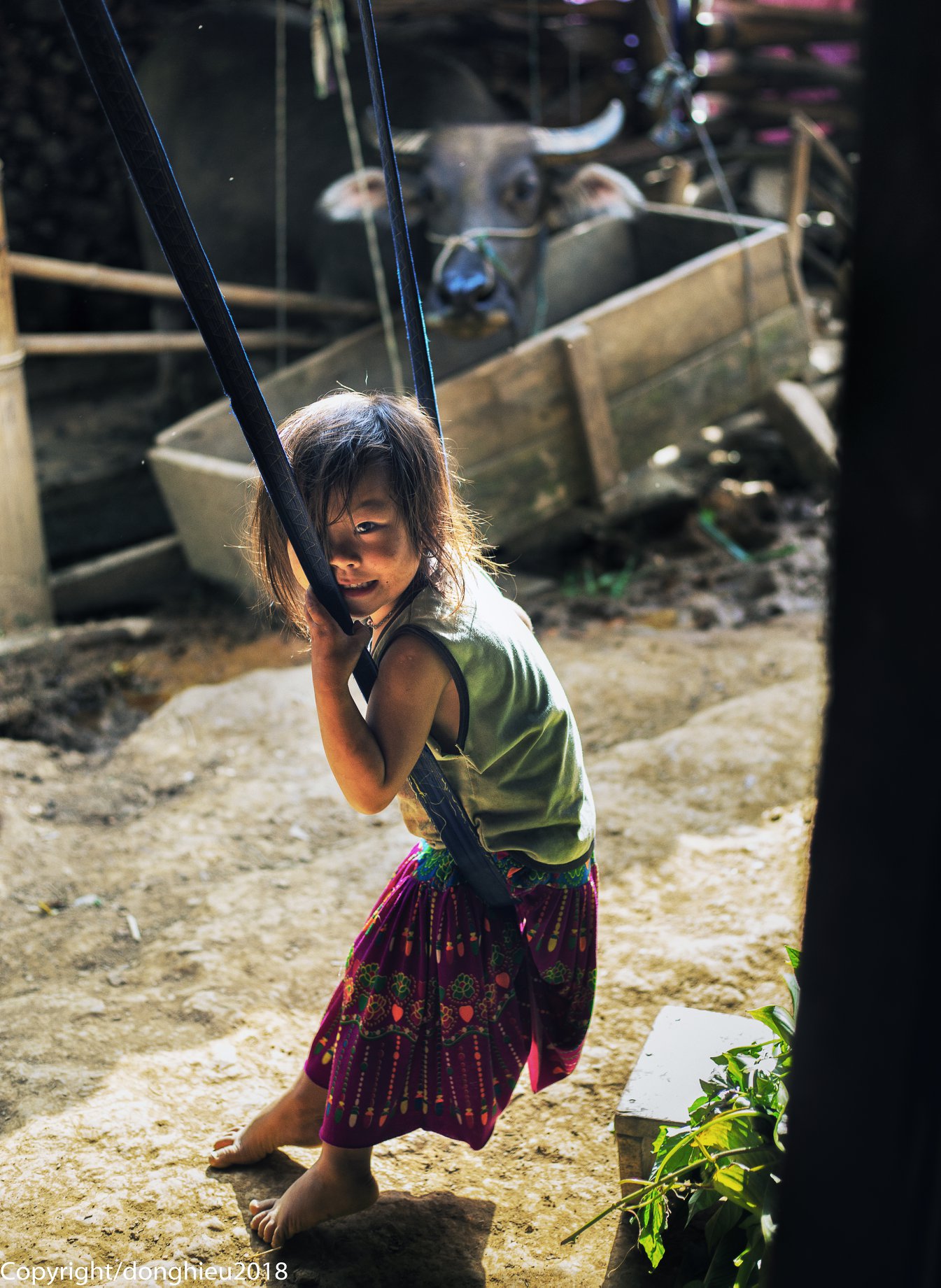
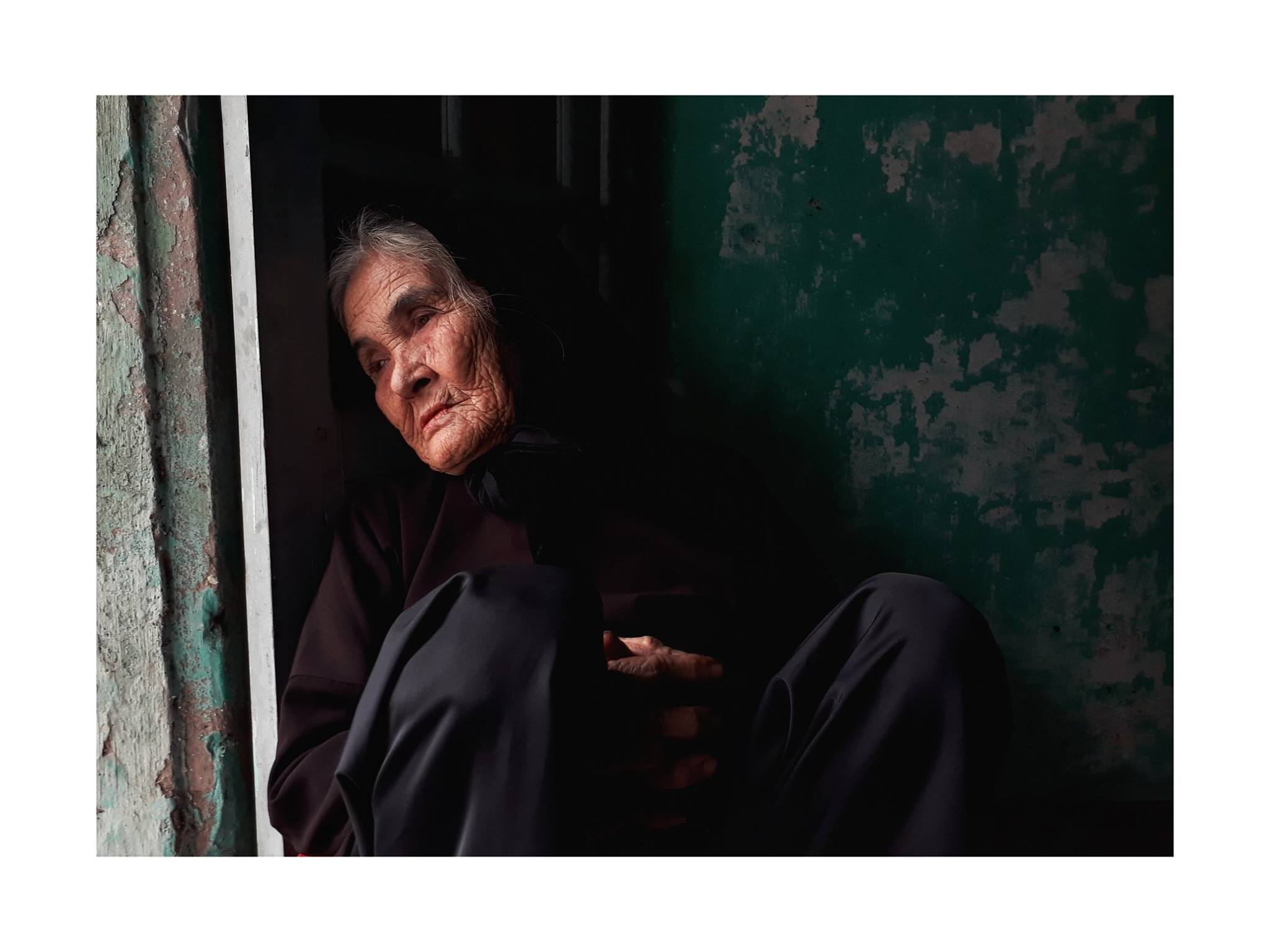
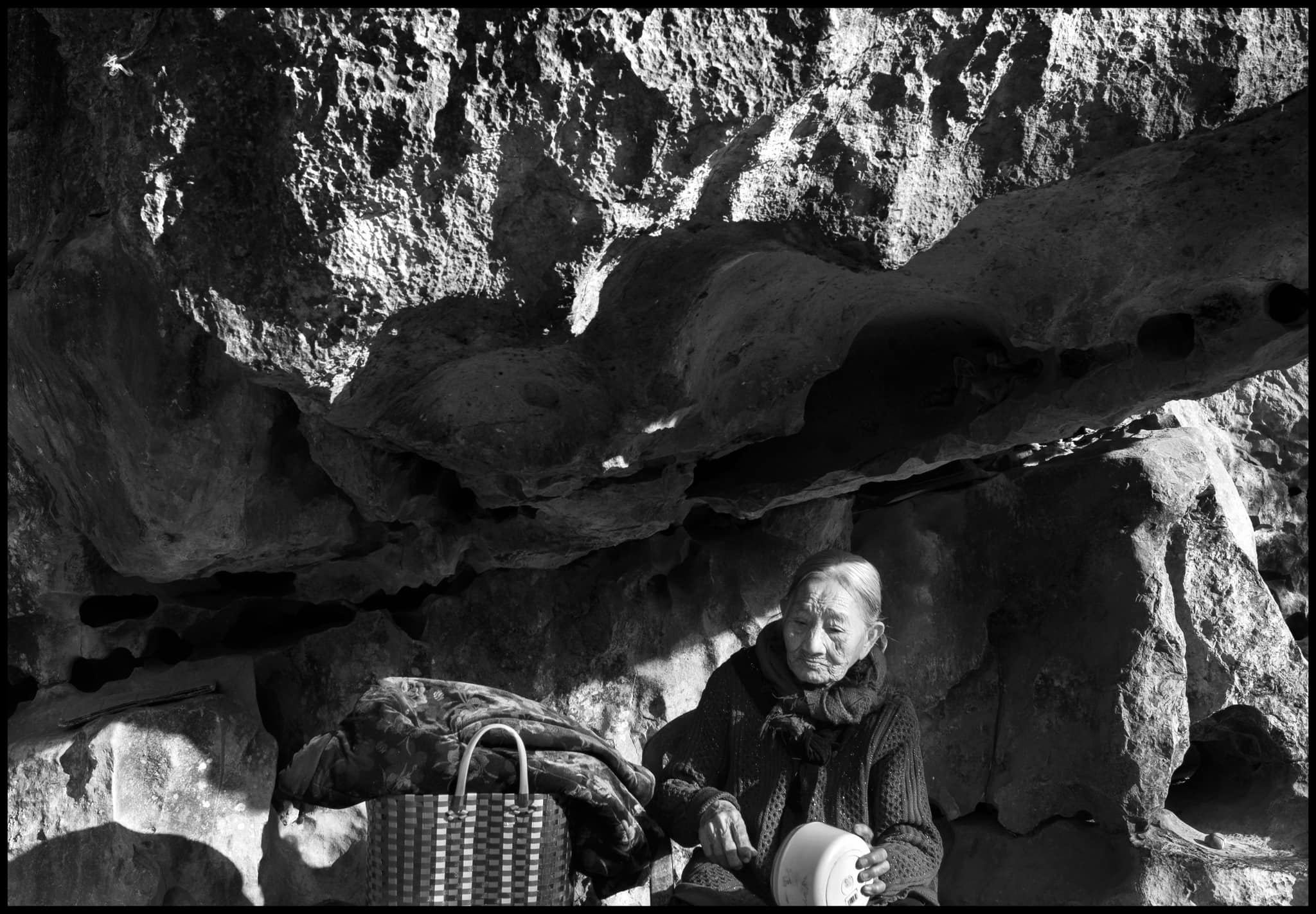
Many young people want to pursue photography but often give up after a while. Do you have any advice on how to maintain the passion and persevere in the profession?
Đồng Hiếu: I think it’s important to distinguish between liking something and being truly passionate about it. Liking is a fleeting emotion that can fade as easily as it appears. Passion, on the other hand, is what remains after years of effort, struggle, and sacrifice. It’s the desire to keep going even when things become difficult. Many young people are drawn to photography because of its romantic image, the idea of wandering freely with a camera but when reality sets in, they often lose motivation. For me, passion grows stronger through the stories I encounter, the people I meet, and the moments when I feel that my work has inspired someone. I once received a message from a person who told me I had been their source of inspiration for four years. Words like that remind me why I continue.
What matters most is finding your own voice. Don’t chase after someone else’s style or perspective. Photograph what truly reflects who you are and how you feel. Once you discover that, photography becomes a journey of self-discovery, and that journey is what sustains you.
Do you have any upcoming exhibitions or projects?
Đồng Hiếu: I’ve taken part in several exhibitions, including a group show in Hanoi with a collective of artists that featured a French collaborator, and I’ve published a photo book titled Hà Nội ơi (Oh, Hanoi). In 2023, I received an award for ecological photography in Yunnan, China. But I don’t participate in many competitions; I prefer to focus on reaching the audience directly. For me, the most meaningful achievement is when a photograph resonates with someone and becomes part of their own story.
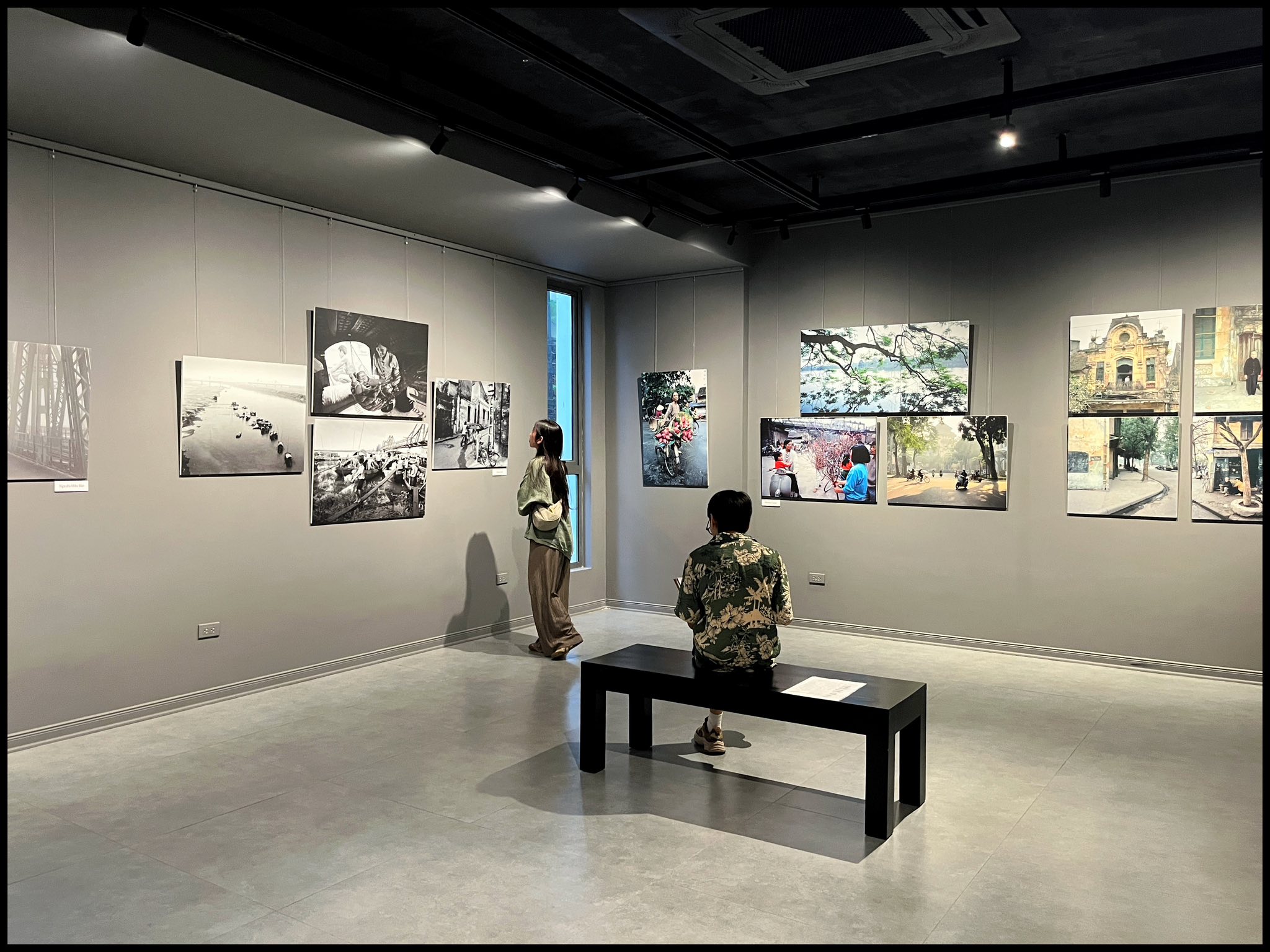
At the moment, I’m working on a photo book about Bắc Ninh, a place that holds many of my most personal memories. It’s where I grew up, surrounded by images of my grandparents and the traditional customs of my hometown. This project feels like a journey of returning to my roots, a way to reconnect with family and the cultural landscape that shaped me.
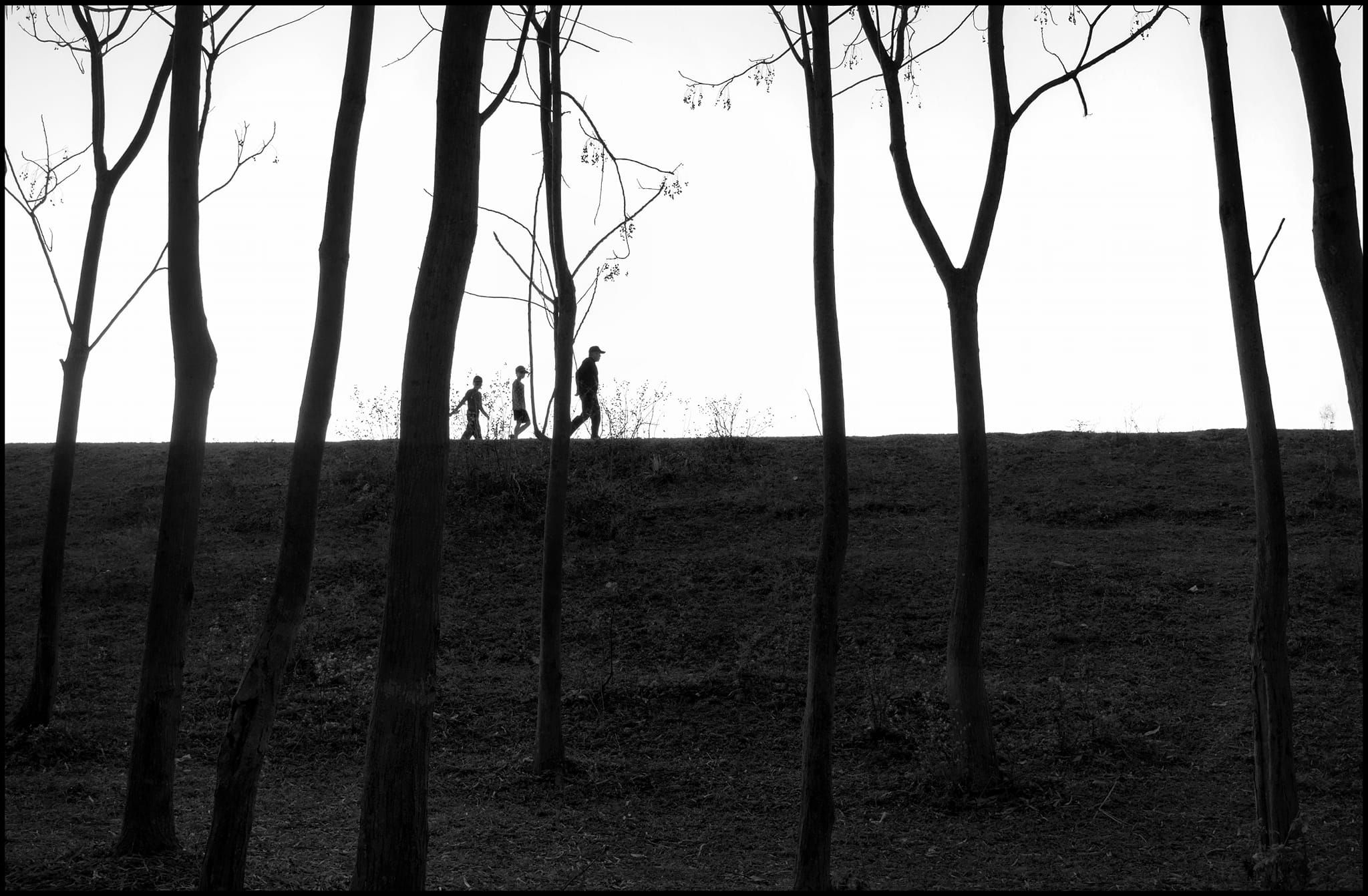
The series is composed mainly of black-and-white photographs that capture scenes from everyday rural life: the morning markets along the dike, the riverbanks at dawn, and traditional customs like the tooth-dyeing ritual once practiced by elderly northerners. These moments markets filled with sugarcane and bánh chưng during Tết, or the quiet presence of old men and women whose gestures carry the rhythm of another era have almost vanished today. Through these images, I hope to preserve what remains of that tenderness and simplicity.
I’ve been working on this body of work for more than a decade, beginning when I still lived in Bắc Ninh, before moving to Hà Nội nearly twenty years ago. Each time I return, I bring my camera and wander through familiar streets, observing where the past and present intersect. I keep the images as authentic as possible, making only minimal adjustments to light and tone, avoiding any artificial manipulation. If everything goes as planned, I hope to present this project next year through both an exhibition and a photo book. It will be, for me, a quiet homage, to the land, to memory, and to the people who continue to live within those photographs.
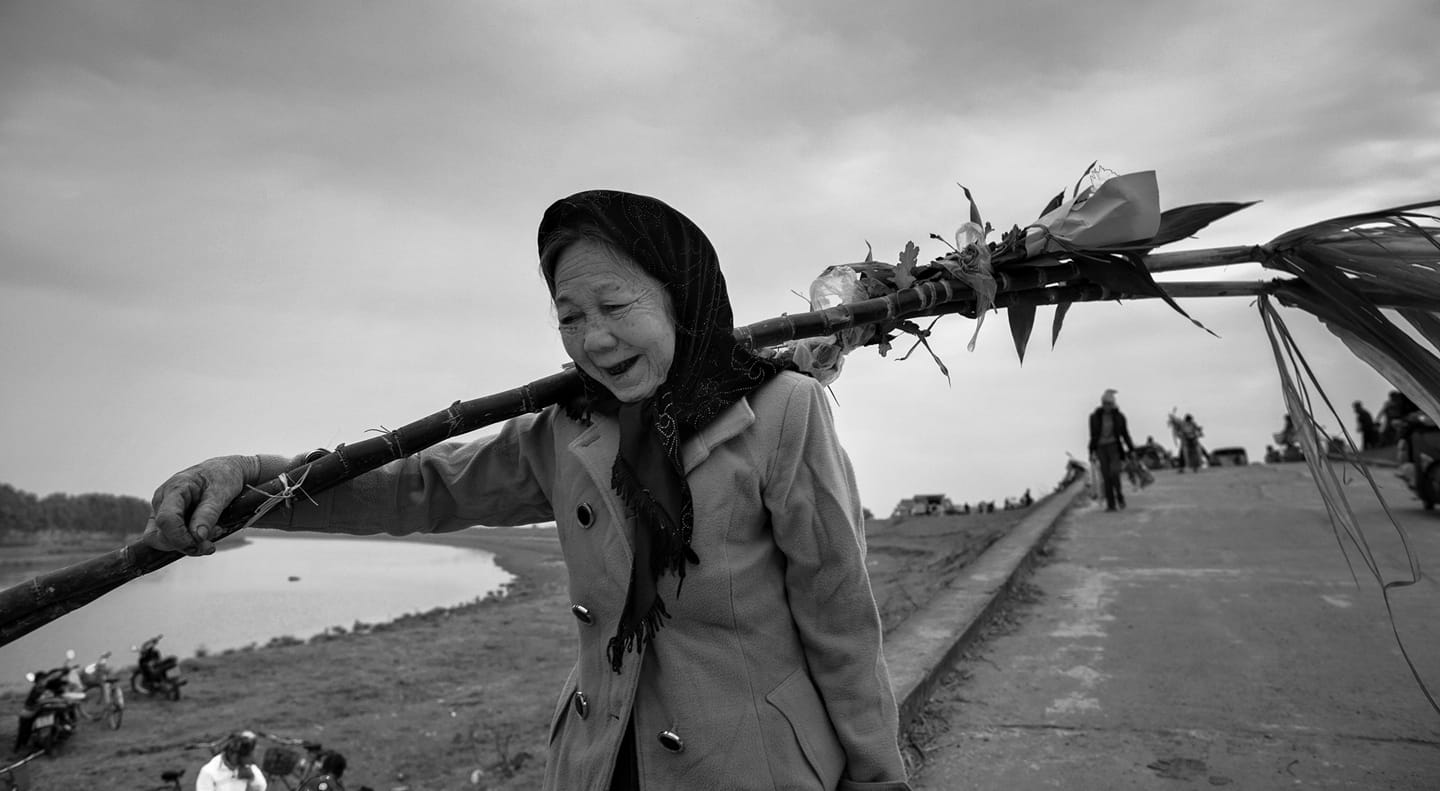
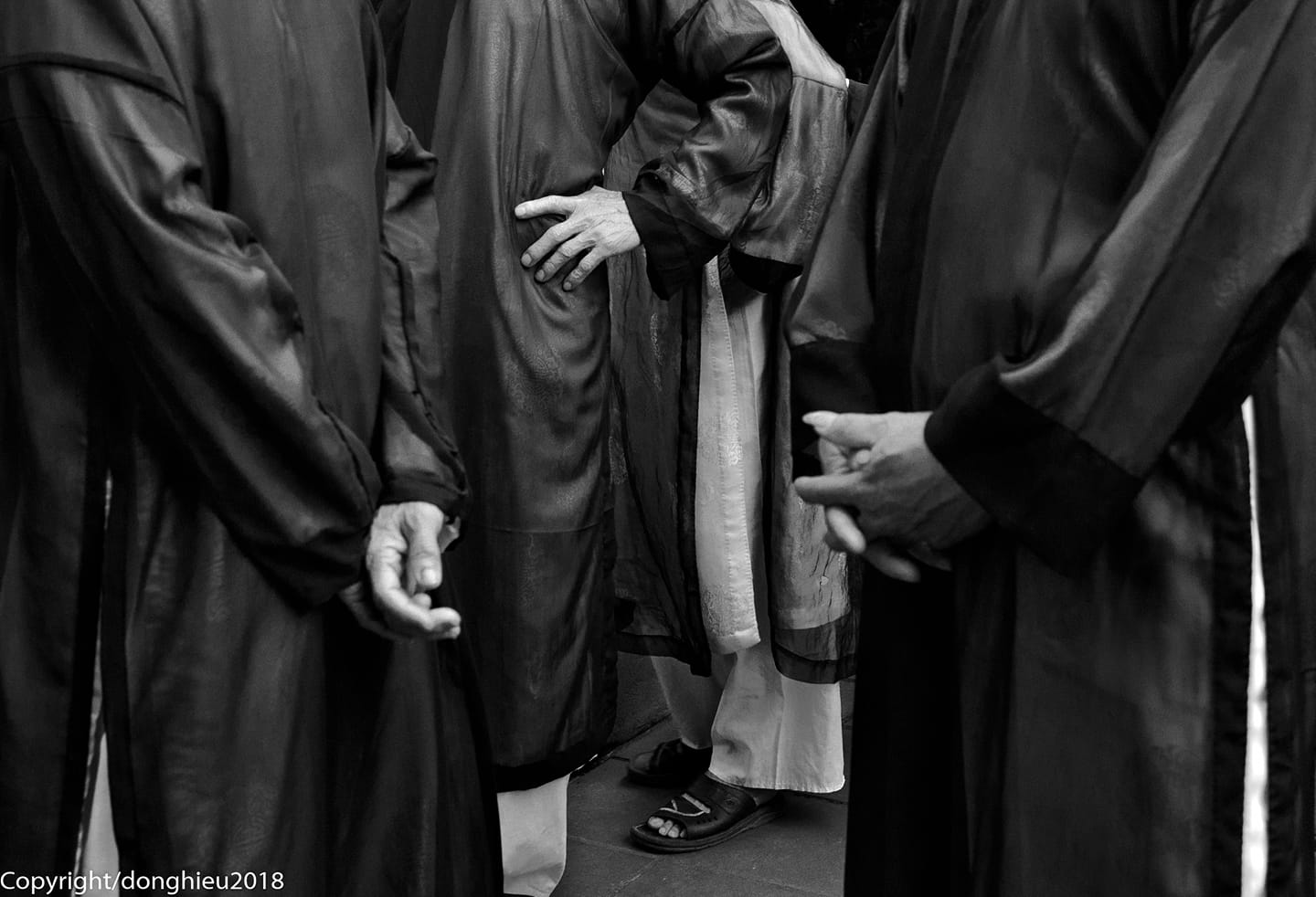
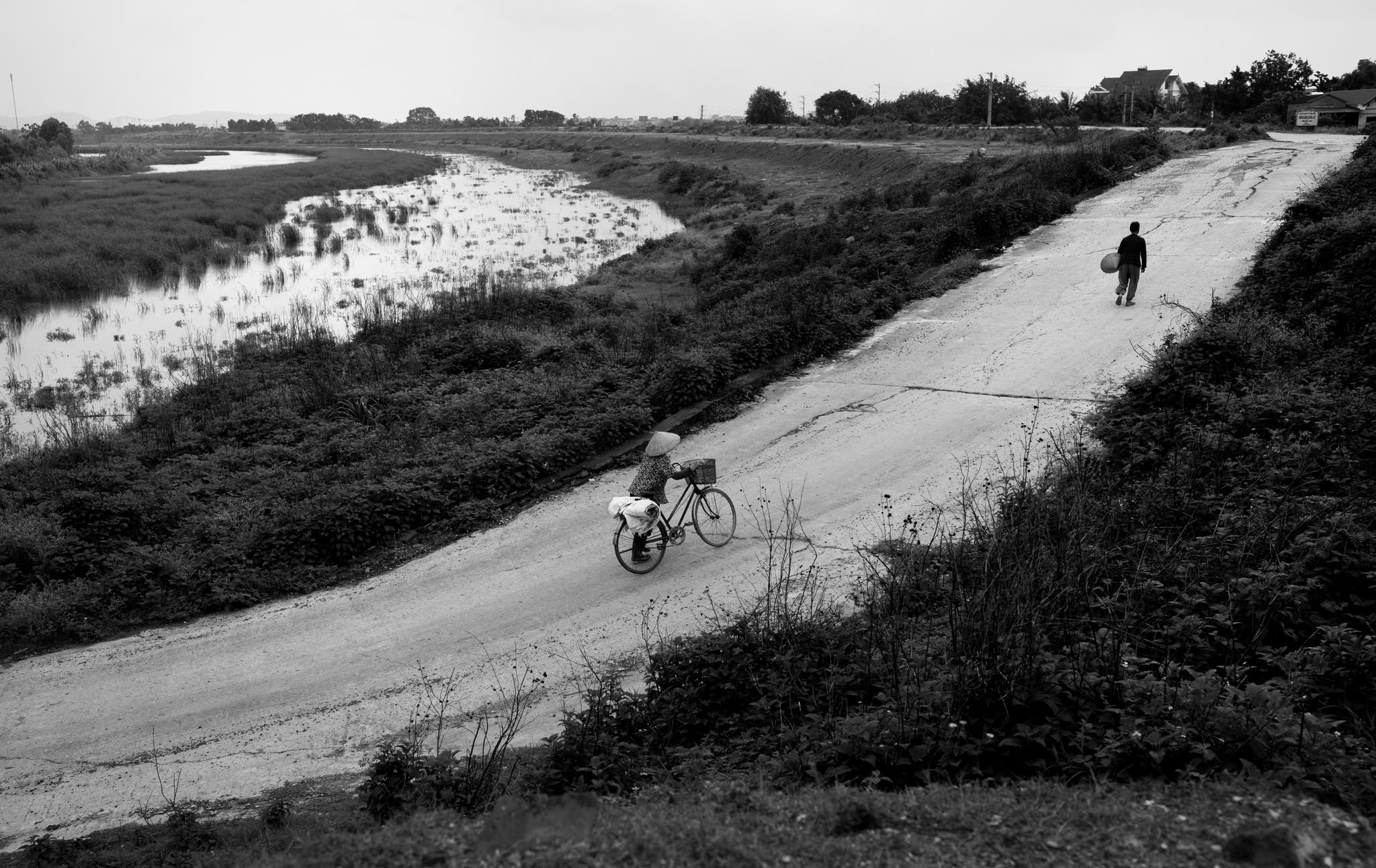
My maternal hometown is in Bắc Ninh, and when I look at your photos, I’m reminded of my grandmother, who also dyed her teeth jet-black like na seeds. Since she passed away, I’ve rarely returned to my hometown, so these images truly evoke many memories. What role do you think photography plays in preserving cultural values and documenting everyday life?
Đồng Hiếu: Photography, especially everyday photography, holds immense power in preserving both documentation and emotion. When I take a photograph, I’m not simply recording what I see, I’m creating a space for memory, where time pauses and moments linger. Rural markets, traditional customs, or people who have passed away all become part of a visual archive. Photography helps us hold on to cultural values that might otherwise fade, allowing future generations not only to see them but also to feel them.
Technology, especially AI, is transforming the way we take and process photographs. How do you view this development? Do you resist new technology?
Đồng Hiếu: I don’t reject technology; it’s an inevitable part of progress. About ten years ago, when I worked with phone manufacturers, features like HDR and AI post-processing were just beginning to appear. They have since made photography more accessible and versatile, especially in advertising and art. Of course, in fields like photojournalism, authenticity is crucial, you cannot manipulate or composite images beyond ethical limits.
I always remind my students that technology is only a tool. When photography was first invented, people feared it would replace painting, yet both art forms flourished. Later, when digital cameras emerged, many argued that film would vanish. Instead, digital photography grew to surpass film in both resolution and convenience. What matters most is that photography remains faithful to its essence: capturing light and emotion with sincerity. Technology may extend the medium, but it can never replace its soul.
How do you see the current photography scene in Vietnam, both commercially and artistically?
Đồng Hiếu: Vietnam’s photography scene is very diverse, spanning commercial, fashion, documentary, and everyday photography but it hasn’t yet developed into a fully dynamic ecosystem, particularly in the field of fine art photography. Twenty or twenty-five years ago, collecting and trading art photographs was more common. Today, only a few collectors and galleries are engaged in this field. Commercial photography continues to thrive, but artistic photography still lacks dedicated museums, curators, and professional exhibitions to support it. Vietnam doesn’t yet have a photography museum, and art photography has not been systematically preserved or promoted.
Personally, I’m not drawn to the glossy, attention-seeking style of photography that circulates on social media. It often feels superficial and fleeting. Everyday photography, even if it isn’t financially rewarding, carries deeper value because it reflects life honestly and poetically. My hope is that Vietnam’s art photography scene will continue to grow, becoming more diverse, more supported, and more connected to the world.
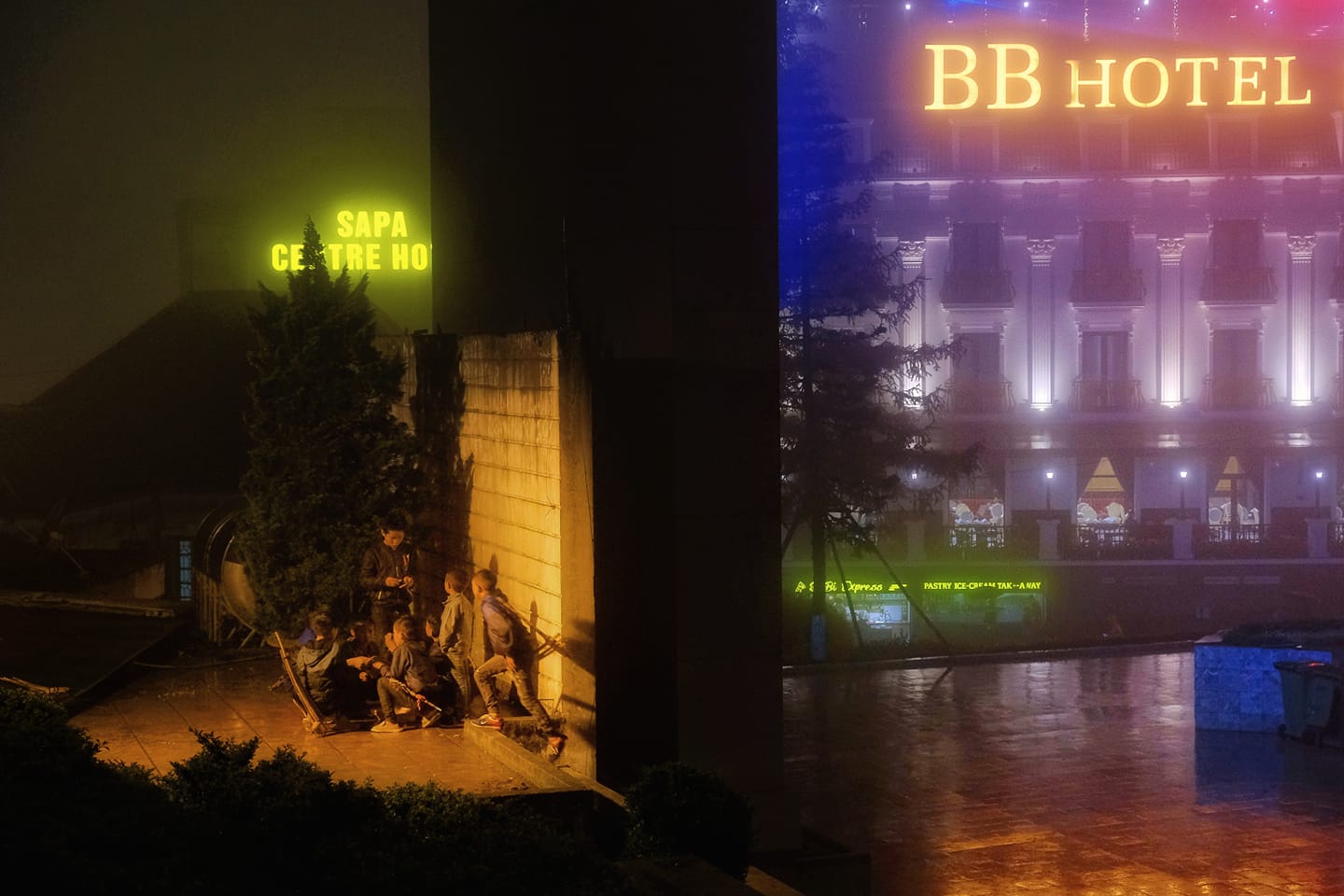
I really love some of the photos in your collection, like the one of children bathing in a stream, kids sharing money at a square, or scenes at the Nghĩa Tân collective housing area. Each photo tells its own story. Can you share more about the stories behind a few of these photos?
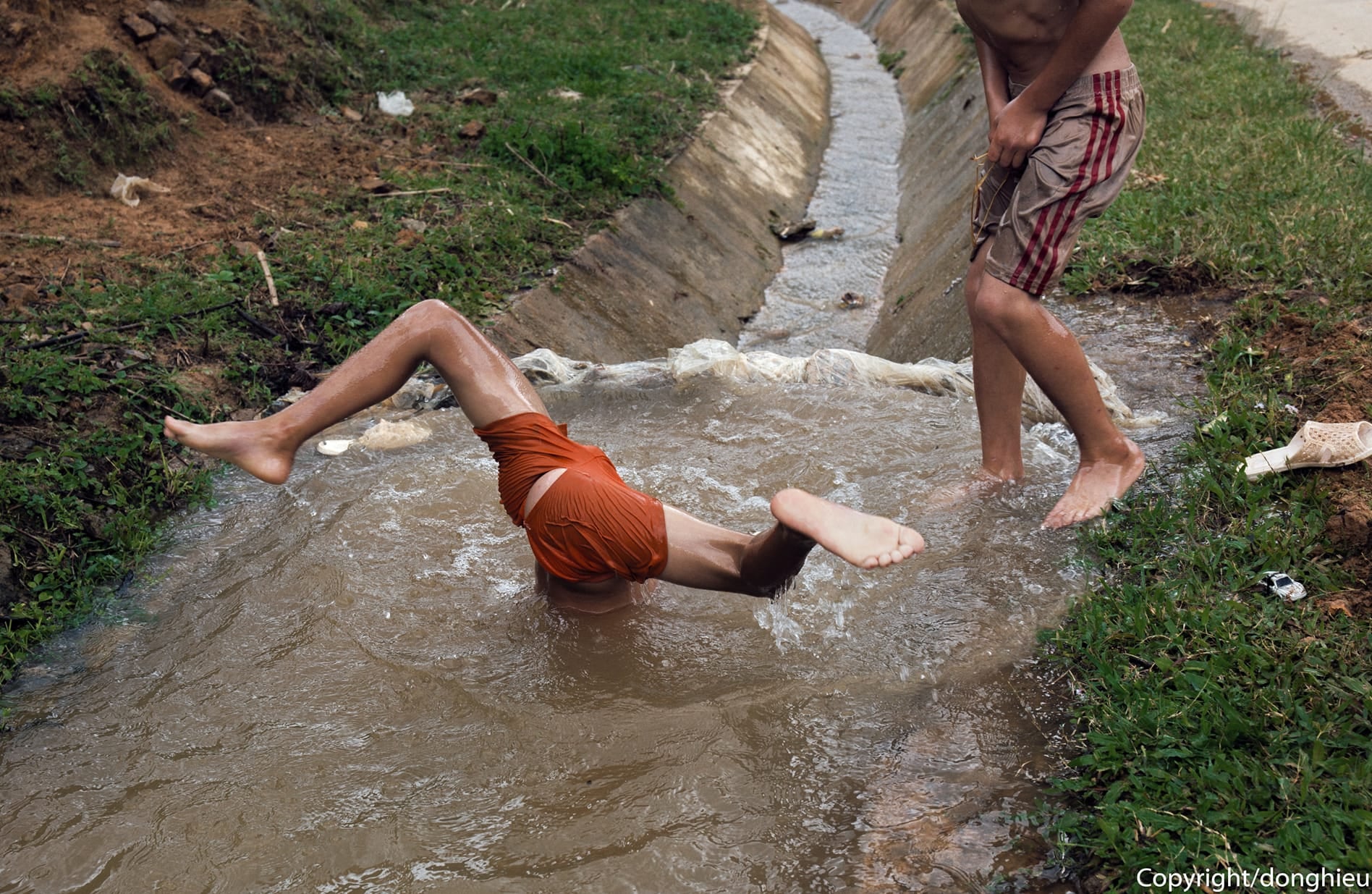
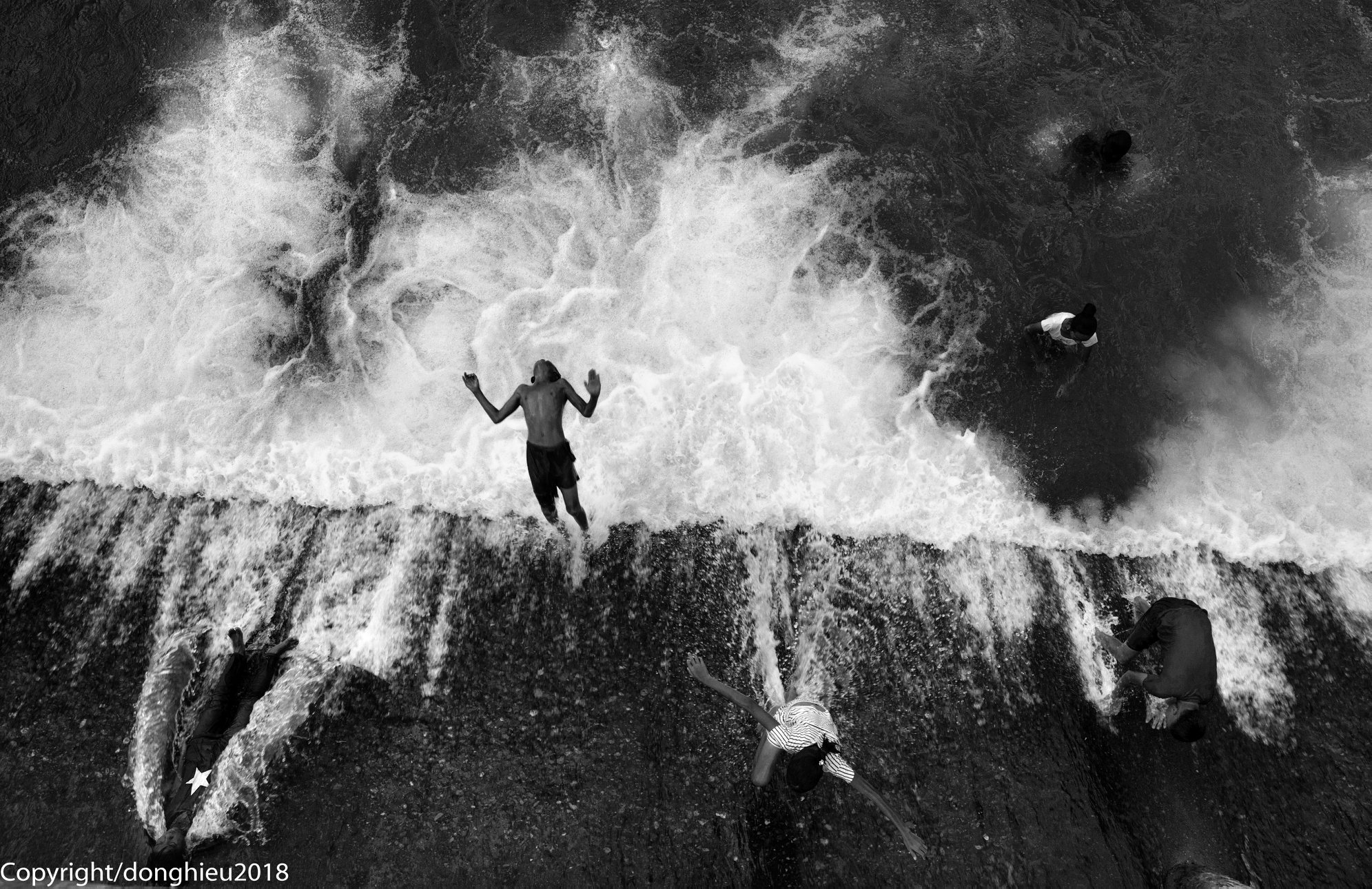
Đồng Hiếu: Every photograph carries a story. One image I hold dear shows a group of children bathing in a mountain stream. They were playfully blocking the flow of water, laughing and splashing each other, their tattered shorts clinging to them as they moved. There was something so vivid and unfiltered in that moment, joyful yet profoundly human. Another photo, taken in Sa Pa, captures a group of children sharing money in the town square. The scene was illuminated by the glow of nearby billboards, giving it an almost cinematic quality. It looks as though it might have been staged, but in truth, it was entirely spontaneous.
I’m drawn to moments of everyday life that carry a quiet drama-fragments that hold both joy and melancholy, where viewers can sense a story unfolding behind the frame. I often share these works on my fanpage, Đồng Hiếu Photo, as a way to stay connected with people who resonate with the same emotions.
Thank you for this conversation, and for sharing your stories and insights. I look forward to seeing more of your work and the worlds you continue to reveal through your lens.