
text Phạm Hà Thu
photo Wolfgang Volz
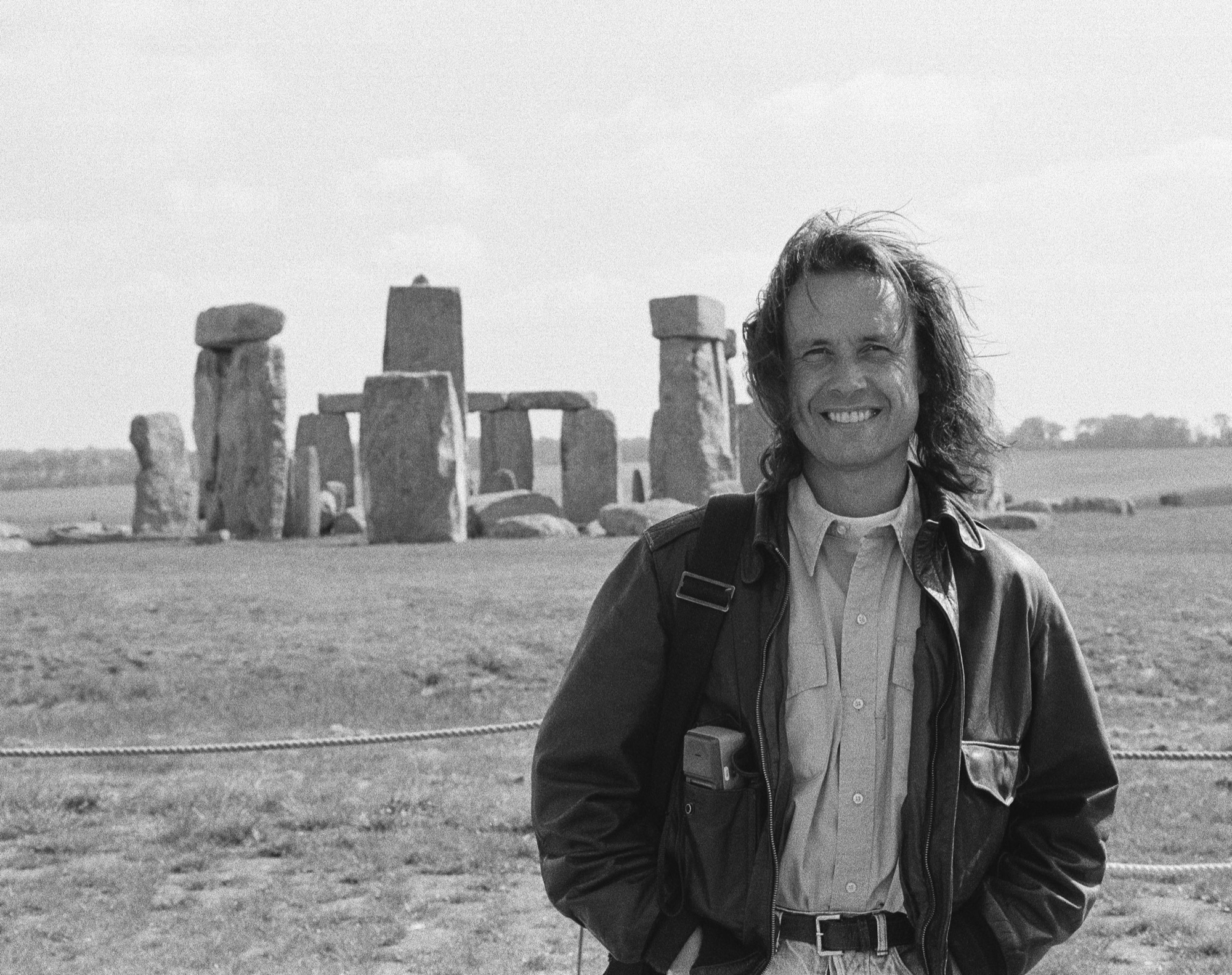
In a given afternoon, quite late, sitting in my office and awaiting for a photographer to join the interview kill my nerves. Wolfgang Volz appears with a charming and gracious look and his calm voice welcomes me to the interview. I can feel how close our conversation goes as if I was talking to one like my grandfather. Wolfgang has been relying on his pure enthusiasm to fuel his photography career. His work and photograph project honesty, truth, nature and the effort of humanity.
He is renowned as the exclusive photographer for Chirsto and Jeanne- Claude for 50 years, ever since 1972 until now. Art historian Werner Spiess called him as “The eyes of Christo and Jeanne Claude”. When the fire of being a photographer grew in him, he started the journey by learning about it and started his study in Folkwangschule (Germany). Amazed by the first time contemplating the art piece 5.600 Cubimetre Package of artists Christo and Jeanne-Claude at the exhibition and event center Documenta in Kassel (Germany) in 1968, later on in spring 1971, knowing that Christo was having an on-going exhibition at Haus Lange Museum (Krefeld, Germany), which was the closest location to him at the time, he travelled there to see Christo in person and discussed about their ideas of doing photography and making books together. They ended up exchanging contacts and about a year after, out of the blue, Christo reached out to him asking: “Do you want to work with us?”. Wolfgang accepted the invitation; since then, he has become the key person that takes part in many projects of the two artists Christo and Jeanne-Claude.
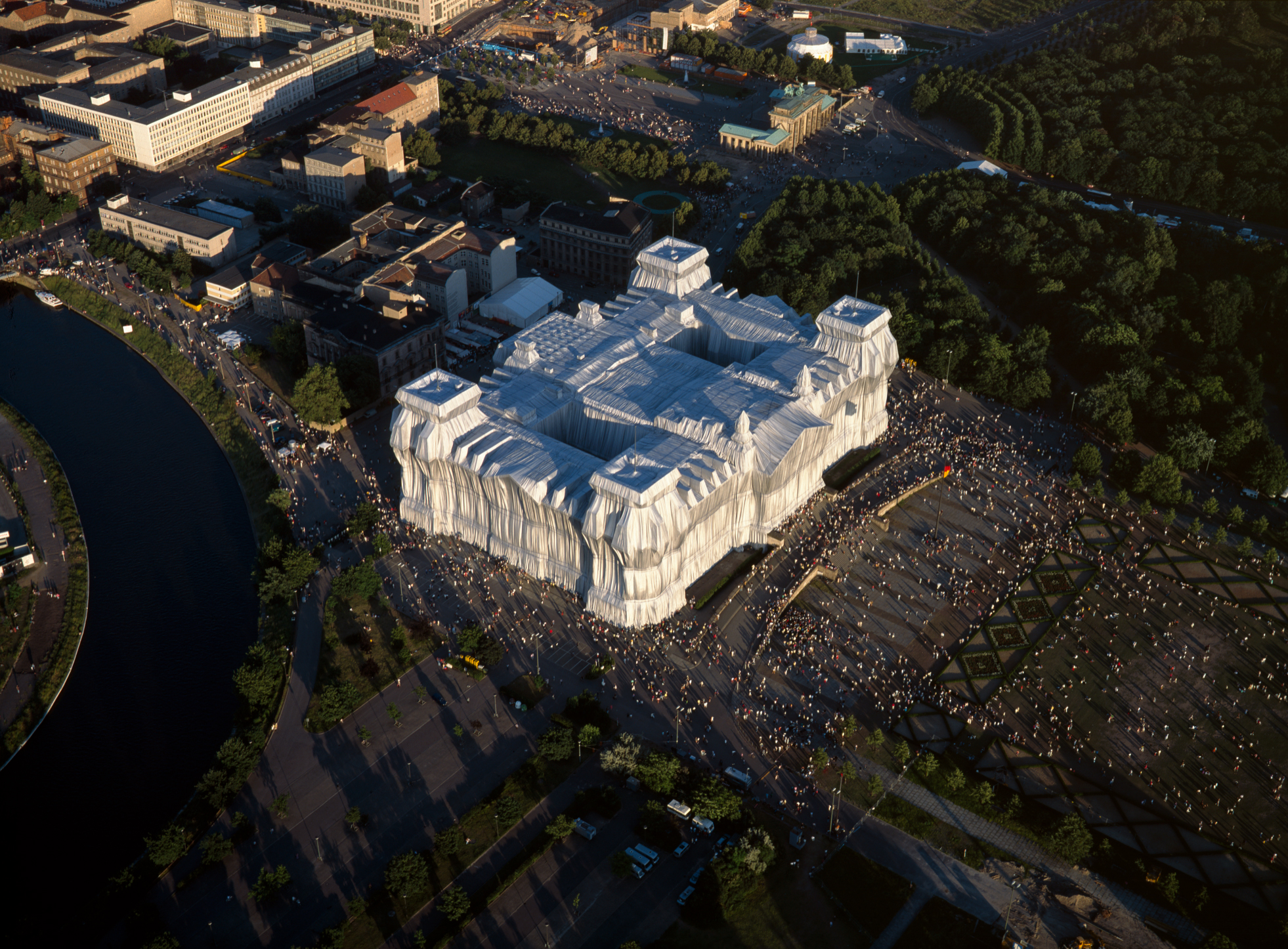
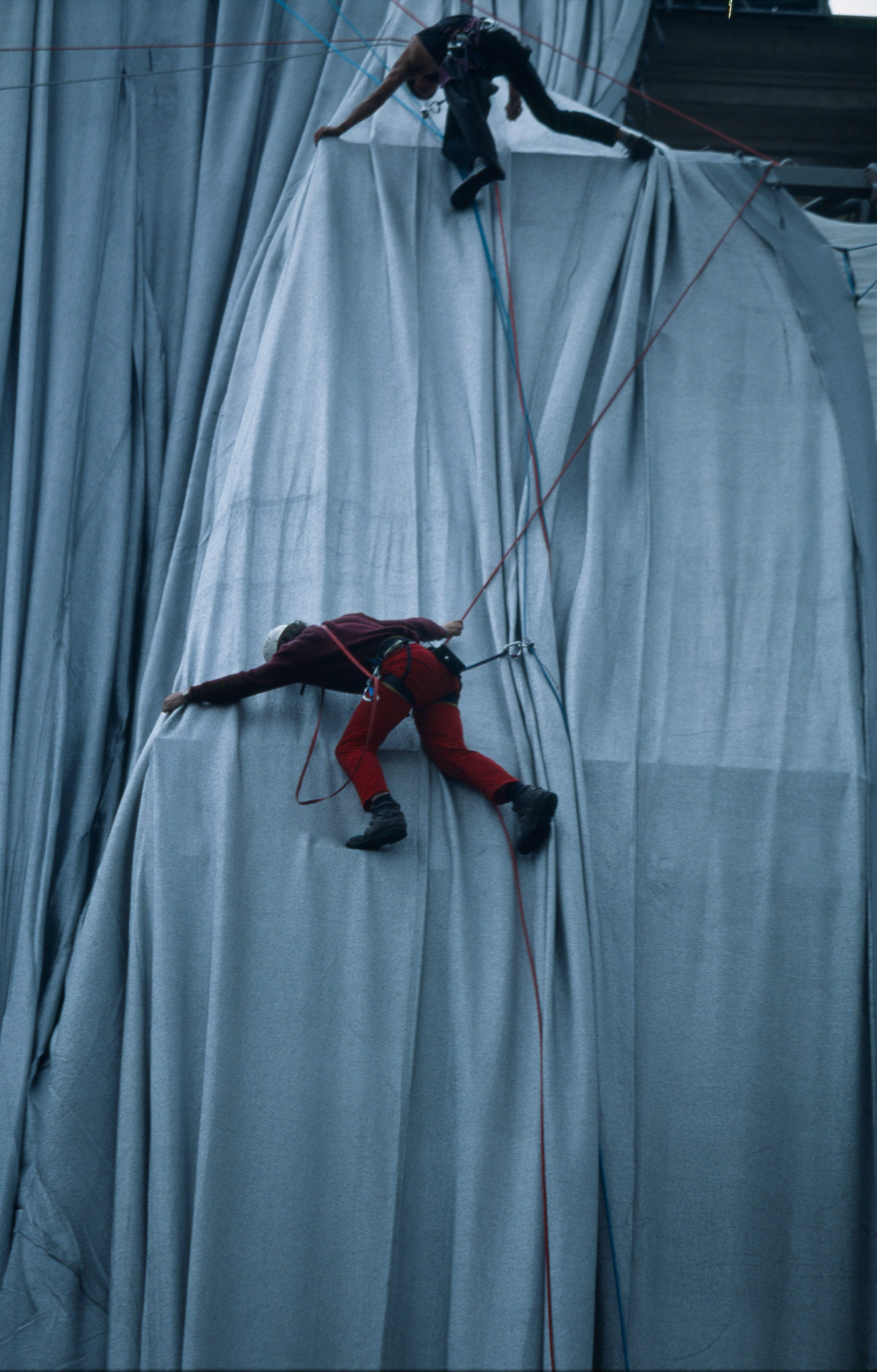
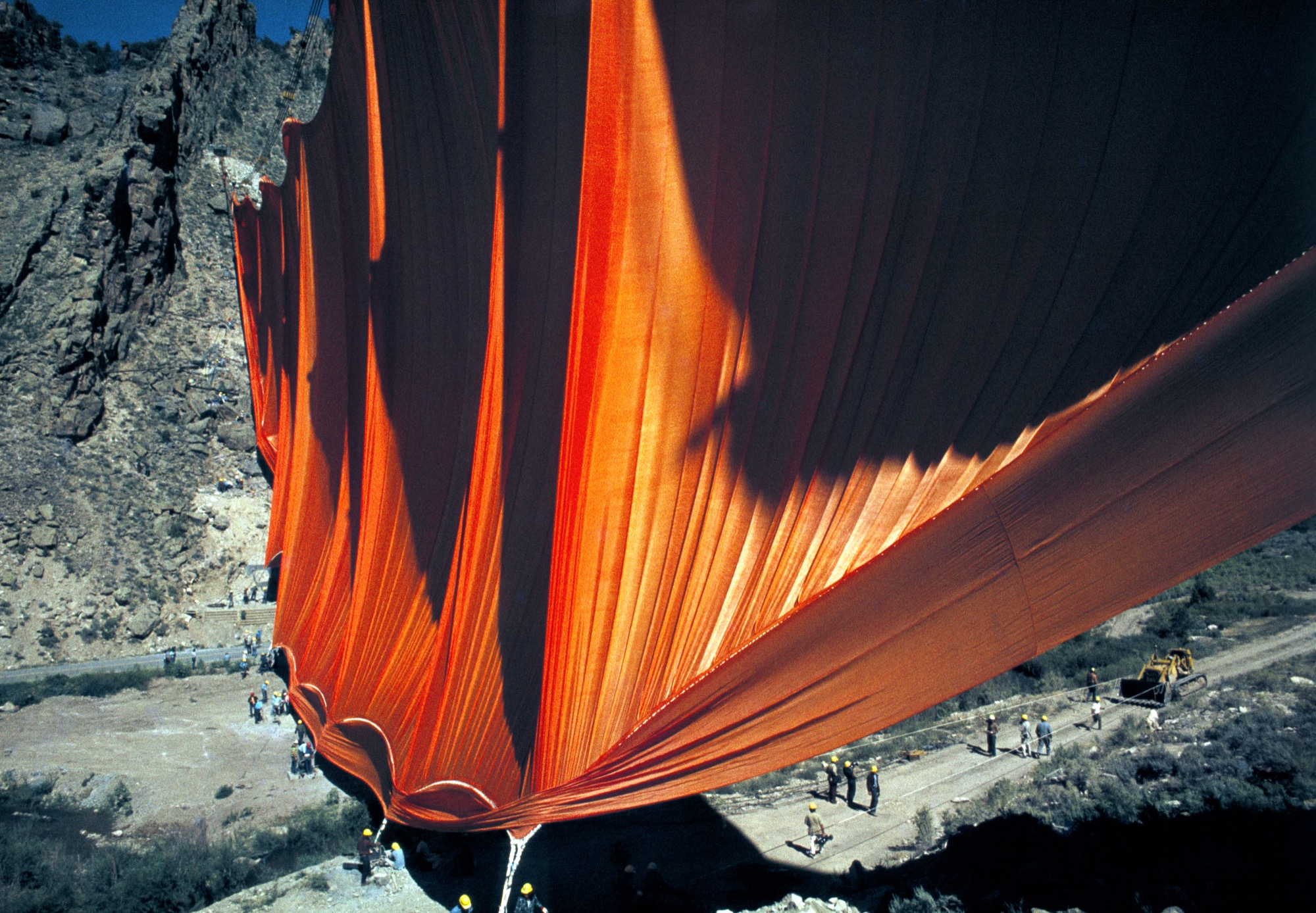
Wolfgang Volz always feels the responsibility for his profession to execute the work at his best. In 1972, his first project right after working with Christo and Jeanne-Claude was The Valley Curtain in Colorado (the US), this was an environmental artwork in which artists raised an orange curtain of fabric across a mountain span. It took 28 months to prepare and to complete the masterpiece. Nevertheless, it could only stand for 28 hours long before the wind tore down the fabric. This is, perhaps, the moment he realised that it is crucial and necessary to document the moment. The satisfaction and excitement of Christo at the very moment when the curtain was destroyed are the turning point which bolded the meaning of the thought about documentation in Wolfgang Volz. He is the only photographer who captured and the copyright owner of this masterpiece’s photos.
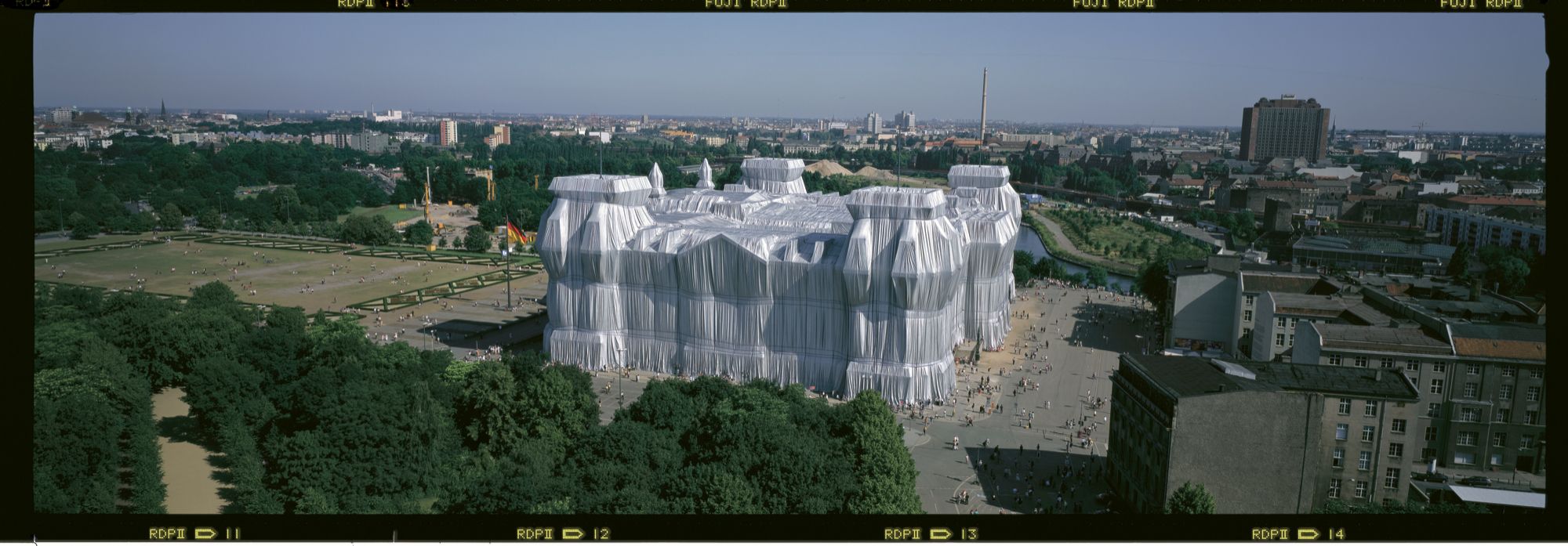
To Wolfgang Volz, photography is not only about documentation but also his artistic interpretation. His work covers vast arrays of life, nature, human and multiple colours of time. He shares: “I have always tried to be consistent to kind of see things as if it is the very first time that I encounter something, perhaps this is a curtain thing throughout many years of my career. It is something that difficult to practice because we are easily affected by our surroundings, we think and react to what we see. Medium present to us all sort of things like movie, advertisement or other type of visual experiences, these things change our perspectives. But when you take photograph of something, erase all that you know and see the thing with new eyes. This is something hard that I have committed to do to produce all the photos. Each one has its own voices and unique feelings.”
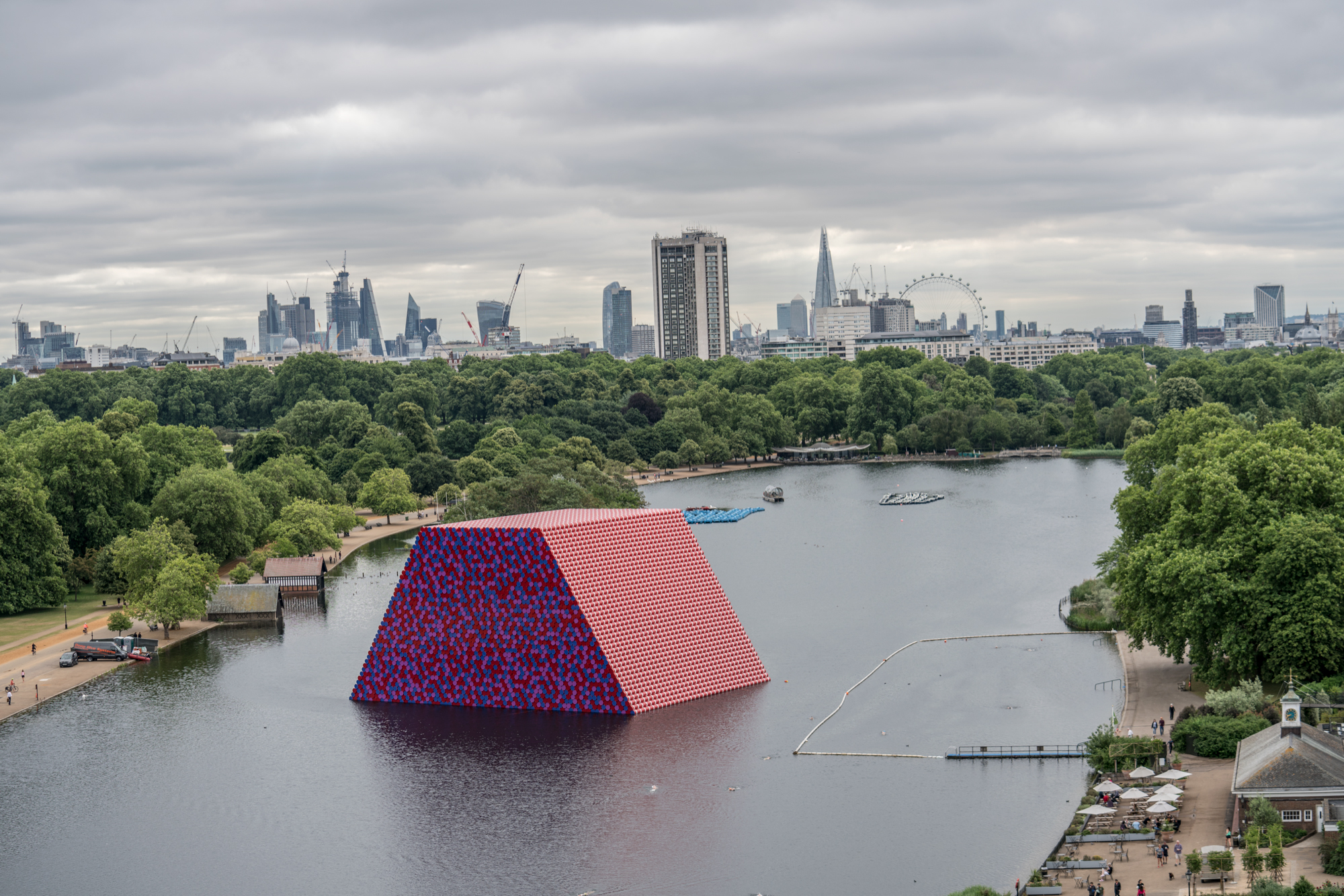
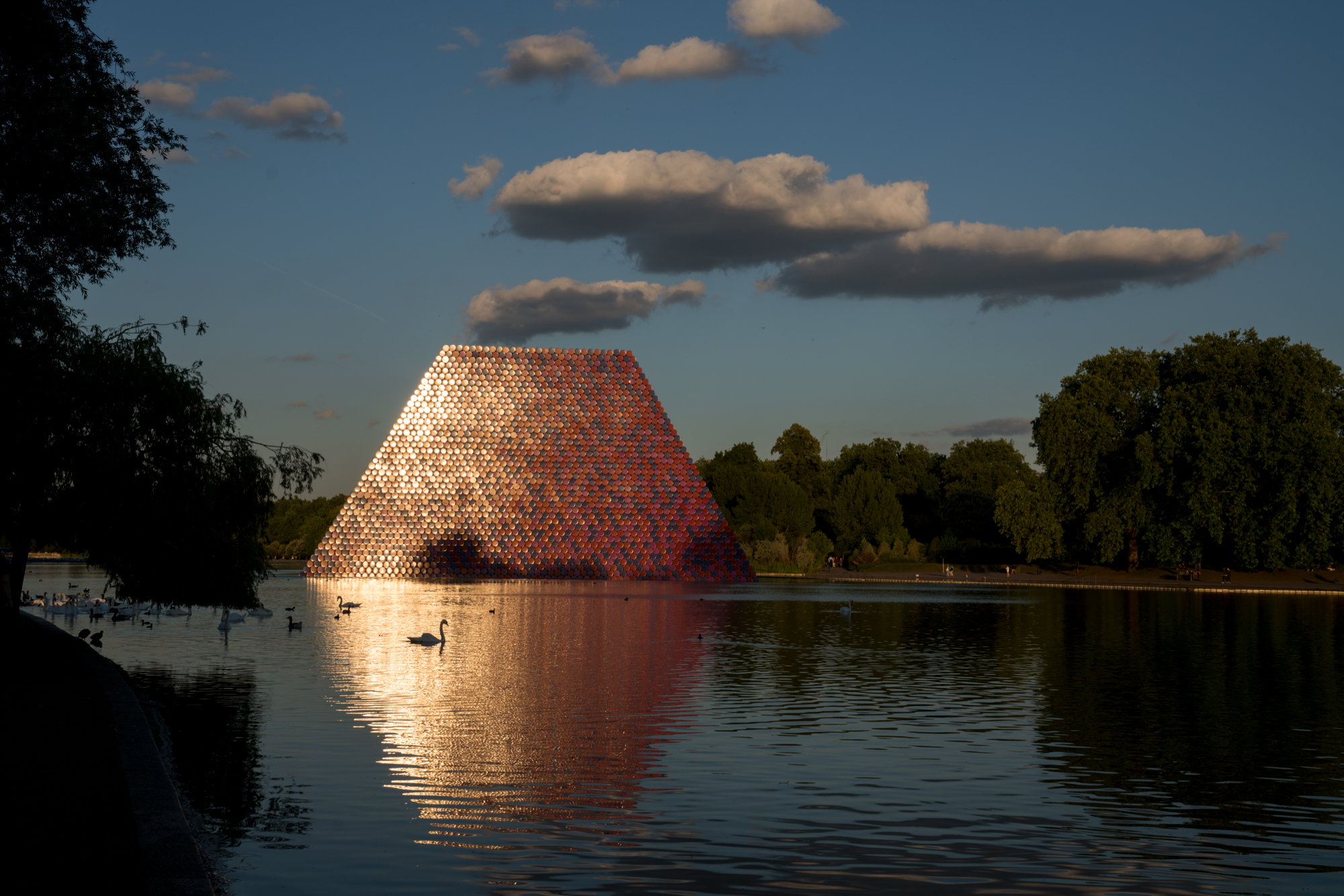
Known as one of the world’s premier landscape photographer, at the same time, Wolfgang Volz is very popular with his ways to portrait living scenes as well. He has been to many places around the world, from cities to provinces, from plains to deserts, from hectic crowds to remote regions. To photographers, to catch the feeling or to imprint the momentary material are what they all try to express by their works. Aside from coloured photography art, Wolfgang has transferred emotions into his Black and White photographs of places he visited, where there are humans or even it is just an absent and raw corner of the earth.
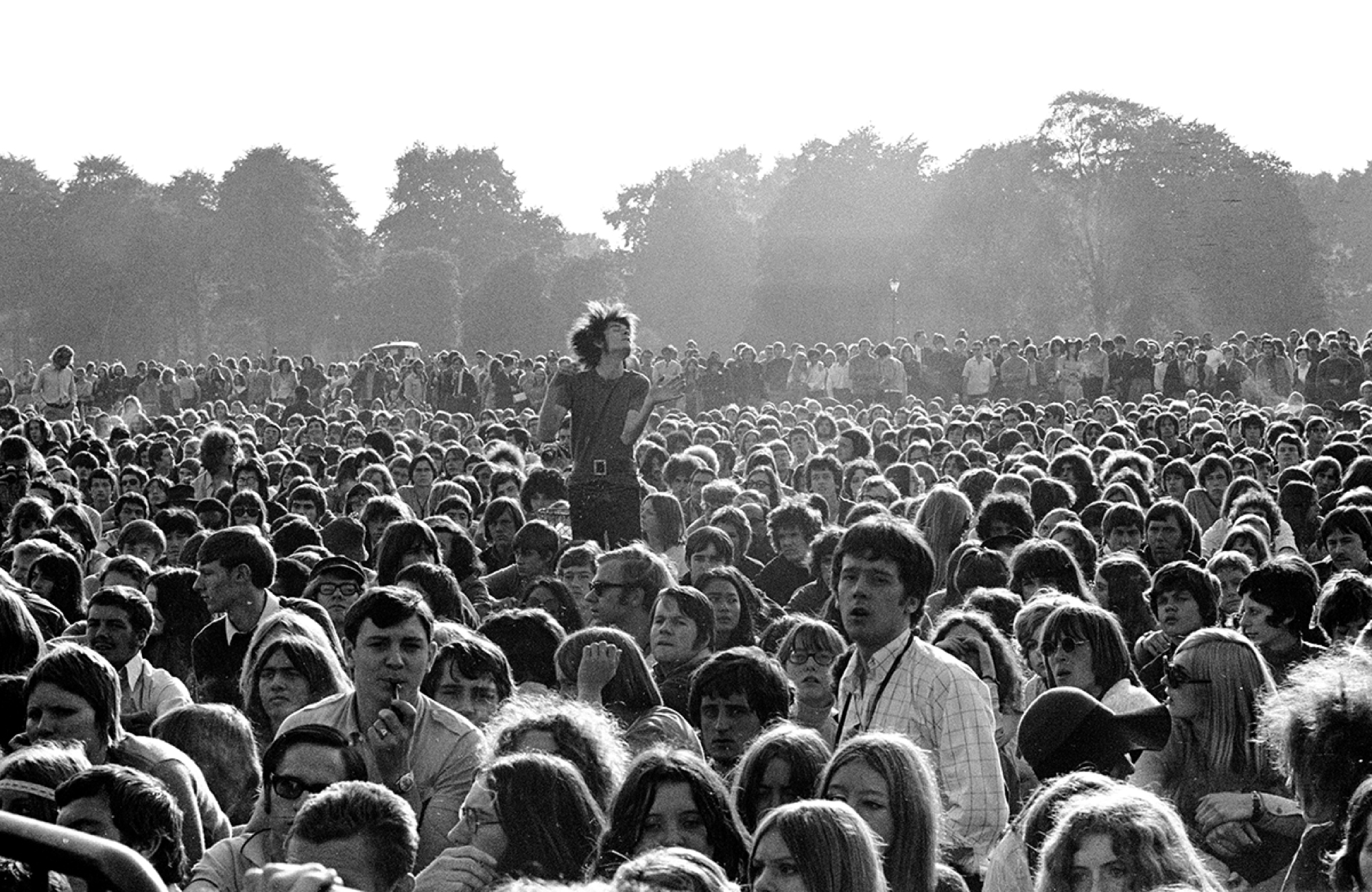
The photo of Niagara Water Fall (the US) in 1987 expresses the sublimity of mother nature. The swift currents which explains the resilience and winsomeness are solid, yet, softened up by water dust. I could even mention the one photo of Hyde Park (England) that projects distinctive emotional attitudes of people enjoying a public concert, the Black and White colours are truly able to speak out the excitement with curiosity of the crowd.
At the age of 75, Wolfgang Volz spends most of his time for his profession and on-going projects. He is now in Stockholm arranging his new studio, homes his massive archive of more than a million photographs. To him, photography is the work of documentary and more than that it is his art. “My job is always a photographer. But there are two types of photography. One is documenting all what happens so people later in books and exhibition can see what the work has been all through the years. And the second type of photography is my own artistic interpretation of the work, which, of course, was very subjective. But that was the idea to have a very balanced photography for the document and have a very well, almost opinionated photography through what I did in order to fulfill as much as possible so that afterwards, you and next generations can learn what the work is about.” He shows me the book “Christo and Jeanne-Claude L’Arc de Triomphe, WRAPPED”, the pictures are evidences that show how exceptionally meticulous he is in documenting images and his whole-hearted passion for this profession. To him, it is all about featuring truth and handing over legacies for next generations to inherit.
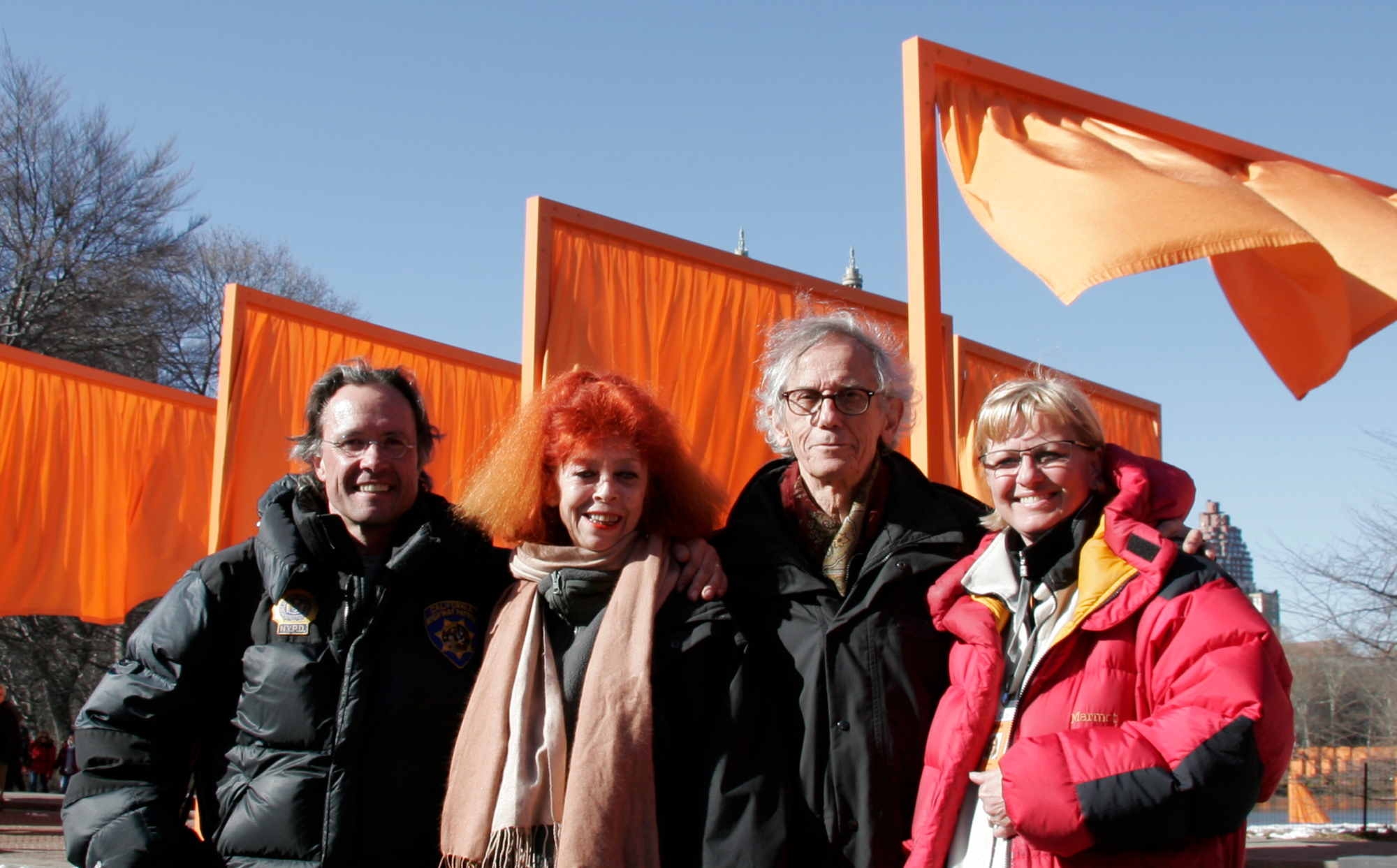
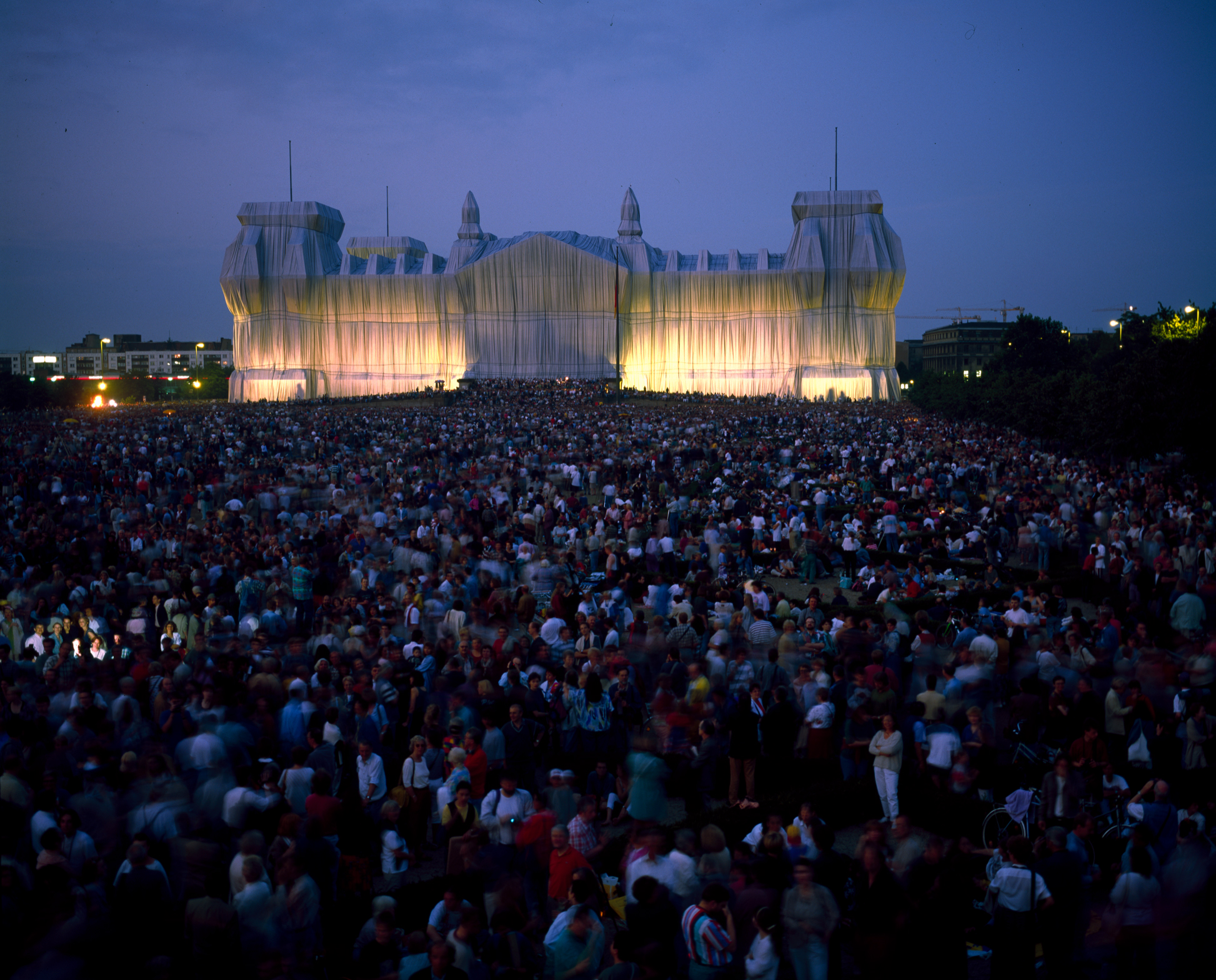
During his career, photography is one aspect, he also involves and dedicates greatly to the processes of creating ideas and installations in many projects of Christo and Jeanne-Claude as the position of Engineer of fabric, Project Director, Project Manager… “Christo and Jeanne-Claude see me as a colleague in their professional journey. I am their exclusive photographer, more than that, I have companied them for years and that puts me, of course, in the position that was very favourable. Sometimes they would follow my advice and sometimes they would not. For me, that was not a problem. It was not an obligation that was planned from the beginning. It was just a side effect. I think it is the relationship in between, you have your voice when you become important enough.” The chemistry of the three artists brings extraordinary results in their own projects working together as well as the quality of Wolfgang’s photography. “In Reichstag wrapped project in Germany, we had to convince the government to have the permission for the concealment, it took us several years. When we finally had the allowance, I was the Project Director for two years. Or when we were working on Surrounded Islands (Italy), the engineers said we had to put the pink panels to surround the islands on boats to transport them to where it should be, and it was impossible to transfer all of them like that. Eventually, I said that all you should do is throwing the fabric in the water because it is supposed to float, and you can just pull it. And that is it, I am pretty proud of this funny part!”
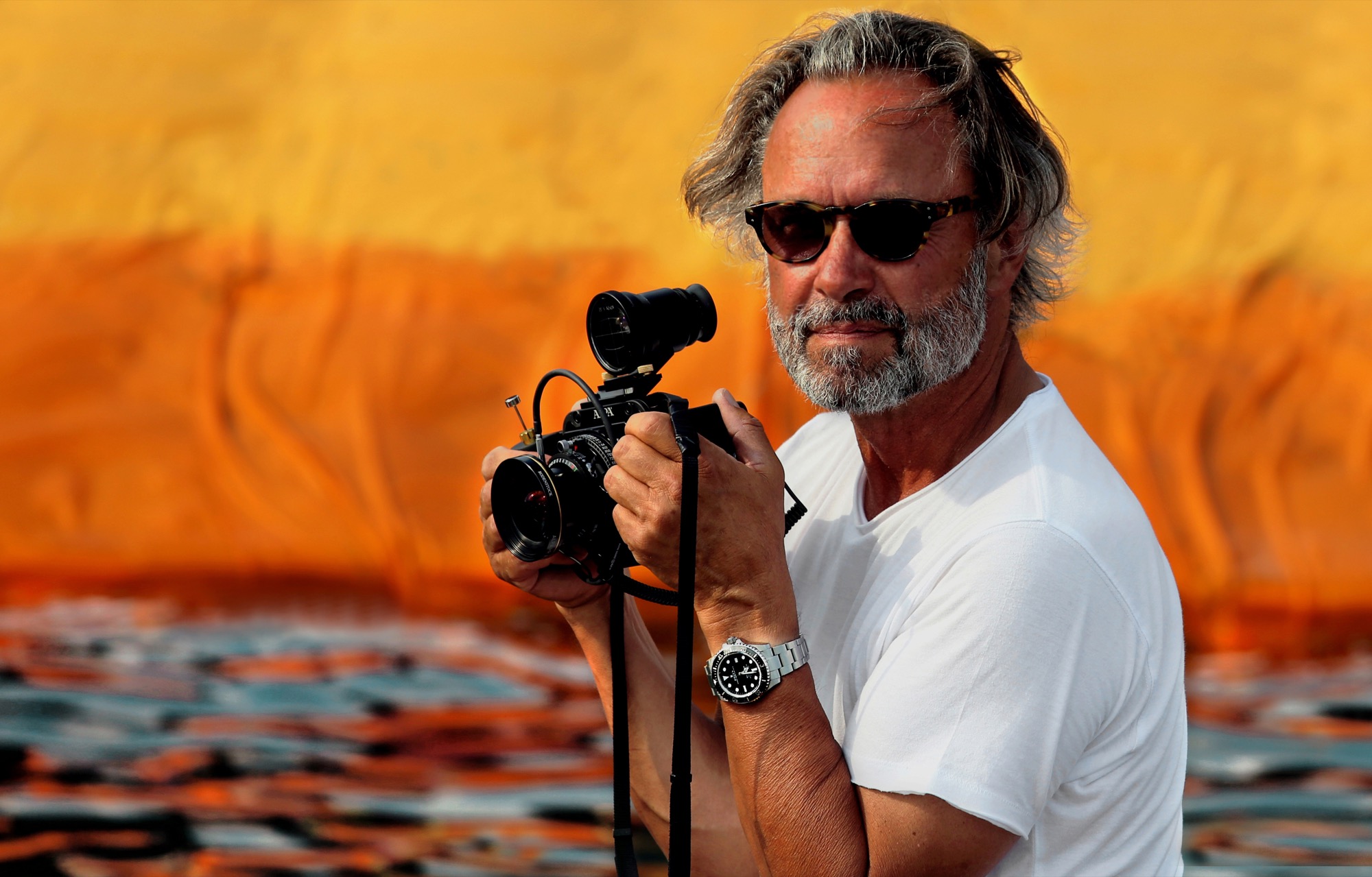
Wolfgang Volz masters alternately analog and digital camera to produce exactly the transparency of what he wants to introduce people through his art pieces. With high development of technology, using digital camera gives you more access to approach photography, it may take hundreds of photos just to pick out one excellent, which is already considered to be a success. Wolfgang Volz is always keen on “seeing things as if it is the very first time”, this is his material to accomplish what he is today. By interchanging between ‘the new’ and ‘the old’, he unveils multifold aspects, dimensions, stages of emotions in his photographs. The momentary angle is also introduced absolutely limpid. All of these reflects his equilibrium, brilliance and creativity.