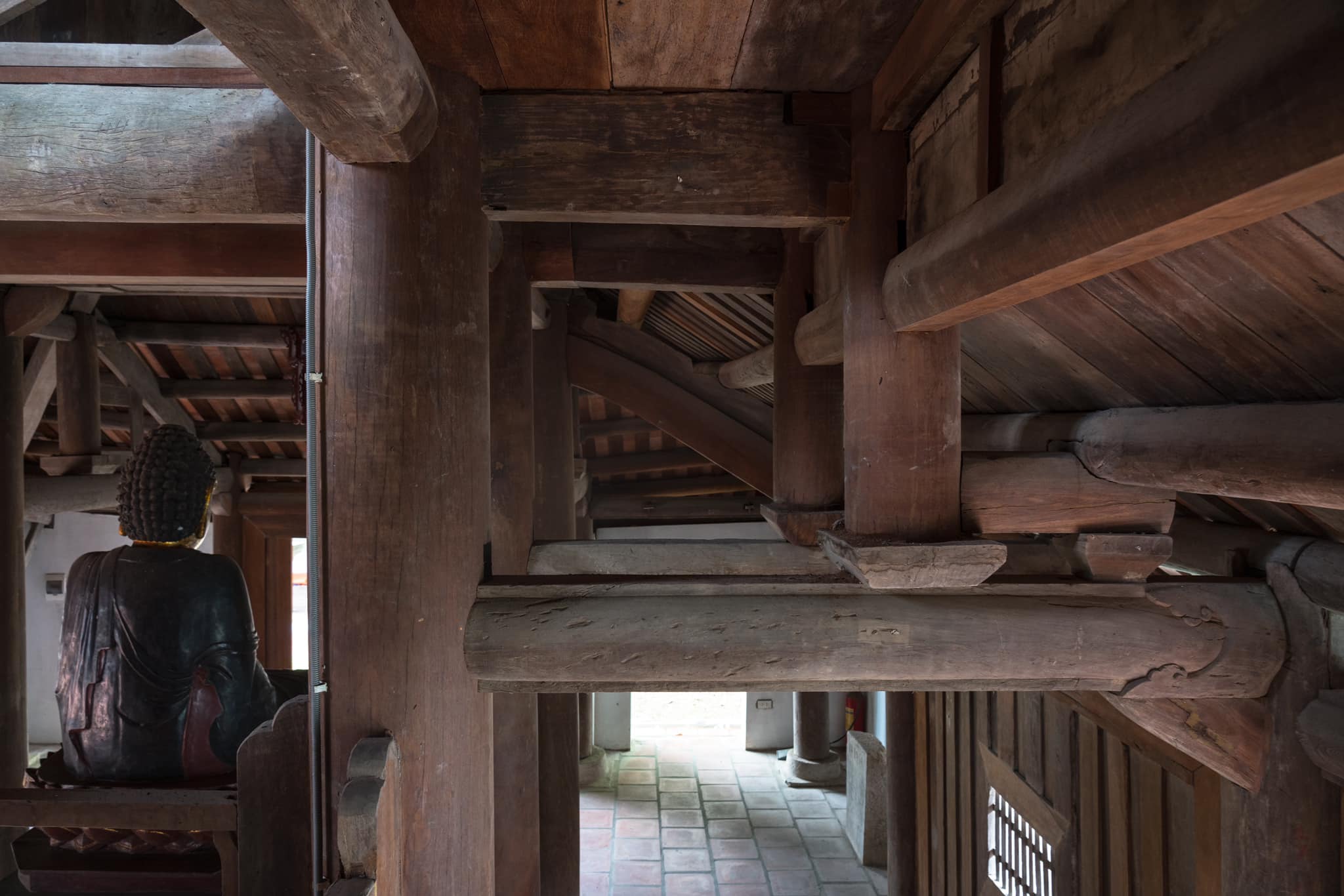
Text
Researcher in fine arts An Hoà
Edit
Anh Nguyên
Throughout history, both domestic and foreign researchers have often put forth misguided judgments about the origins of Vietnamese fine arts. Too frequently, they have denied its independent existence, its deep-rooted tradition, and by extension, its national character. Instead, Vietnamese fine arts have been dismissed as a mere patchwork of foreign styles, a colonial hybrid without its own identity. Such views were epitomized by Louis Finot, who divided the historical trajectory of Indochinese art into categories such as Prehistoric, Chinese, Indian, Siamese, and French. His taxonomy alone reveals the extent to which the history of Vietnamese fine arts has been misrepresented and distorted.
Of course, no one can claim that Vietnamese fine arts evolved in complete isolation. Influences from China, Champa, and other neighboring cultures are clearly evident, and we do not deny them. What we resist is the tendency to magnify these influences to the point of erasing our own contributions. Cultural exchange is a natural and inevitable phenomenon in every nation’s artistic development, especially between societies bound by geography, diplomacy, or trade. For Vietnam, positioned at a crossroads of civilizations, such exchanges were perhaps even more extensive than elsewhere.
But foreign elements alone cannot define our artistic tradition. The essential task is to examine the depth and scope of these influences: where they came from, when they occurred, and how they were integrated. More importantly, we must illuminate the distinctive essence of Vietnamese fine arts, an essence that, despite centuries of outside contact, has continually reasserted its independence and originality.

Recognizing the national character of Vietnamese fine arts has never been simple. For centuries, it has often been conflated with Chinese art, at times dismissed outright as nothing more than “a clumsy imitation.” Such judgments typically arise from surface-level observations: both cultures feature temples with elegantly curved rooflines, statues of the Buddha with similar names and appearances, or carved motifs that share themes and expressions. The confusion is further compounded by the fact that in both countries, religious architecture is abundant and has always held a central place in the development of ancient fine arts.
Asia, as one of humanity’s earliest cradles of civilization, fostered both Vietnam and China as nations with long-standing cultural traditions. Naturally, the two peoples developed affinities in their material and spiritual lives. Centuries of close diplomatic and cultural exchange only reinforced these connections. To insist that a national fine art must be entirely distinct, defined by absolute uniqueness without any shared features, is a false ideal. In reality, no artistic tradition emerges in isolation. Every national art shares points of resonance with other cultures, whether through ancient common roots or through later exchanges across borders.
However, such affinities never permit the complete identification of two artistic traditions. On closer examination, important distinctions emerge. While both Vietnam and China favor temples with curved roof eaves, Vietnamese architecture typically unfolds in horizontal layouts, whereas Chinese architecture tends to emphasize verticality. Both traditions also portray the Buddha, yet their sculptural expressions differ in meaningful ways.
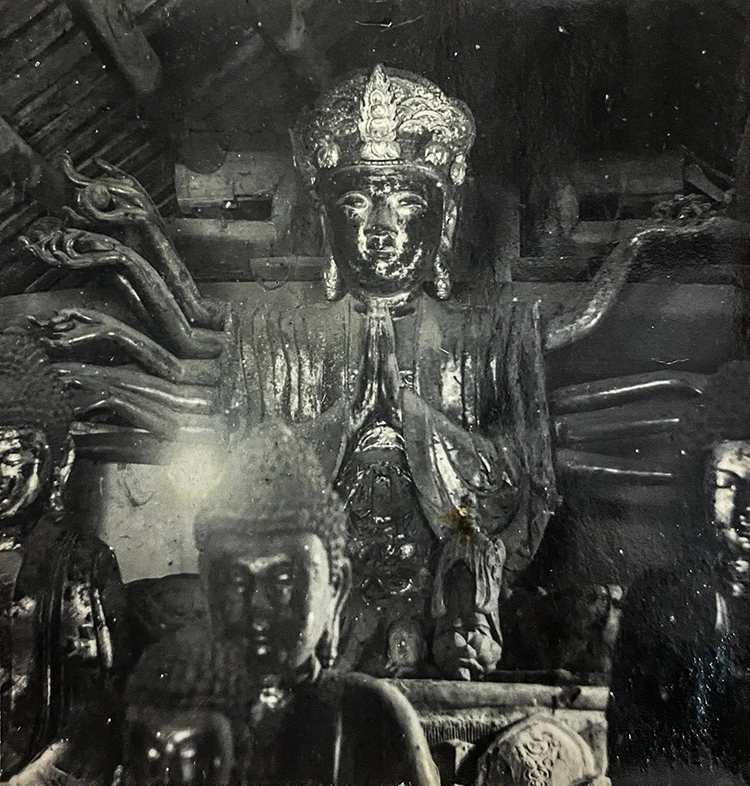
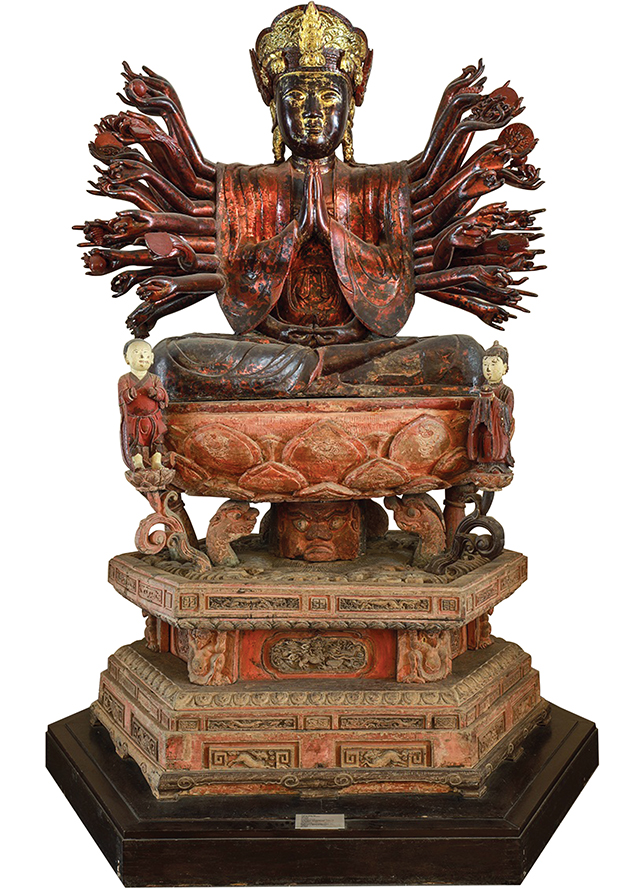
A striking example is the statue of Avalokitesvara with a thousand eyes and a thousand arms. The image derives from the same conceptual foundation: “Avalokitesvara’s head splits into ten pieces in anguish over humanity’s entrapment in sin, and Amitabha Buddha (Avalokitesvara’s spiritual father) transforms those ten pieces into ten heads, adding his own” (1), or from the belief that “the Buddha multiplies heads and arms to better save sentient beings.” Yet the statue at But Thap Pagoda in Bac Ninh, Vietnam, diverges markedly from its counterpart at Chongshan Temple in Shanxi, China (2). The But Thap figure reveals softer modeling, more fluid lines, and a compact composition, qualities that have led it to be recognized as “one of the masterpieces of Vietnamese sculpture” (3).
The dragon offers another telling comparison. This mythical creature, long a symbol of cosmic vitality and deeply familiar to agrarian societies, assumes distinct forms in each tradition. In Vietnamese fine arts of the Ly Dynasty, the dragon is sleek, ornate, and highly decorative. In contrast, in contemporary Chinese fine arts it appears more literal, resembling a four-legged reptile rendered in physical realism (4).
(1) L. Bezacier: L’Art vietnamien, Éditions de l’Union française, Paris 1954, p.165.
(2) See photographs in “Chinese Buddhist Painting Collection,” People’s Publishing House, Beijing 1966.
(3) L. Bezacier, op. cit., p.218.
(4) See images of dragons from China’s Han, Tang, and Song periods displayed in the Fine Arts Museum.
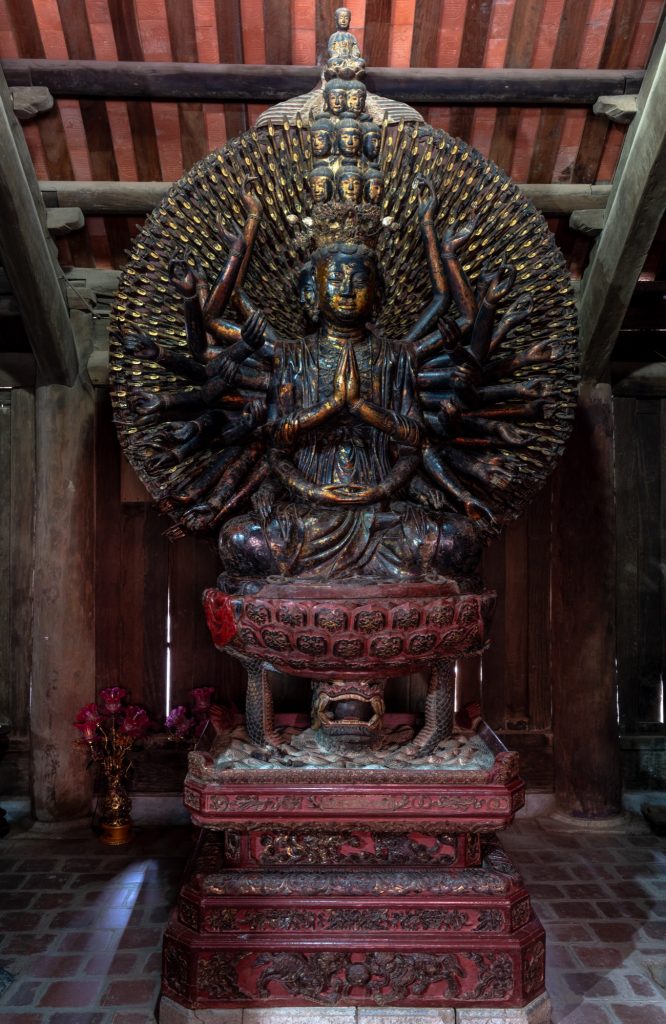
Photo: Trieu Chien
Beyond the confusion with Chinese traditions, another misconception often raised is the so-called Cham origin of Vietnamese fine arts. This belief stems from historical encounters between the Vietnamese and Cham peoples, leading some to claim that particular Vietnamese works were produced by Cham artisans. It is true, as noted earlier, that Cham elements are present in Vietnamese art, yet these remain the natural outcome of cultural exchange rather than defining traits. Their presence is complex and cannot be reduced to episodes of Vietnamese-Cham conflicts during the Ly and Tran dynasties. In any case, there is little justification for exaggerating these influences to the point of obsession.
Another factor complicating the recognition of Vietnam’s artistic identity lies in its history of serving primarily the ruling class rather than the laboring people. For centuries, fine arts in Vietnam were monopolized by the elite. The very notion of an orthodox art forced artisans to adhere to prescribed templates that satisfied the aesthetic preferences and political ambitions of feudal authority. Vietnamese feudalism often mirrored foreign feudal models, particularly Chinese, and at times degenerated into reactionary practices by importing foreign styles in eclectic and ostentatious forms.
All of this has created a veil obscuring the true essence of our national fine arts, sometimes even generating confusion. Under such conditions, to search for national character through form alone risks doubt and disappointment. What is required is a deeper understanding of the complex historical environment in which Vietnamese fine arts emerged. We must peel back these layers to uncover its authentic core. Just as importantly, we must recognize the class dimensions within the idea of national character, learning to distinguish between cultural tendencies, and firmly rejecting those that served ruling interests rather than the people from what truly constitutes national fine arts.
So, where does the national character in Vietnamese fine arts manifest?
Artisans, when creating, do not consciously set out to embed national character in their works. Yet the objects into which they pour their talent, labor, and emotion inevitably carry national hues, for they embody the multifaceted existence of a people. As Belinsky observed: “Clearly, the national spirit in an artwork is not an achievement but an inevitable attribute of creation” (1).
National character, therefore, is not simply a matter of form, technique, or style. At its core, it reflects the lived reality, the spirit, and the emotions of a people, woven deeply into the work itself. Belinsky further noted: “The life of any nation manifests in forms unique to itself alone; thus, if the depiction of life is truthful, it is also national” (2).
(1) and (2) Russian Writers on Literary Labor, Vol. I, Leningrad, 1954. Quoted in Literary Theory, Vol. II, Education Publishing House, 1966, p. 11.
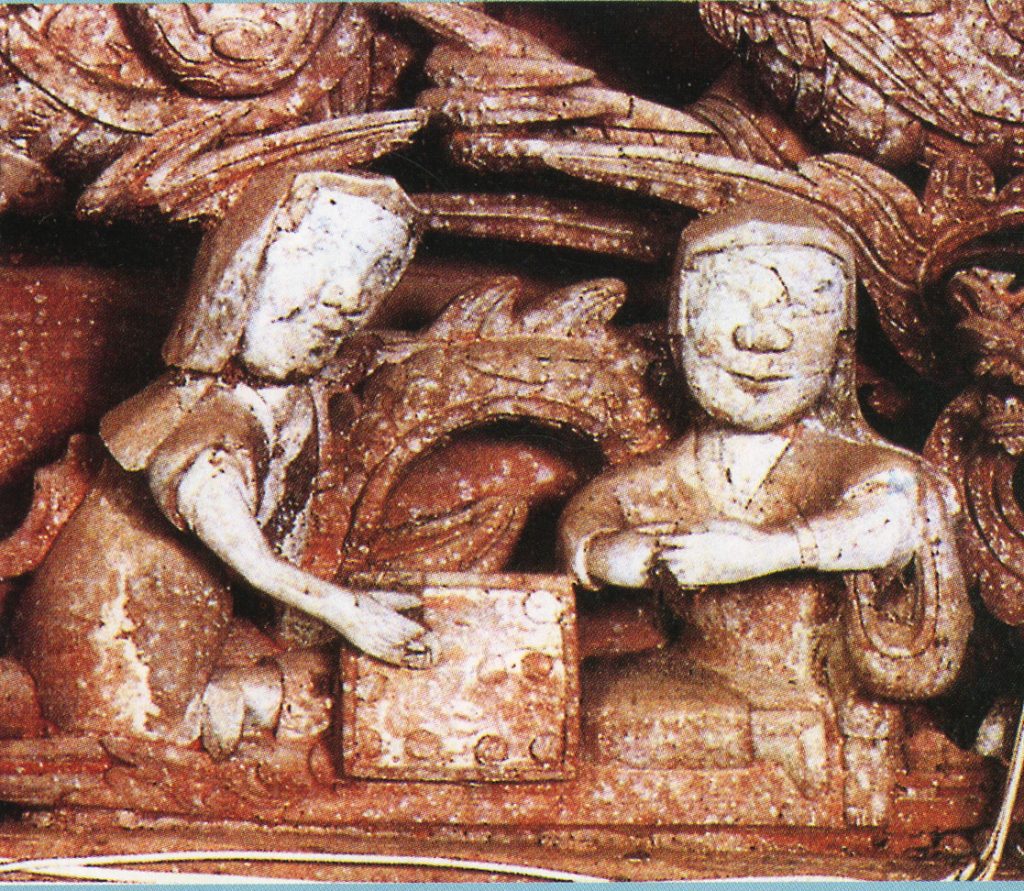
If national character is revealed through realism, it finds its deepest expression in the richness of folk traditions. National character is the inevitable outcome of folk character. A fine art rooted in folk vitality cannot fail to achieve national depth. Yet the two should not be conflated, for the relationship is not reciprocal: one cannot simply claim that national character automatically produces folk character. Both, in fact, can only flourish in times and places where the people themselves enjoy a measure of freedom.
In Vietnamese history, the latter half of the seventeenth century offered precisely such conditions. The feudal elite, weakened after nearly a century of war, had yet to regain its dominance. In this climate, the people’s persistent struggle for the right to live and create secured meaningful victories. The result was a glorious chapter in the history of Vietnamese fine arts. Never before had folk character flourished with such vigor and boldness, and never before had national character reached such depth.
At the heart of this flourishing was the truthful depiction of everyday life. Through their works, artisans gave form to the central concerns of the people: their struggles, their desires, and above all, their aspirations for freedom and happiness.
Working with real materials drawn from daily life, artisans gave unique expression to the rhythms of the people. They recreated folk activities in a natural order: productive labor, communal festivals and gatherings, romantic love. This language of expression emerged from simple and honest thought, and from the artisans’ deep bond with the people. Only folk art could imagine such scenes, which is why they remain quintessentially Vietnamese.
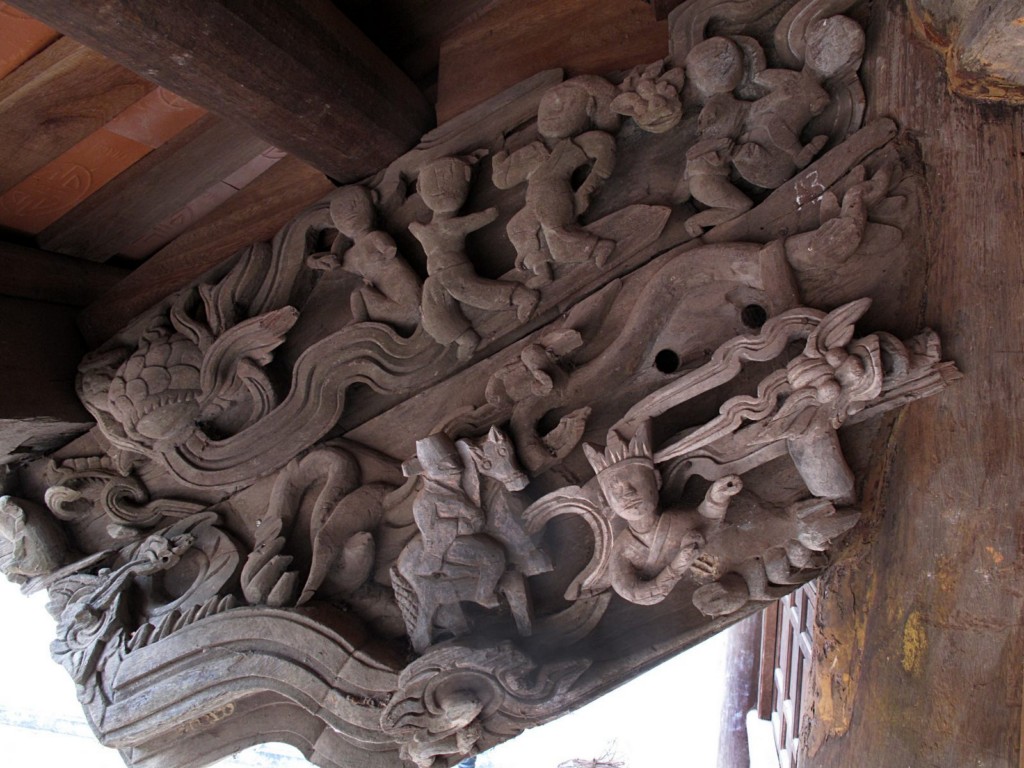
Consider the carving of four men gathered around a chessboard at Ngoc Canh Communal House in Tam Canh Commune, Binh Xuyen District, Vinh Phu. One man makes a move while another offers advice, their shirts casually unbuttoned at the belly, their trousers rolled above the knees, exuding a carefree ease. Or the carving at Hoang Xa Communal House in Mai Dinh Commune, Ung Hoa District, Ha Tay: two men drinking wine, one offering, the other politely refusing. The gestures are informal yet intimate, natural yet composed.
Equally striking is the wrestling scene, also at Hoang Xa Communal House, where two men grapple with all their strength to pin each other to the ground. The carving captures not just bare-chested wrestlers in loincloths, muscles taut and entwined, but evokes the rising roar of the crowd and the pounding of festival drums. Even bolder is the renowned carving at Dong Vien Communal House in Ba Vi District, Ha Tay, depicting four nude young women bathing in a lotus pond while four boys playfully spy and tease from behind the reeds. The girls appear flustered and shy, the boys mischievous and daring, a tableau that radiates humor, vitality, and human warmth.
Across a wide range of subjects, these carvings vividly capture the many shades of life. Yet themes of festivals, communal gatherings, and youthful love appear with particular frequency. To grasp their prominence, one must recall the central place of annual village festivals in ancient Vietnamese hamlets, and the long cycles of labor that shaped the lives of farmers. These occasions of celebration and respite found their most enduring expression in the woodcarvings of the time.
For today’s viewers, these works offer more than images from the past. Through them we encounter the artisans themselves, as if joining in the village festivities, listening to the whispers of their souls, sharing their confidences. What comes through is not only craft, but echoes of a vibrant national spirit.
The carvings of village communal houses from the latter half of the seventeenth century, rich in folk vitality, stand as both testimony to the layered history of our people and as expressions of their inner life. In them, the essence of the nation’s soul is crystallized, affirming a profound and unmistakable national character.
In the history of Vietnamese fine arts, national character has never appeared with constant clarity. It ebbs and flows, rising at certain moments, receding at others. Sadly, we have yet to map its trajectory fully across historical periods. What can be affirmed is that whenever folk character blossomed with vigor, national character reached its deepest expression.
Vietnamese fine arts developed within a complex social environment, shaped not only by domestic realities but also by exchanges and pressures from neighboring cultures. It had to contend with the reactionary tendencies of the ruling class at home and resist foreign artistic intrusions in order to preserve an independent path of growth. To assess Vietnamese fine arts fairly, the first step must be to acknowledge its independent national character. Yet the study of this national character is demanding. It calls for objectivity, scientific rigor, and, above all, the collaboration of many voices over time. What I have offered here is no more than a preliminary attempt, with all its inevitable shortcomings.
I hope to learn more.