
text Hạnh Nguyễn
photo Triệu Chiến, Anh Nguyên
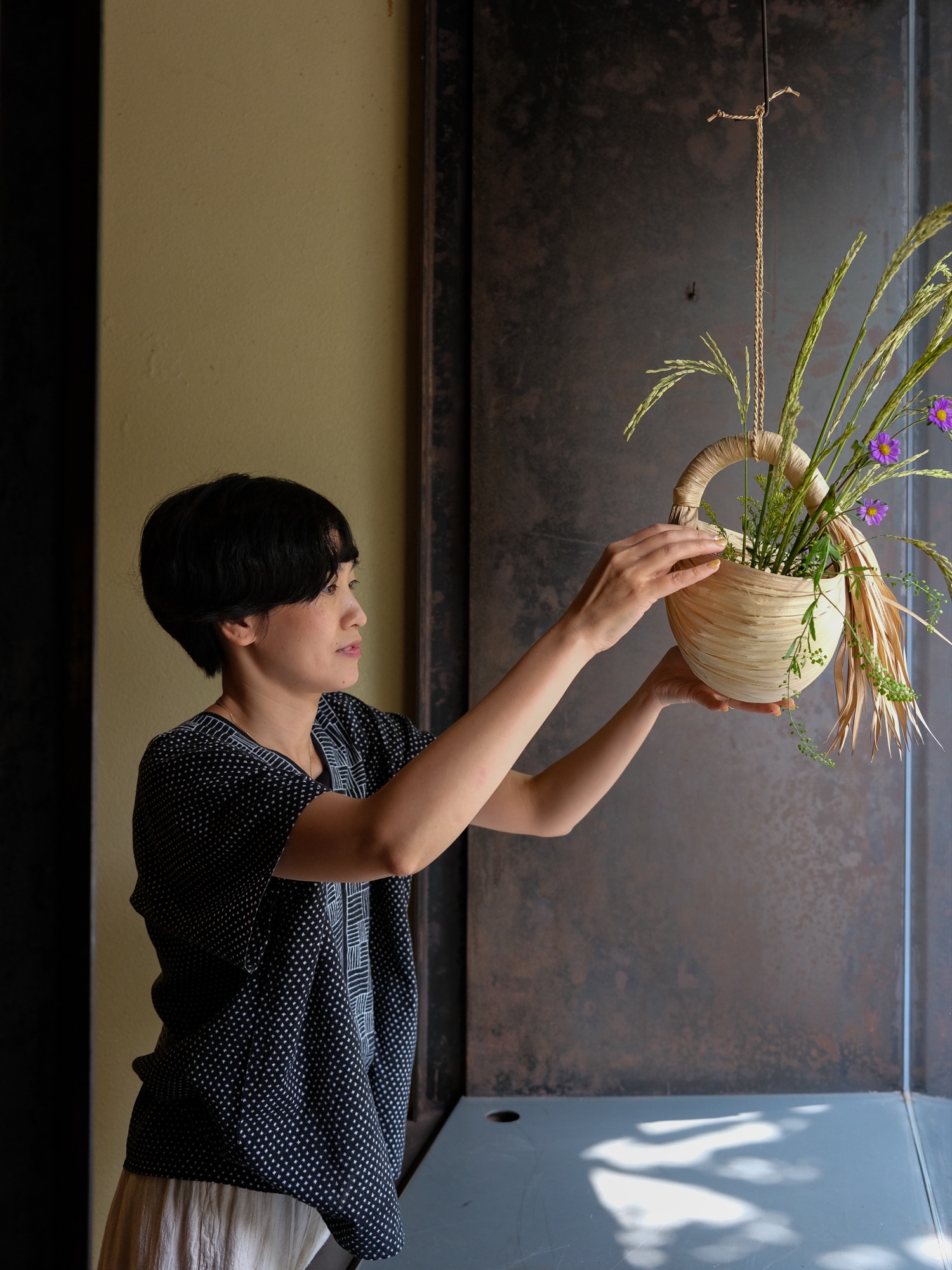
Abe Hanna (Lê Phạm Việt Hà) is currently teaching flower arrangement and tea ceremony classes in Hanoi. She is the representative of Ikenobo Vietnam Tachibanakai Study Group, which is officially recognised by Ikenobo Society of Floral Art – the oldest school of Ikebana flower arrangement in Japan.
The coming talk shares about the art of flower arrangement, Abe Hanna’s career path and her views on traditional values. On behalf of Abe Hanna, I – the editor would like to tell the story to you – readers through the lens of an insider.
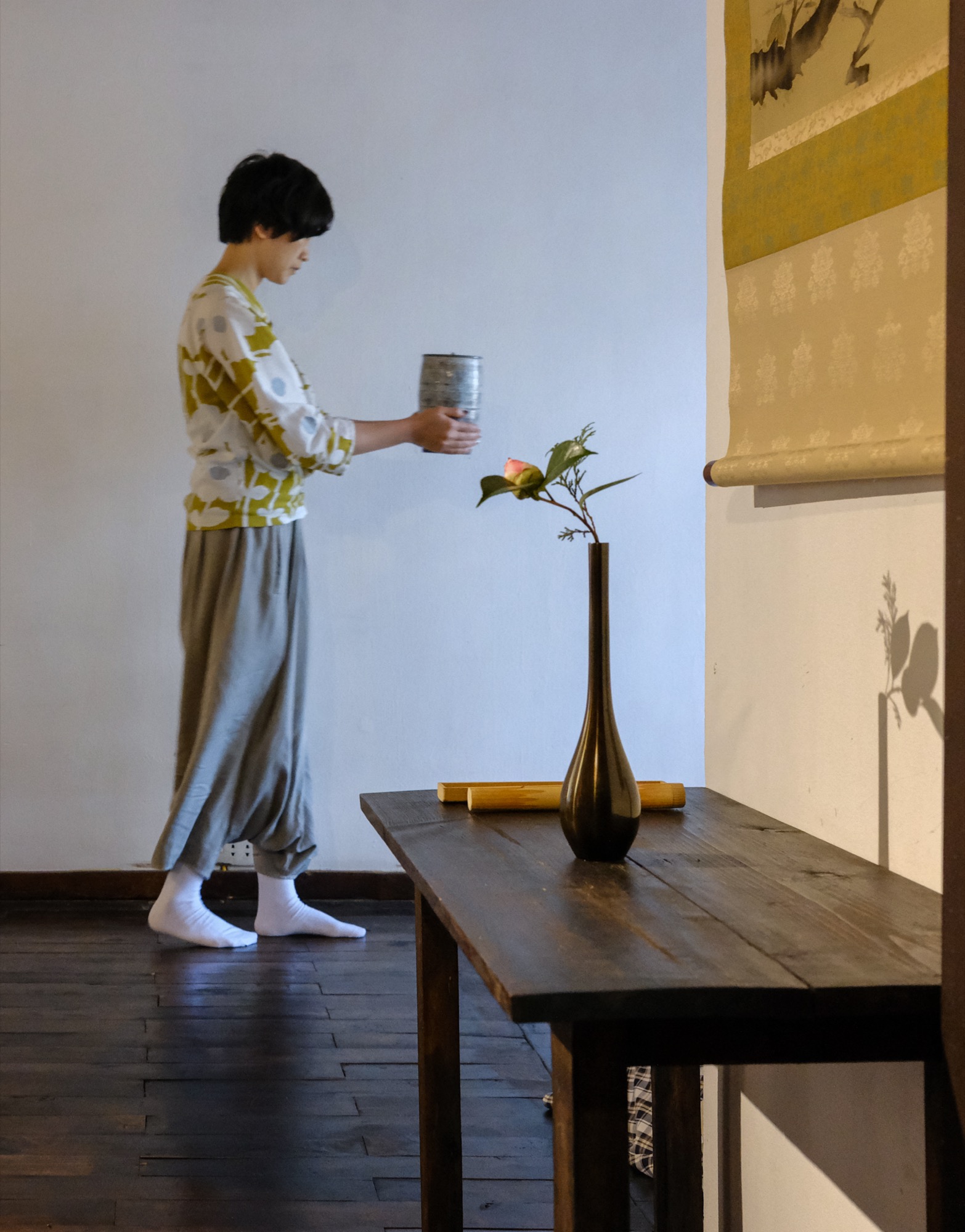
Flower arrangement is a mean to express
I was born and raised in Hanoi. Since I was little, I was brought up with the image of my maternal grandfather wandered inside the house brewing tea, smoking and taking care of his orchids. My childhood memories growing with the garden influenced my habits unconsciously. Not until being a grown- up, I have realised that I rarely use perfume in order not to overwhelm the natural scent of the garden.
After having married, I changed my family name according to my Japanese husband. We are living in Osaka. I had many thoughts during the time Yohaku was an idea for me to do in Hanoi. Should I buy or rent an old house and then renovate? Or might just get a place in the suburb to hold the class? Finally, despite the noisy hectic townhouse and its difficulty that might mismatch Yohaku’s criteria, I decided to come back to where I was born and raised because it sparks in me the passion for flower and tea.
Ikebana in Japanese literally means ‘living flowers’, it can be understood as ‘to give a life to flowers’ when they are cut from the plant. Today, this noun is typically used to indicate the Japanese flower arrangement art. The journey that brings me to Ikebana was very natural. By chance, I registered for a flower arrangement course while studying abroad in Japan, a short while later I realised that Ikebana is definitely something for me.
Arranging flower, to me, is a mean to express. Emotion can be interpreted by different means such as writing, drawing, tuning, you name it. Drawing tortures me, always; I had to draw all the time during my flower arrangement course because that how I could learn in more detail every time I depicted it, I would know how to improve or what I had achieved. I have tried many things, from painting to playing music or singing but none were for me. Nevertheless, I kept my pace amazingly fast with Ikebana. Quite unalike to tea ceremony which carries education, floral design gives me space to express myself in a more pleasant way.
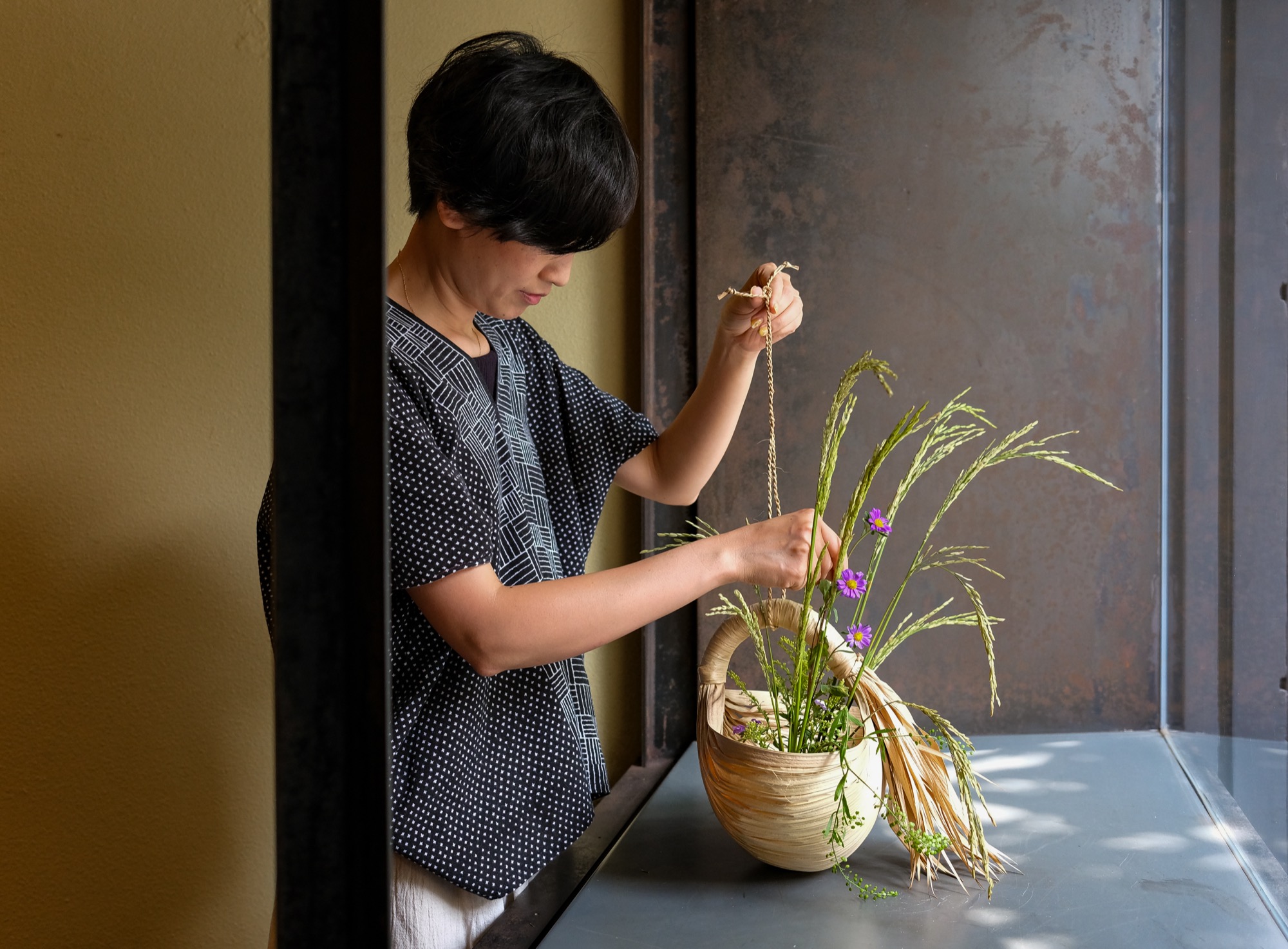
Photo: Anh Nguyên
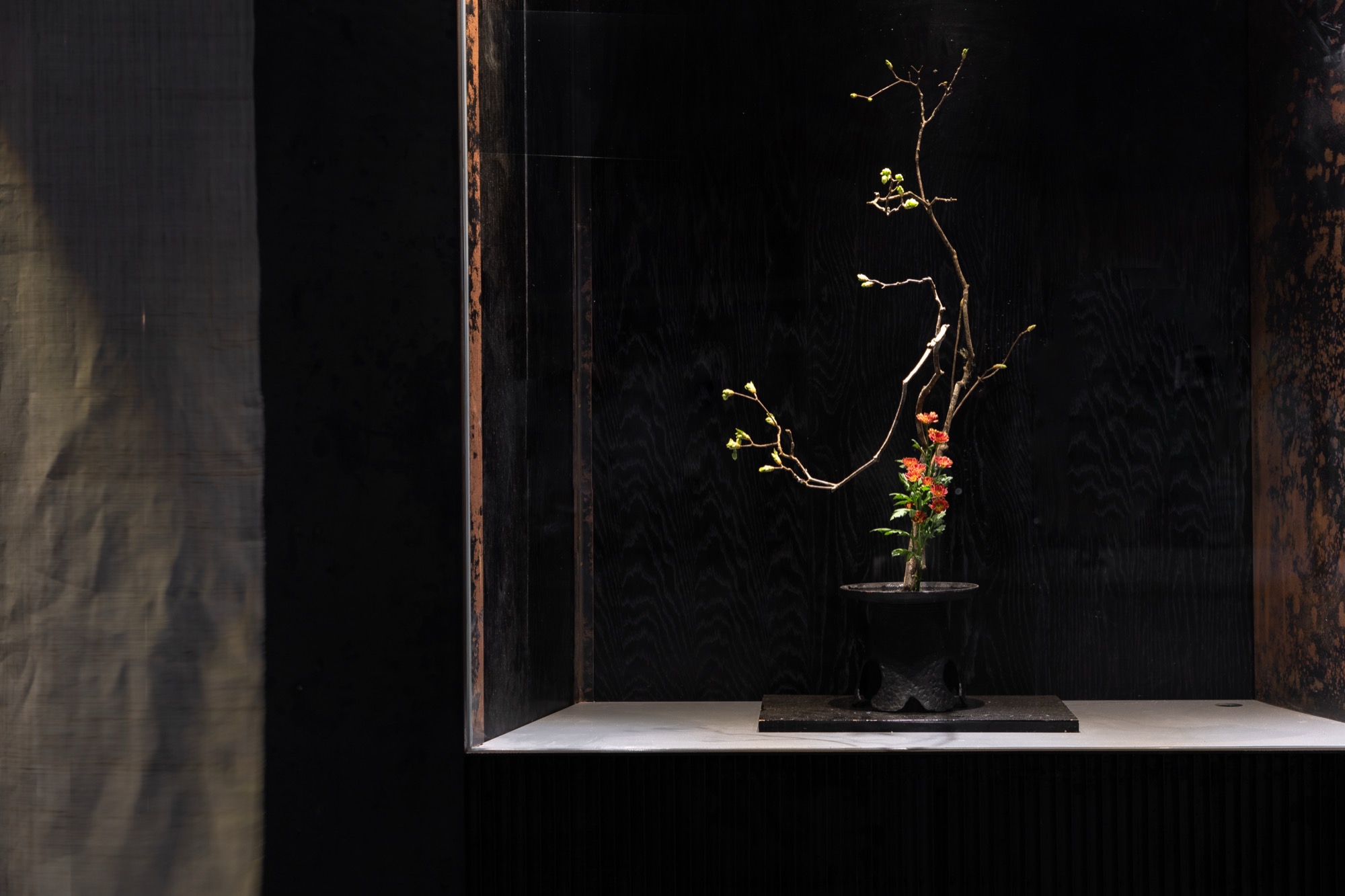
The art of flower arrangement in the land of rich seasons all year round
There is one question that many people ask me: “I am keen on gazing at flowers in the nature because it is at its best stage. May I ask for the meaning of picking and holding them in a vase?”. I must agree that the natural beauty is something absolute, yet, I might ask that how they explicate what beauty is? The definition of beauty of Asian is not the same as Western’s. Depending on the time, Asian in the 10th century has a different kind of beauty to one in the 15th century or even now. In the past, people appreciated a woman that had a pleasantly plump and kind-hearted face but would they keep that standard now? Or for current time it should be a sharp v-line one that can be called beautiful and stand?
To reiterate what I have mentioned to say that the appearance of beauty or not of one thing does not rest in our call. A flower, purely, exists. How to perceive them is a subjective opinion of individual. Flower and foliage that happen to be in nature or in your home’s vase are no more a concern we should dig in.
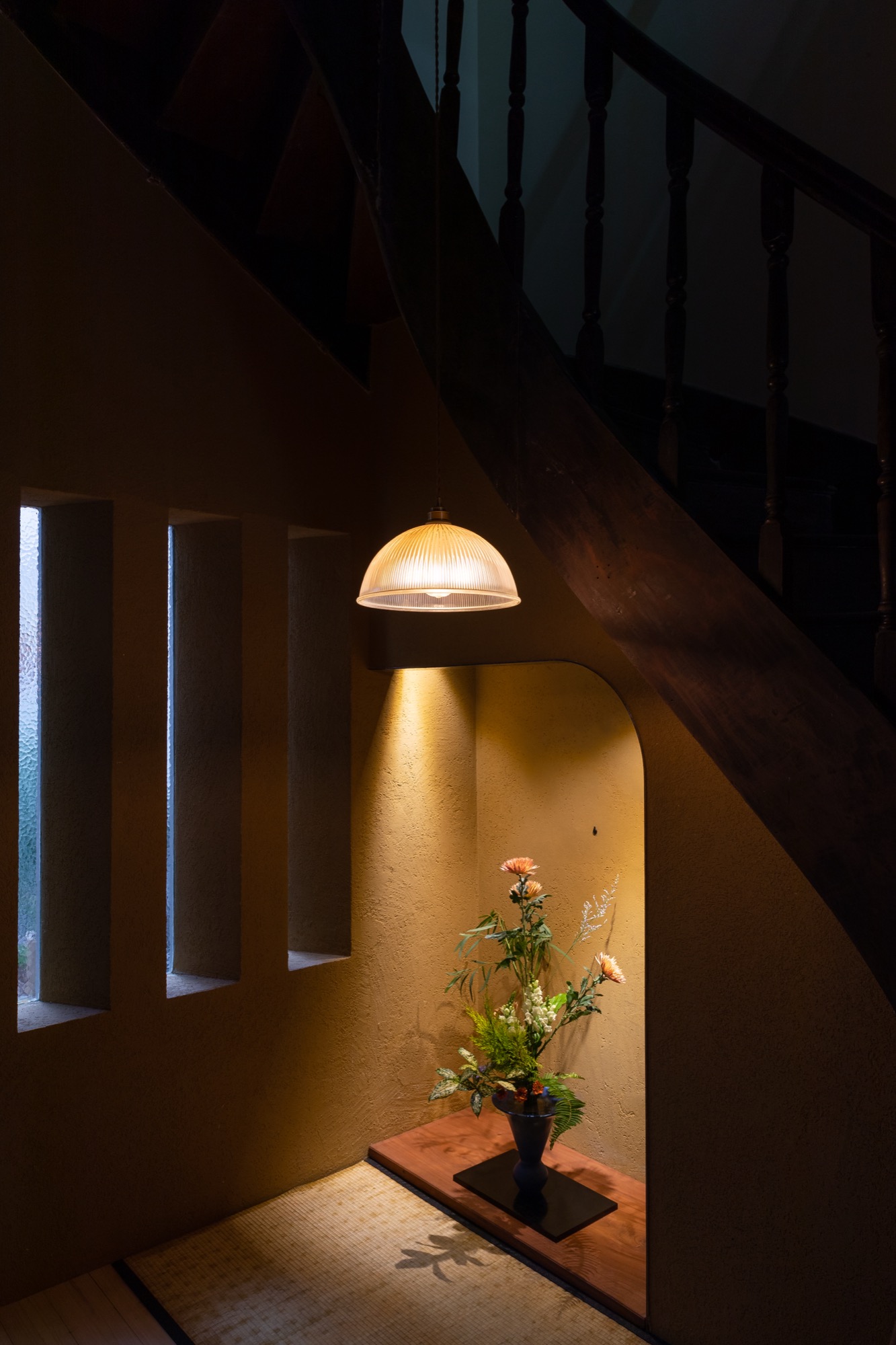
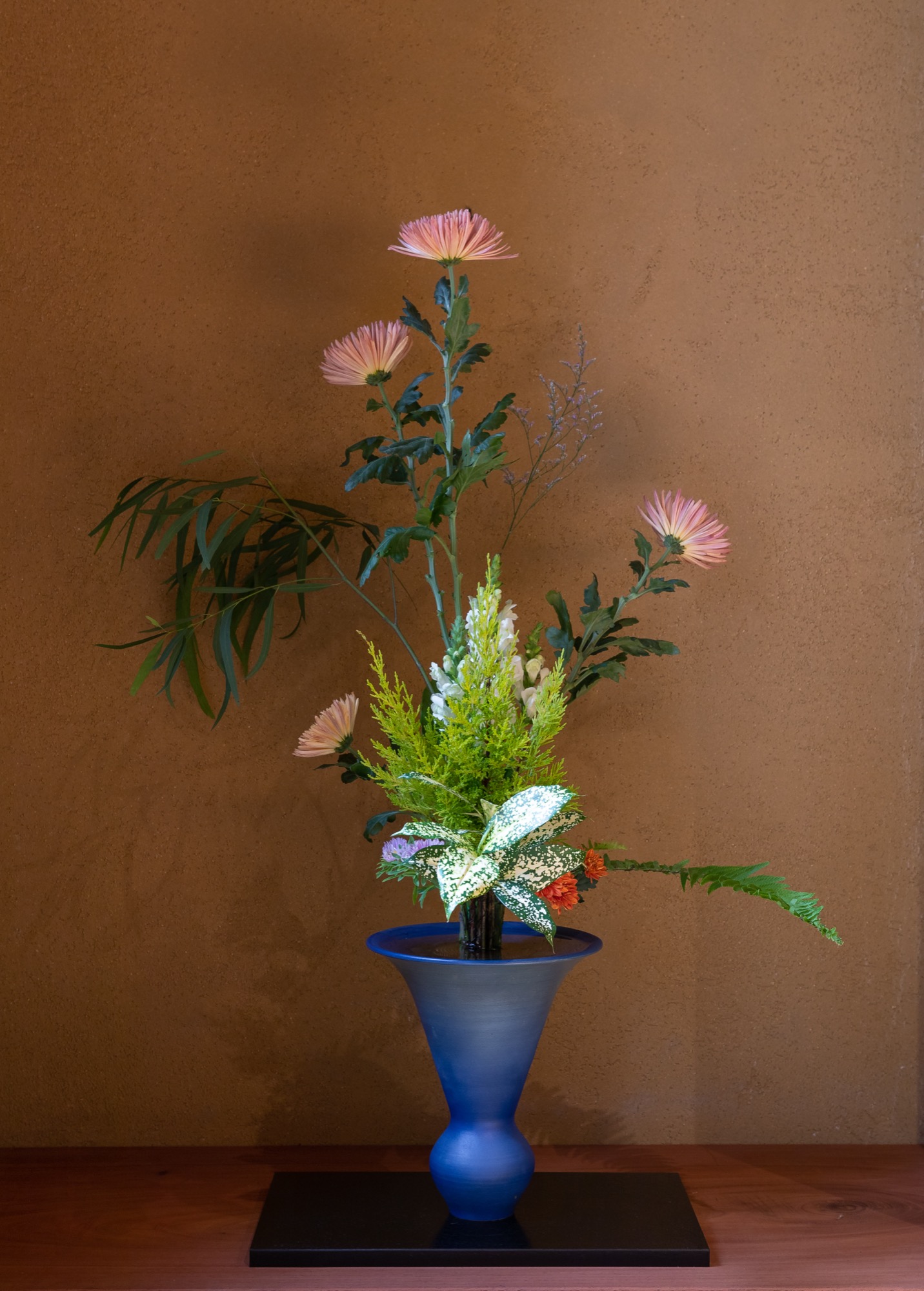
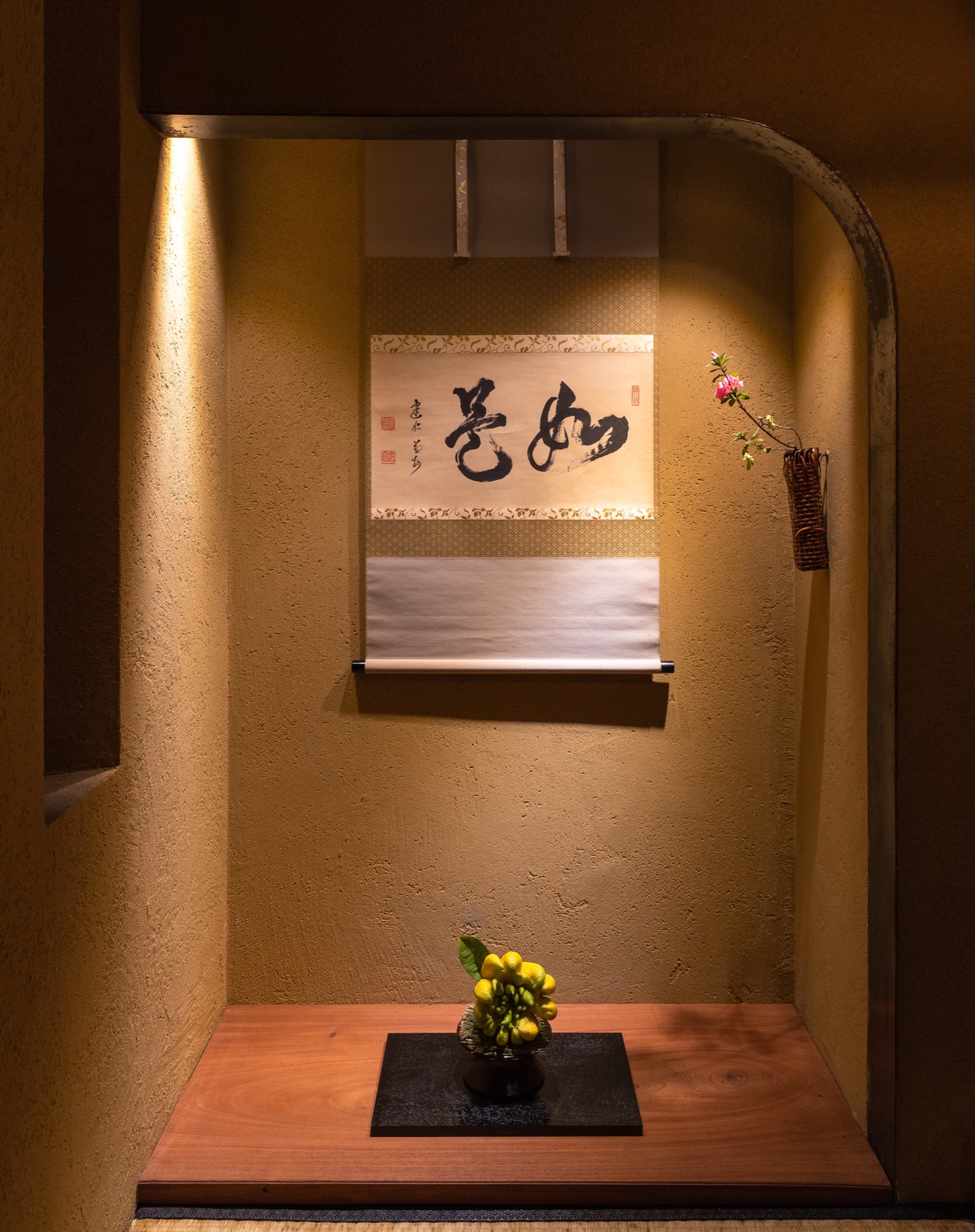
The concept of Ikebana, as many people define, is to closely imitate the figure of plants in nature, I share no common thought with this. When standing in front of a flower or a beautiful natural landscape, your heart flutters, you want to reproduce this sensation through the flowers you arrange so that when people contemplate the vase, they share what you feel. To me, this progress is Ikebana.
Abe Hanna
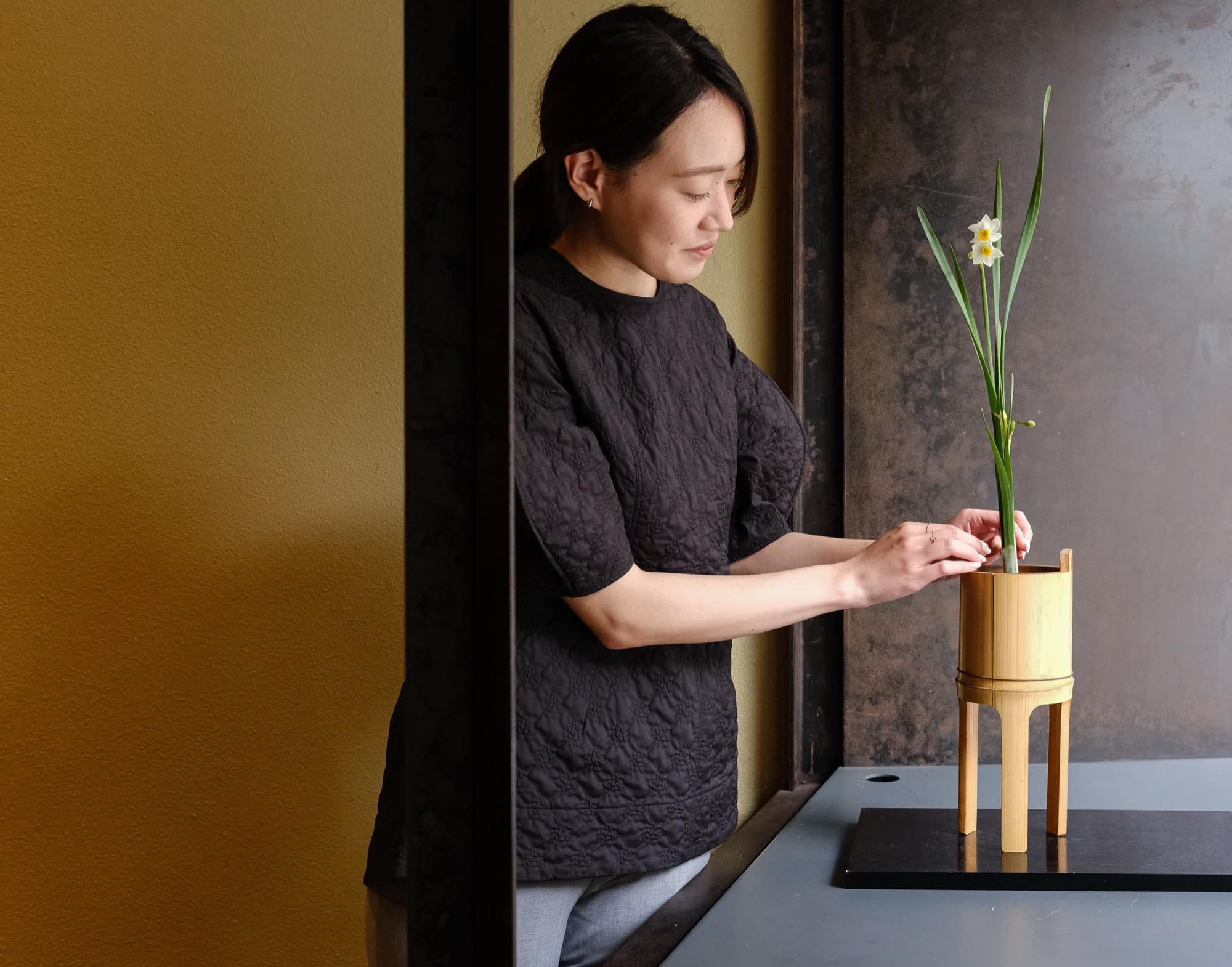
A simple instance is the cherry-blossom Shoka of the Ikenobo, there is no such scene in nature that you can find because images arise in the florist’s imagination. In spring, it gets warmer from the foot of the mountain, Sakura (cherry-blossom) flowers bloom gradually from the bottom then spread upwards. You have to stand from afar to witness this spectacular scene. The rush feeling before an ocean of flowers or a tree that is flowering blends into the man’s mind. This mind, then, gives form to Shoka carrying freshly bloomed flowers with old branches from the year earlier; all in one represents this alluring appearance of the ocean of cherry blossoms.
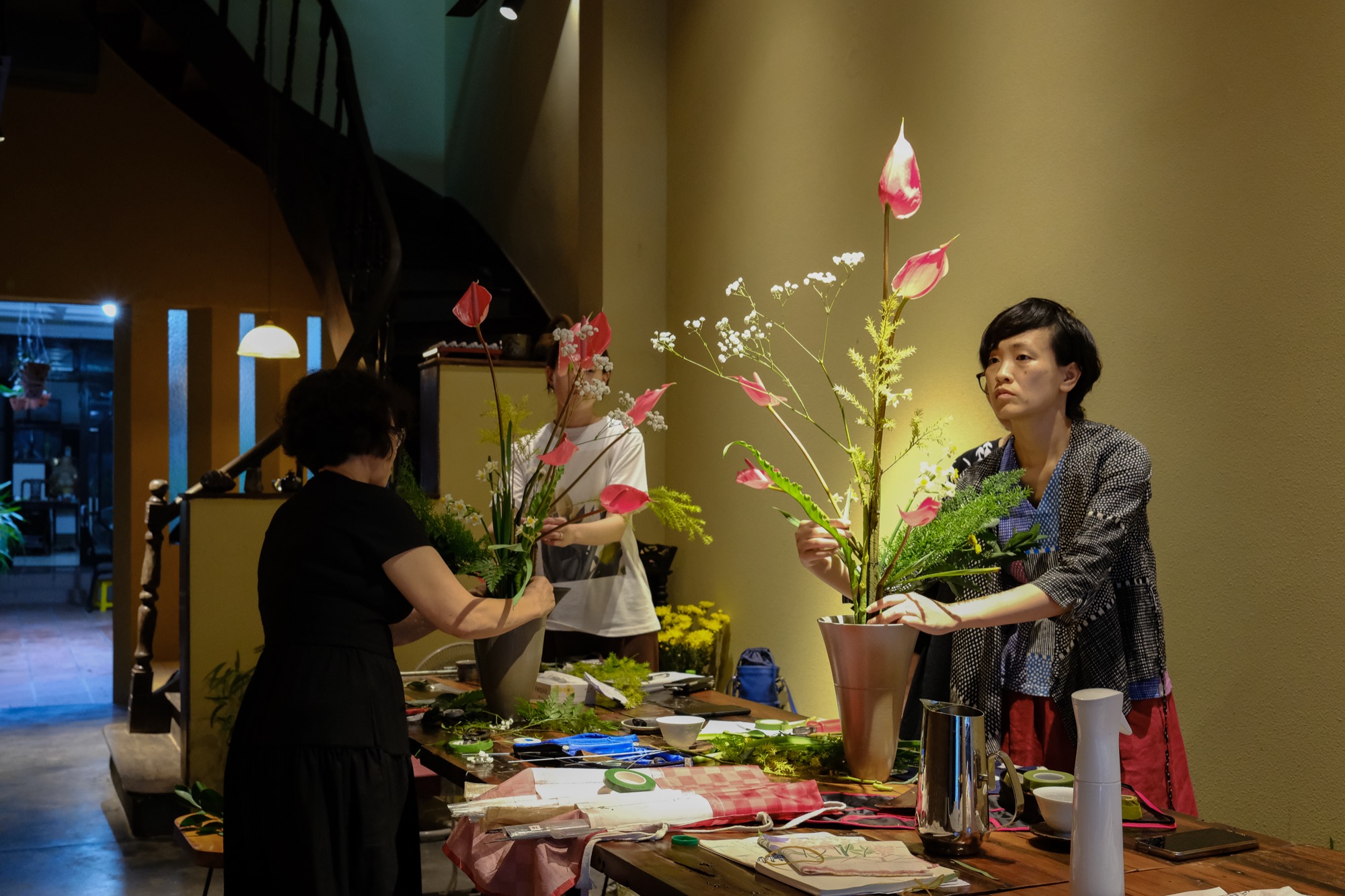
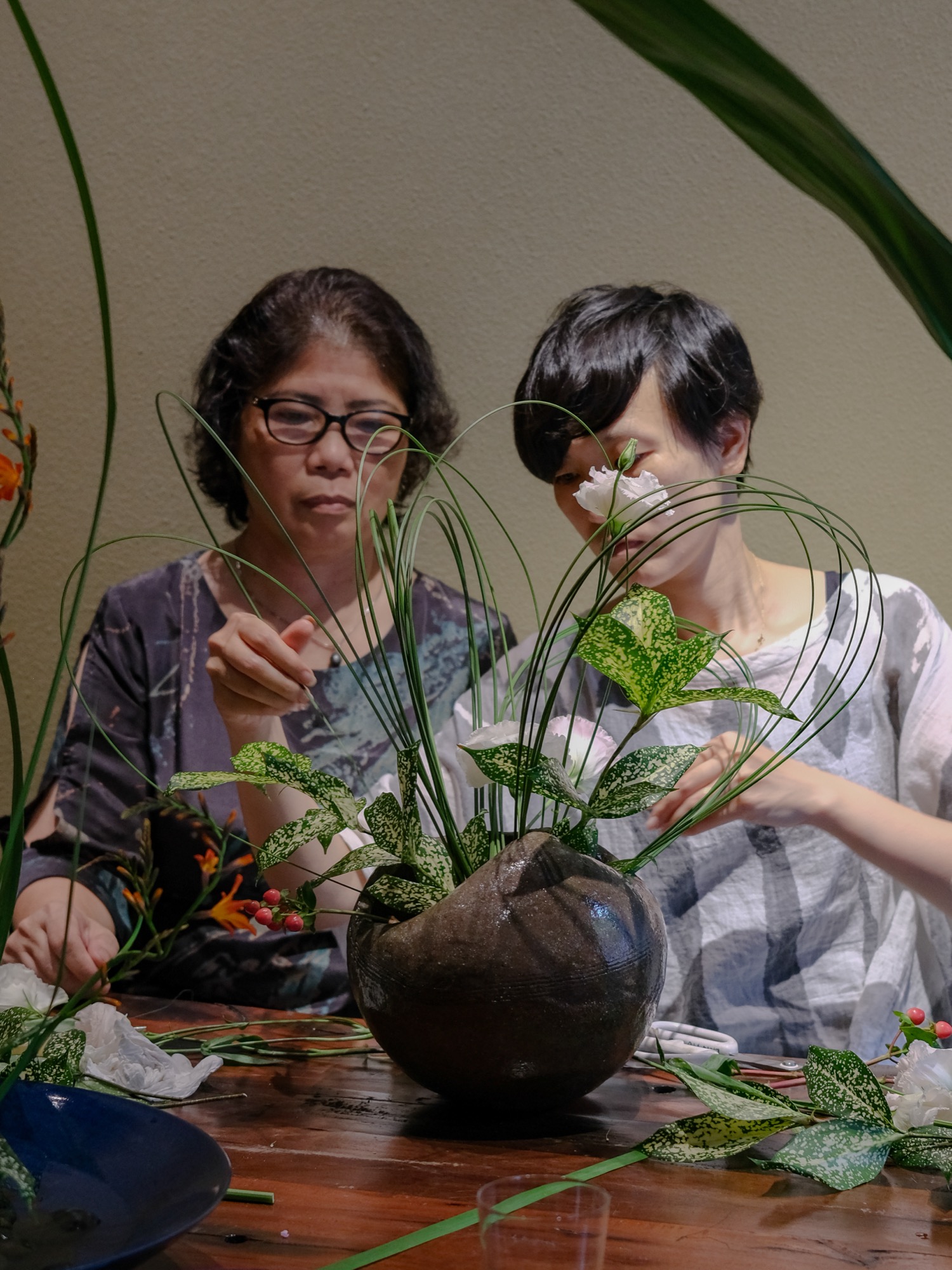
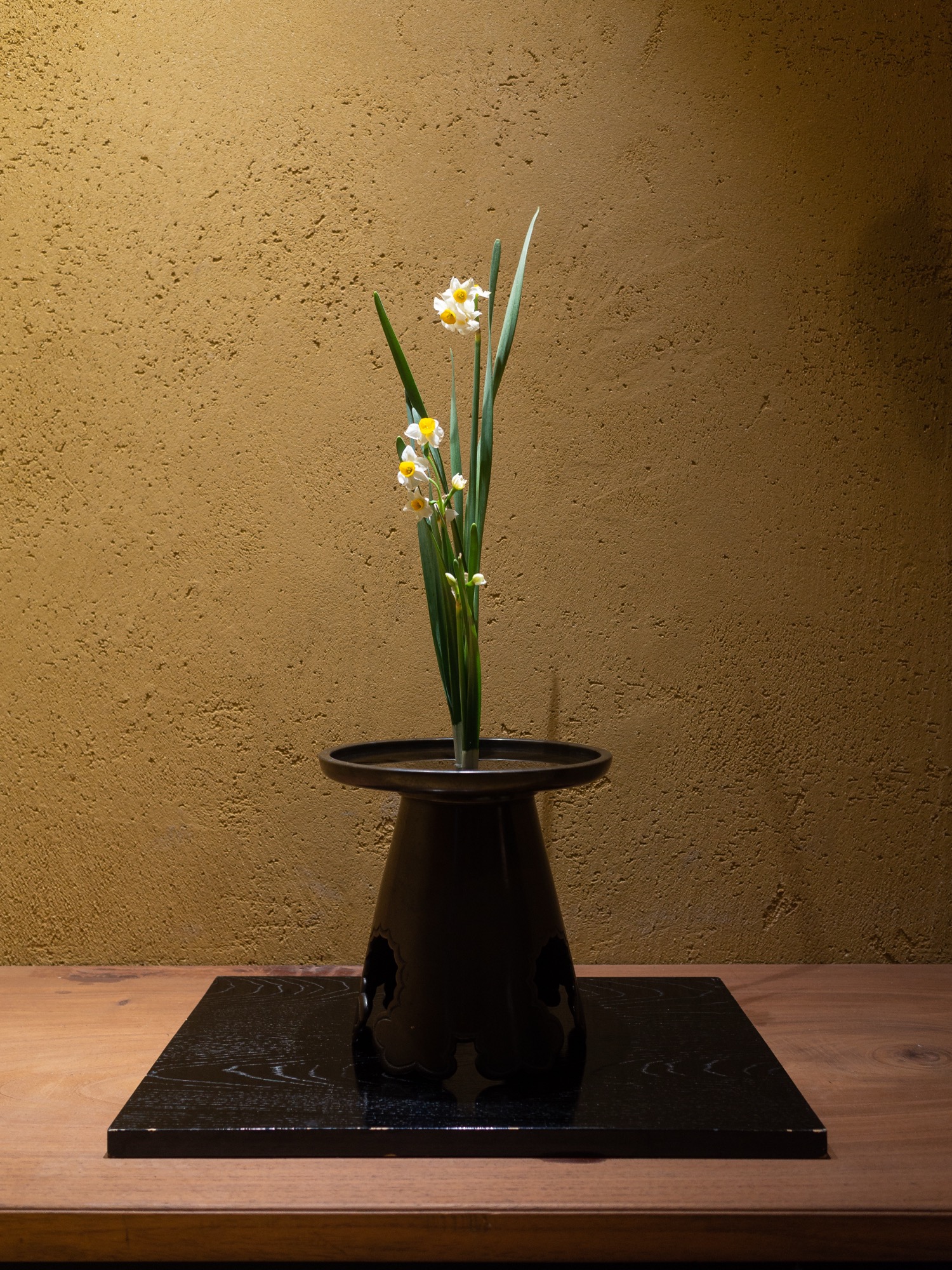
Or another example in summer, the Nadeshiko flowers (Japanese fringed pink) grow only in sunny field by the river while ferns spring up under the arms of big shading trees. These two plants never meet in nature because they grow in two completely different environments. But they can be together in a vase without evoking wrong feelings thanks to the feeling of the florist. Nature has its own beauty, always. However, at times, Ikebana gifts observers the feelings that they cannot experience in real life.
The Ikebana’s history of formation and development is associated with the demand of floral contemplation in daily life and rituals of worshiping Saints, Buddha. Over generations, artisans observe, practice and steadily refine the guideline of arranging flowers. Currently, there are hundred schools of floral designs according to the statics, among them some very well-known are: Ikenobo, Mishoryu, Ohara, Sogetsu… Each school has its own education system and regulation that are passed down from generation to generation.
Throughout history, there are also artists that follow no school or system, they think that rules constrain their ideas and creativities. They incorporate individual creativity with traditional Ikebana background to create their unique style. In the past 20 years, thanks to the development of social networks, they are more known in the world.
Ikebana in modern life
Sharing the same faith like tea ceremony, Ikebana is gradually disappearing in the daily life of most Japanese. The first reason is closely related to the Tokonoma alcove because the origin of Ikebana connected directly with it. Despite having individual aesthetic style, each school of traditional Ikebana meets in one common point, which is the yin and yang operation of the alcove, by default the flower vase is placed in Tokonoma after being arranged. Over time, the population grows, land becomes more expensive so they had to build their houses smaller. The Japanese’s living space has also changed from traditional to a more updated one. Therefore, the place for Tokonoma is now much less in today society.
There are countless reasons, working pressure and busy life take away many people’s interests for Ikebana or any activity the requires peace of mind. And last but not least, traditional Ikebana depends greatly on the material. Before, people go to the forest to pick flowers and branches for their arrangement. Now, they buy these from suppliers, the style and quality of the material from shops are often unsuited for traditional Ikebana.
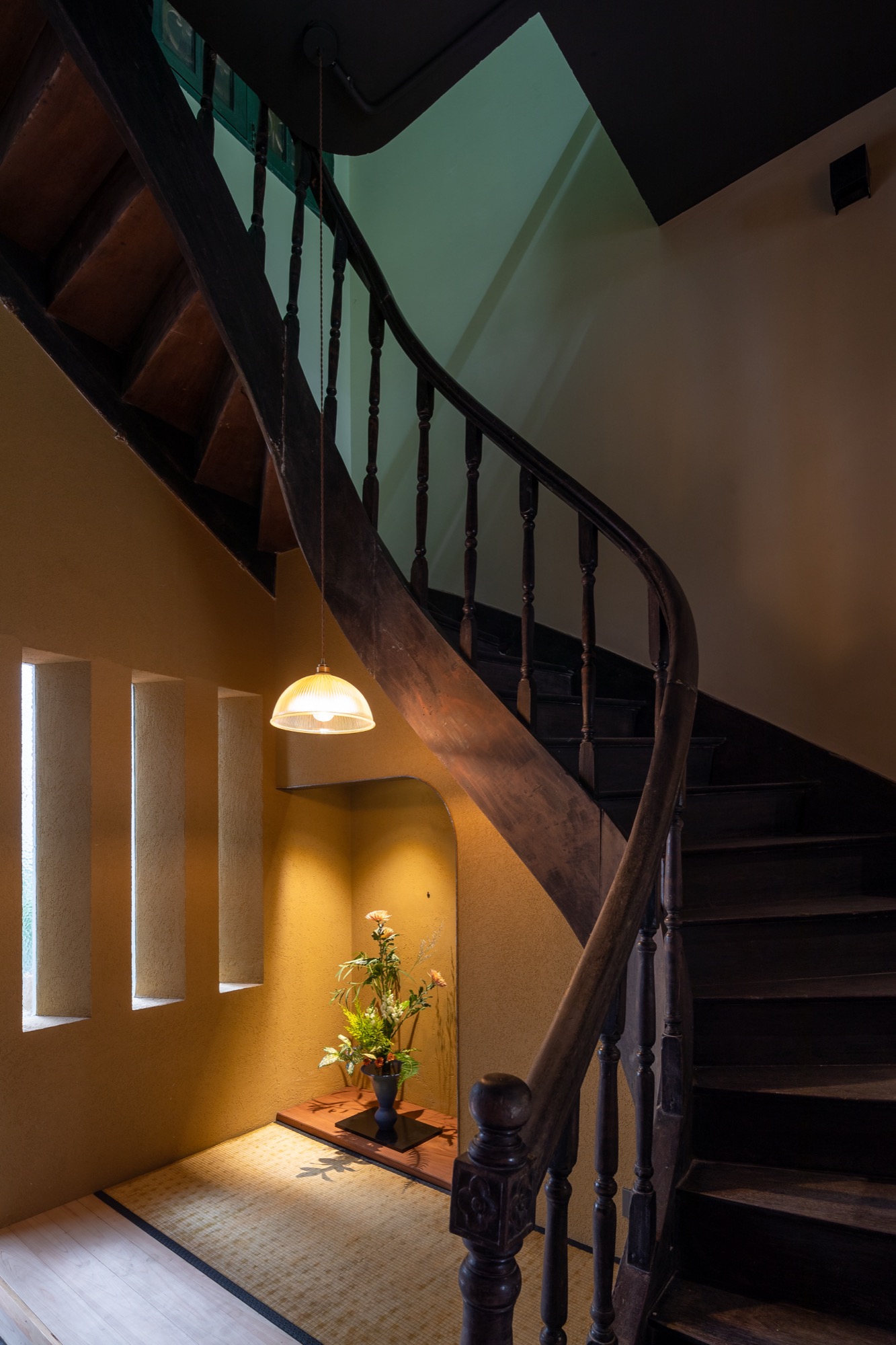
It is an uneasy task to buy enough flowers and leaves for a Shoka, the gerbera that can be found in the market has no leaf or some others only have leaf without flower. Young Japanese shows indifference to traditional culture due to many subjective and objective motives.
Nonetheless, Covid19 forced them to quarantine inside their houses for a long period somewhat intrigued many of them to pay attention towards old values to find balance. Ikebana also transforms itself in order not to be worn down by time. The Ikenobo has officially announced a free-style flower arrangement.
Additionally, traditional flower arrangement methods have been altered to suit the present as well by simplifying ancient obligations to accommodate new materials and display spaces. Old-fashioned large vase is gradually shrunk, some art works can even be a compact size that fits the palm of a hand, which can be presented in small spaces.
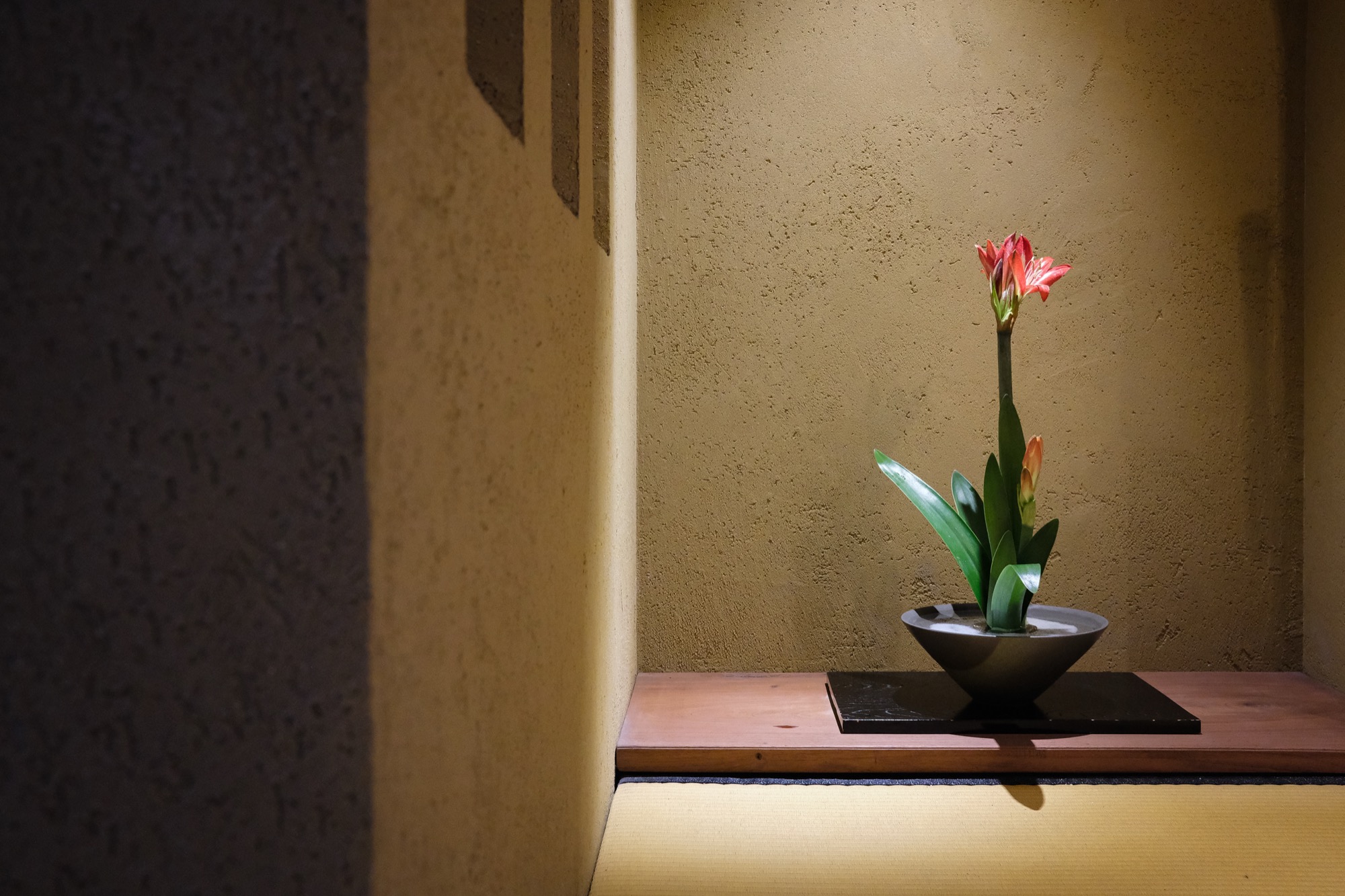
In the flow of a time that is considered to be convenient and developed as we are seeing, there are individuals that choose for them their own path. They silently do their own things but positively impact others around them. I have a friend who owns the flower shop Mitate in Kyoto, he does not affect directly to my arranging technique but he influences a lot to how I perceive Ikebana.
Their shop has no fridge – something familiar and is indispensable at any ‘ordinary’ flower shop. My friend aims to use solely pure natural sources, preserves flowers by manual methods that he knows and understands. During summer, he stores ice in the house to keep flowers cool and sells flowers that lasts a long time. In winter, there are not many flowers available for sale due to the harsh weather, he looks for other plants instead of sourcing and supplying ones grown in greenhouses or imported. Thus, he always keeps himself to be creative to find solutions to all problems.
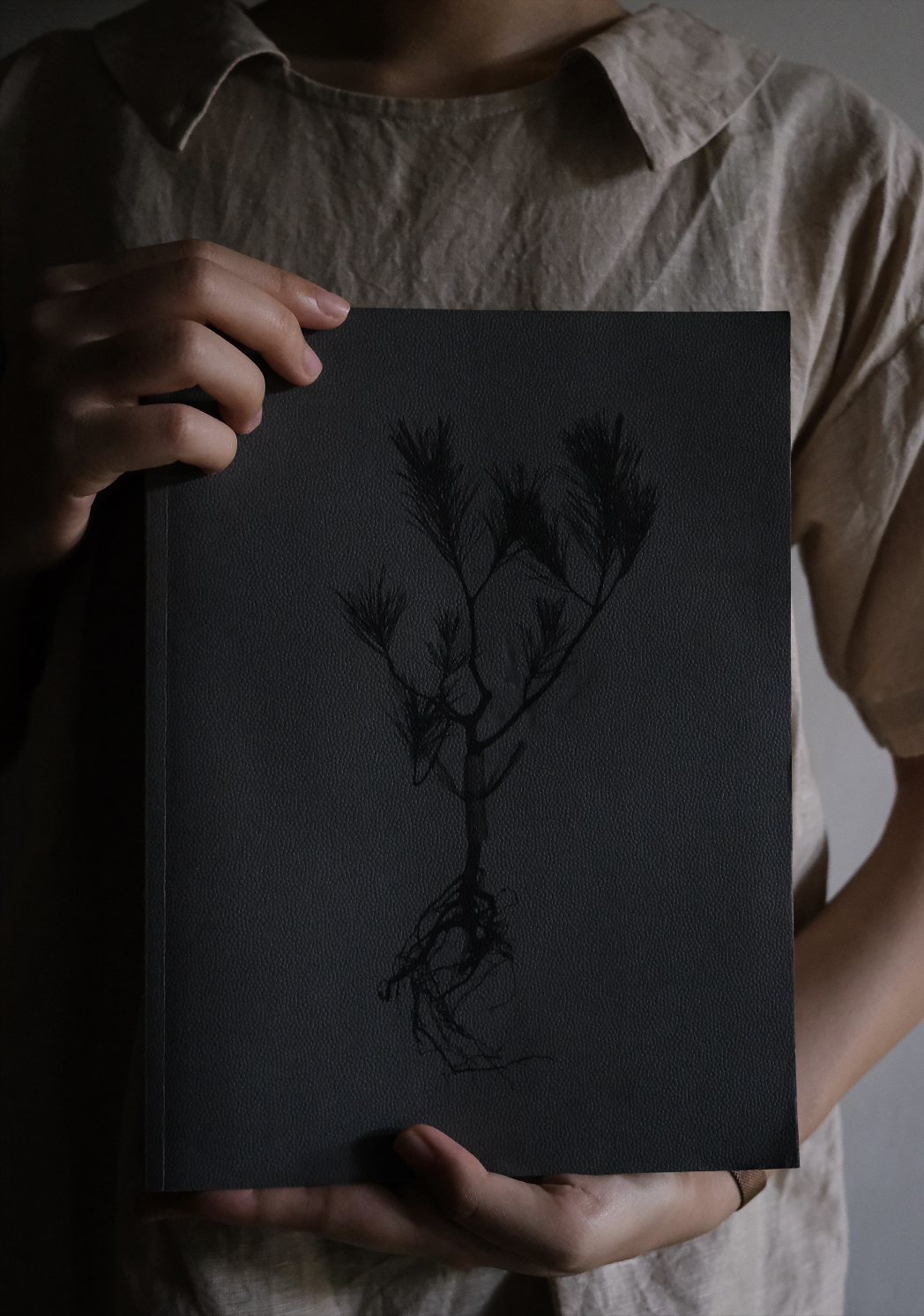
Many people could not understand the reason why he has to do so when they heard the story. Before having his own shop, he and his wife worked in a big chain flower supplier. To one point, he felt that there was unsatisfactory with the industrial way of running things. Is it necessary to use chemicals for preservation? Is it necessary to sell flowers that date the oldest?
A work of Ikebana can be a combination of the old and the new. He hopes that buyers can select what they need without being limited by what he can offer because of commercial factors. Many of his thoughts push him towards a model of having less human impact and intervention. I was there watching him trade off many conveniences to retain a part of history and traditional culture, including Ikebana.
Turning passion into profession
From the moment I decided to earnestly pursue Ikebana, I went study at the Ikenobo Institute of Culture in Kyoto. I did not enroll with the aim to become a teacher. It all started with my feeling of pure pleasure and desire to get to know deeper the meaning behind this art. I knew I need time to accumulate capital and experience, so I worked and went to school, at the same time nurtured my passion.
The day I got an interview and worked at the first company in Japan, I shared straightforward to my boss that I worked here because I needed the visa to stay to learn floral design and an income that could afford my interest monthly. I apologised him for not being able to receive call on Saturdays because I usually settled in the tea room. There were times when I worked at three or four places at once just to make ends meet in Japan. I was quite lucky when later on I met my husband who always understands and supports what I pursue in life.
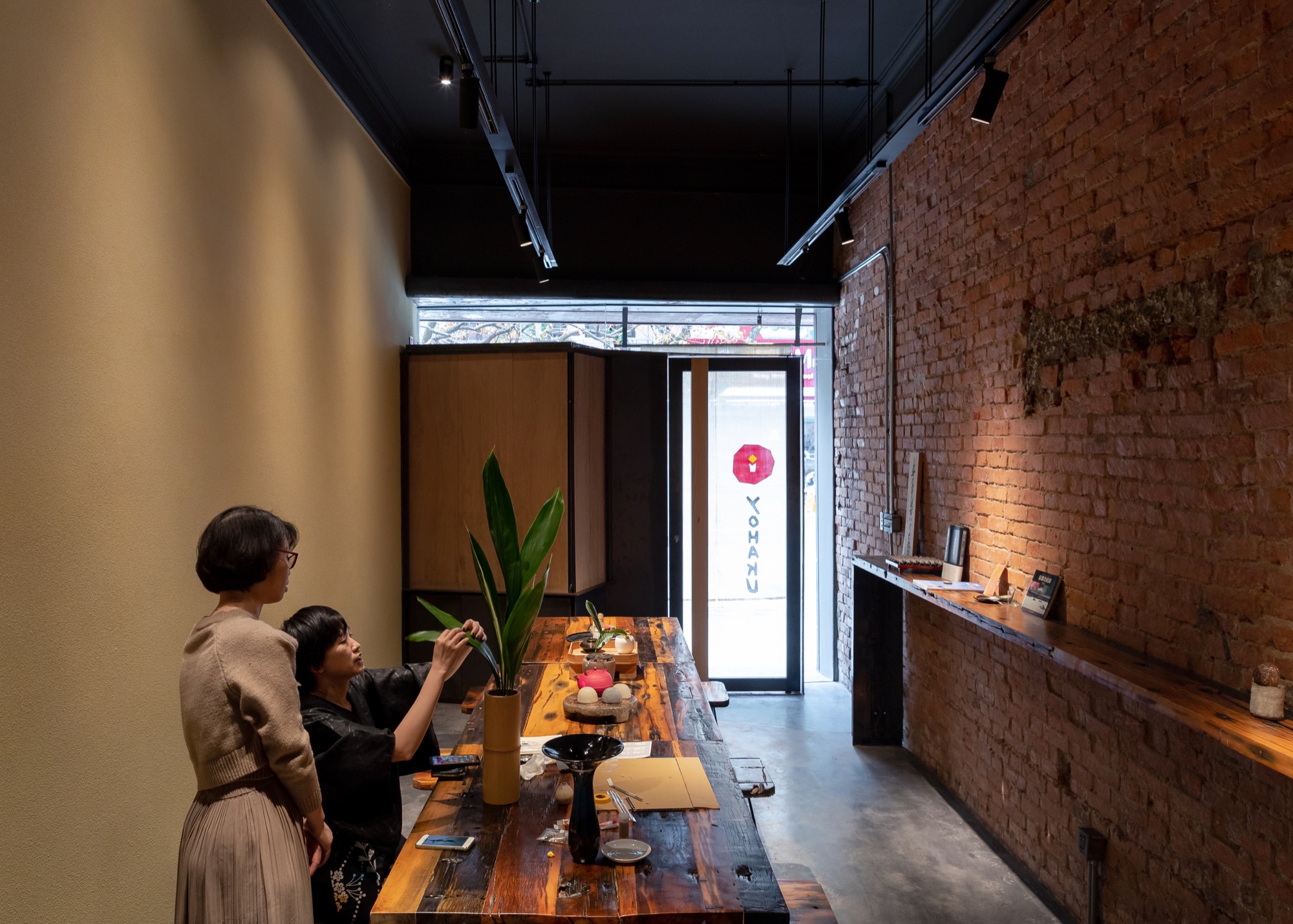
In 2015 – 2016, I joined a Vietnamese flower arrangement group on social media and often shared my knowledge to interact with other members. Little by little, they grew the desire to study more systematically about Ikebana so they actively invited me to teach. At that moment, my direct teacher encouraged me to become a teacher earlier than planned. He made itpossible for me to become an official teacher of the Ikenobo when I was in my early thirties, which is very out of the ordinary in Japan.
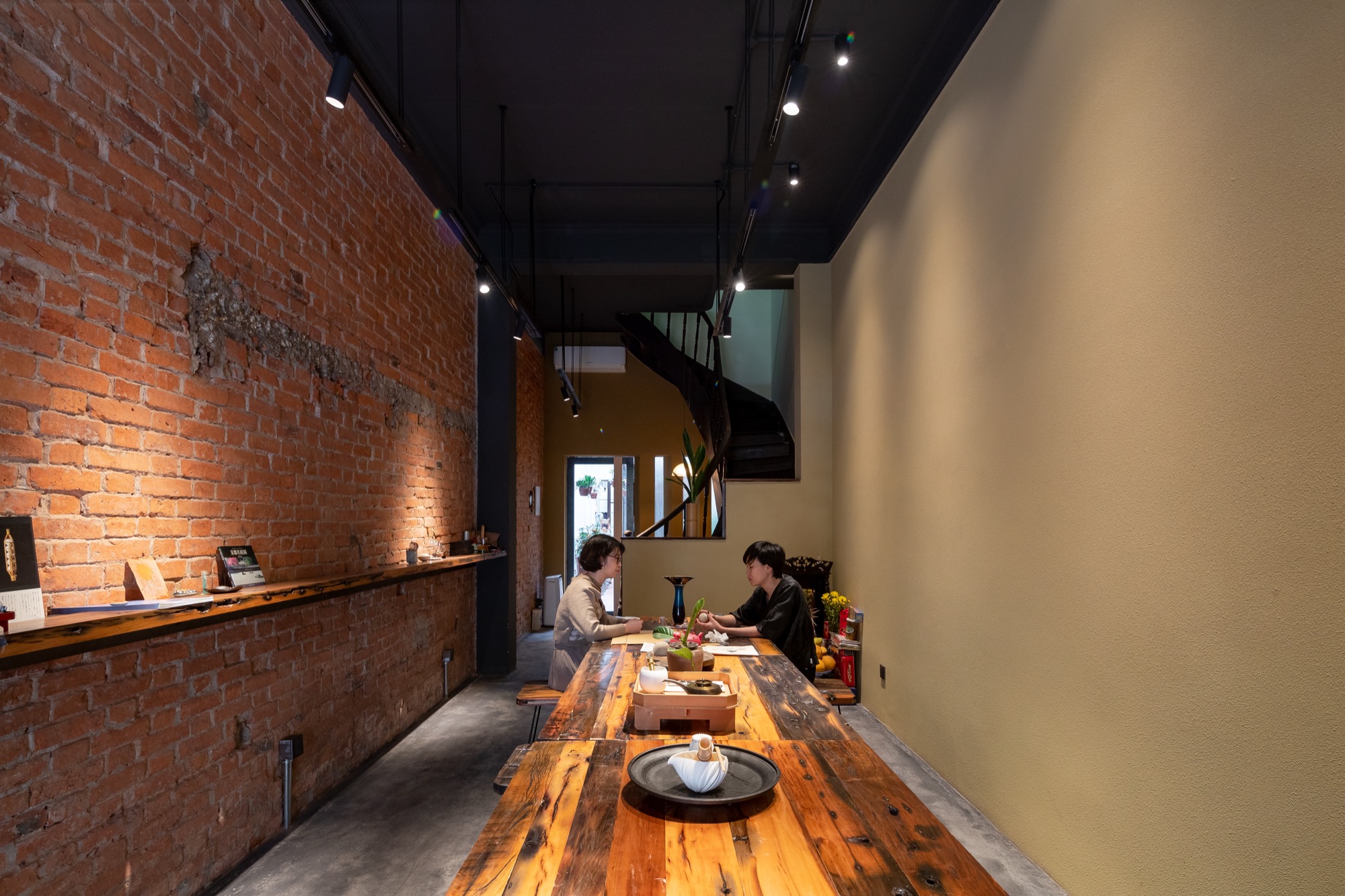
I thought I should respond to the offer in Vietnam. I made plan for a space of my own in order to fully concentrate on all activities. If I built up a space just to arrange flowers, it would be truly lavish, whilst there are plenty thought- inspiring experiences about Ikebana, tea ceremony, traditional sweets and so on in Japan. I simply wanted to share with people these knowledges.
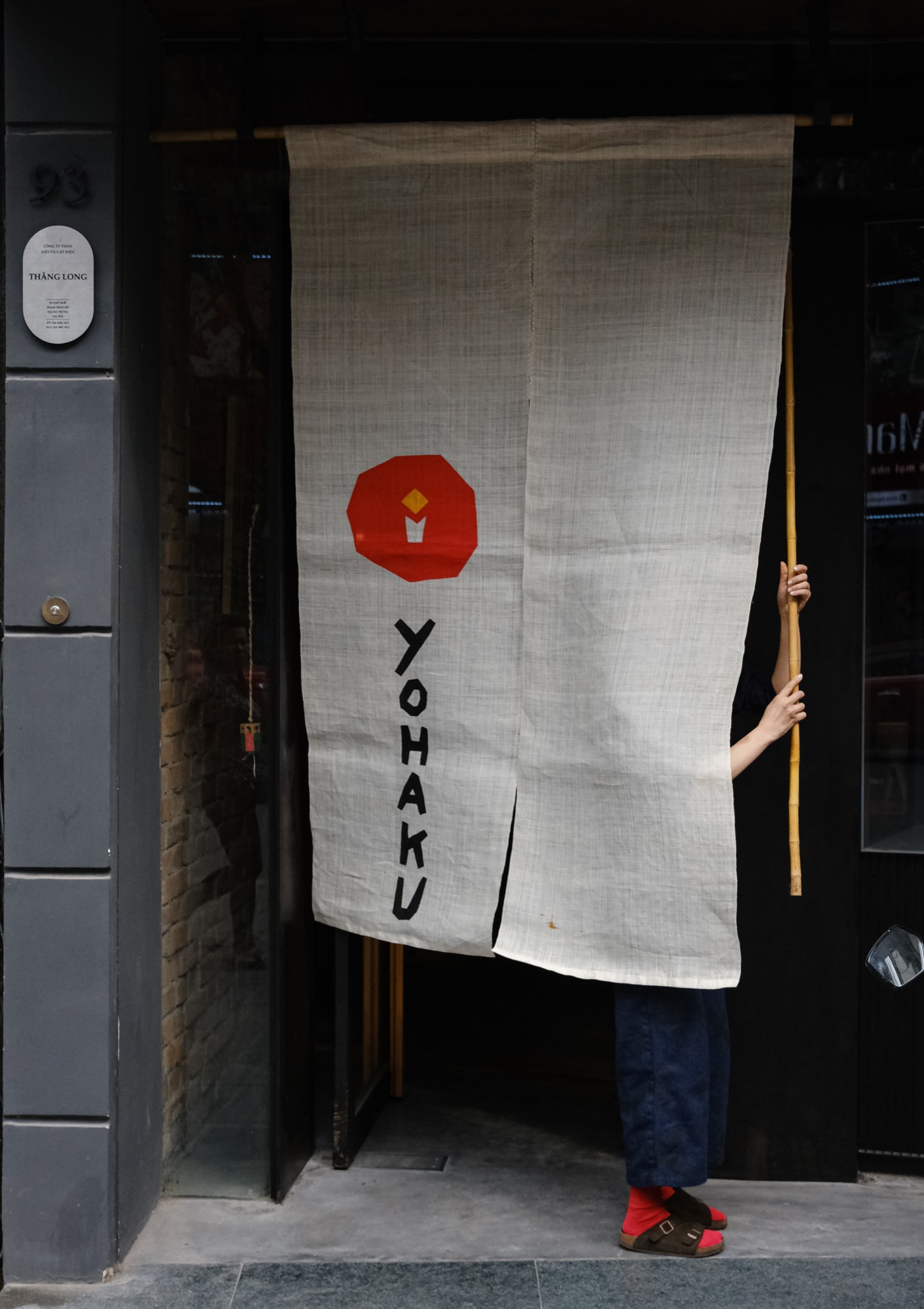
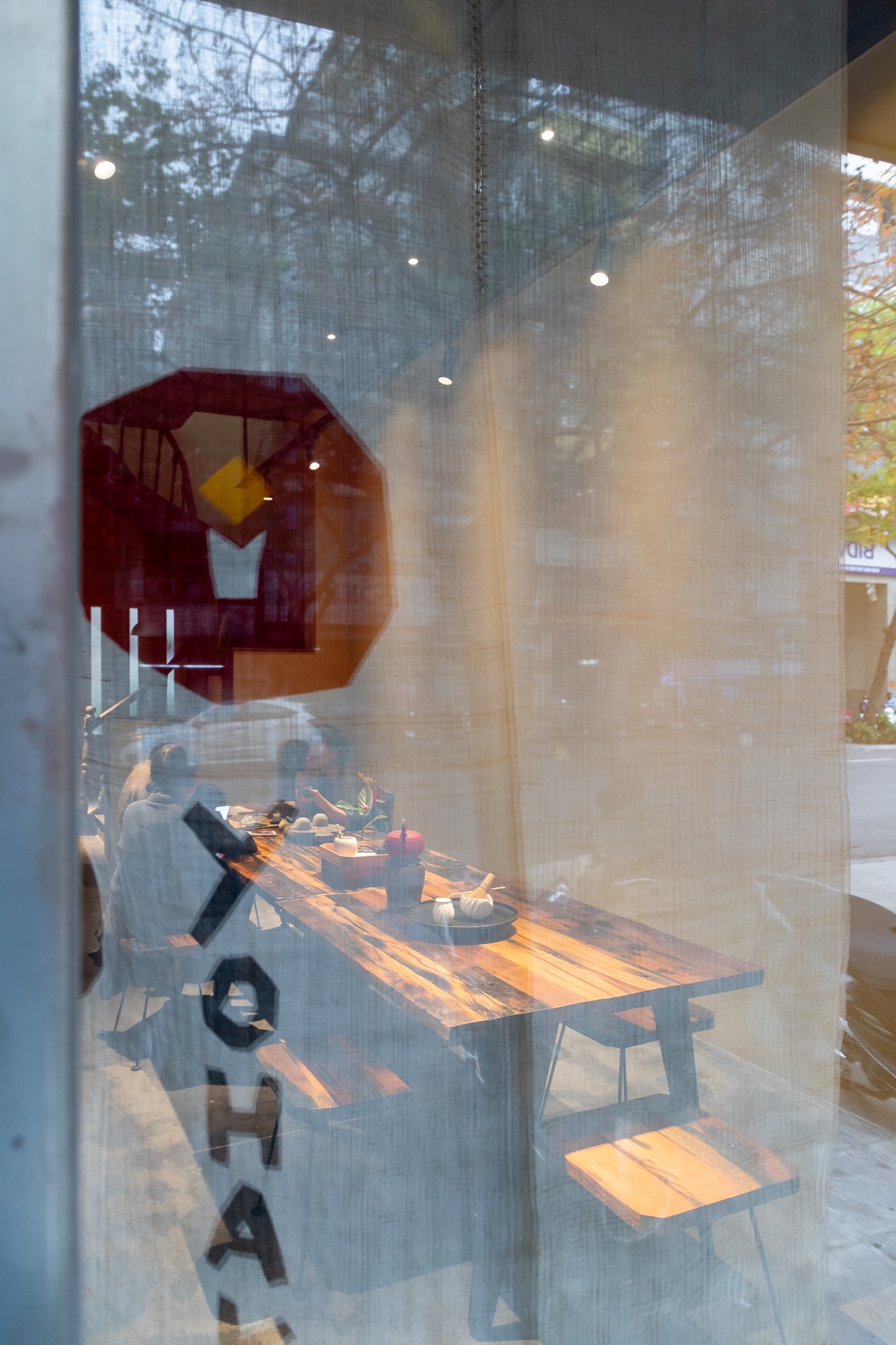
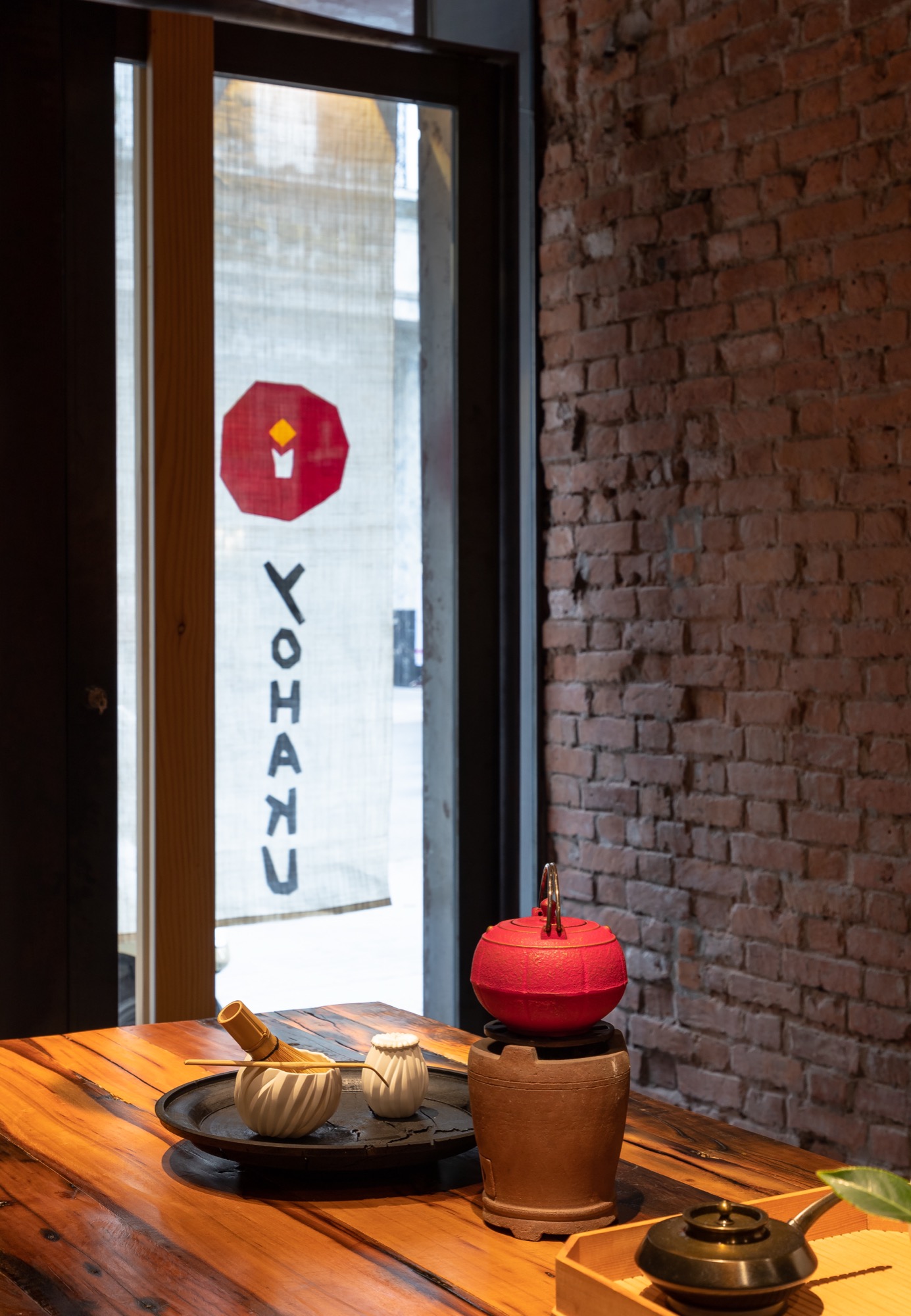
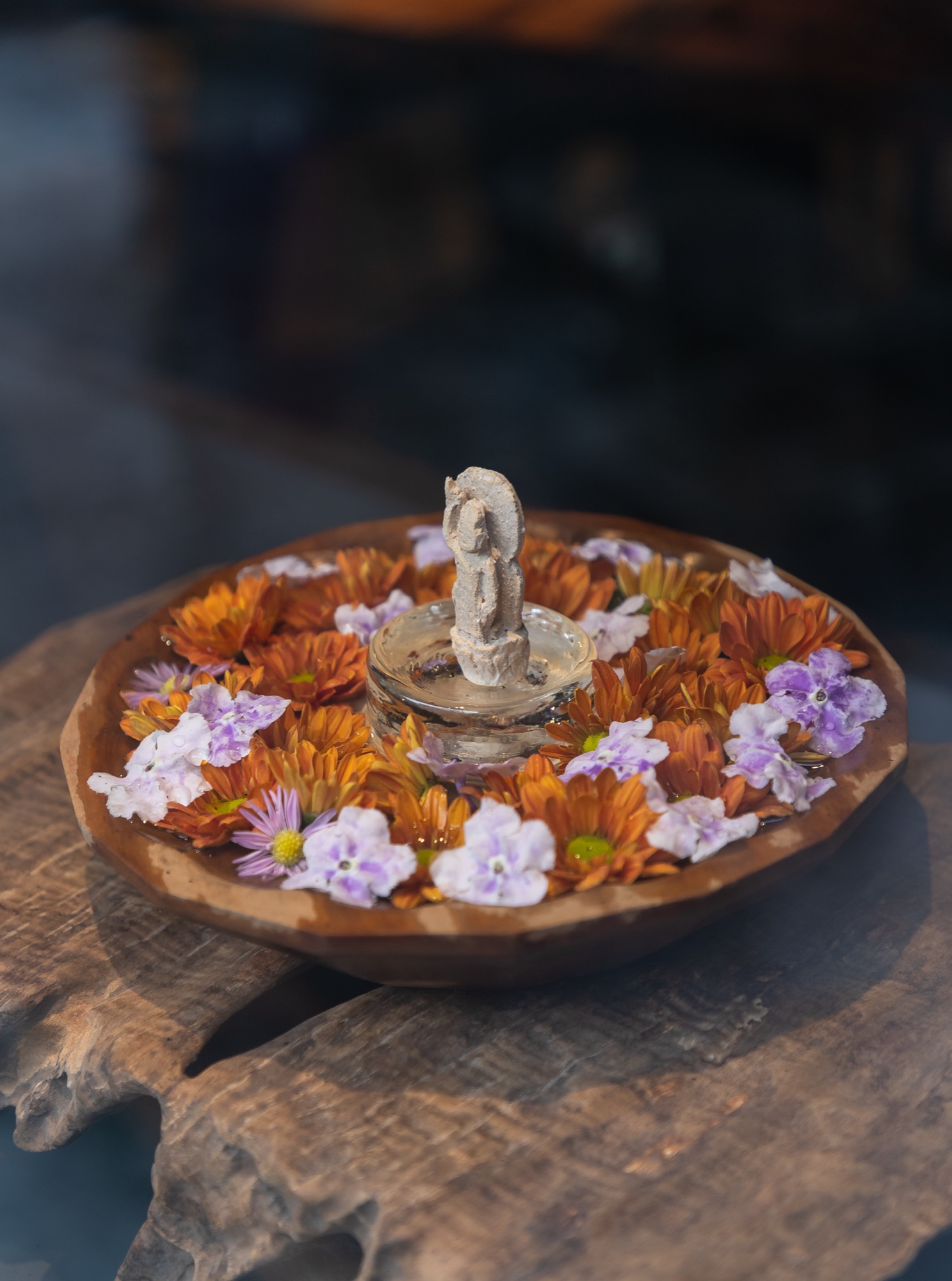
The Japanese has this definition of ‘on-okuri’, it has a close meaning of ‘to requite’ but it does not come in the usual meaning as we know. It is about giving others the same good thing that we have received. When I worked in an office, there was a senior who mentored me a lot. Feeling grateful to them is one thing, I need to do the same with the one who comes later. When in Japan, there were countless people that gave me amazing experiences. I want to help others to have richer experiences in their lives. That is what motivates me to continuously operate Yohaku.
I am not sure if Ikebana will be welcomed in Vietnam in the future. Not only in Vietnam but even in Japan or other countries, the number of people showing interest in Ikebana are many but just a minor number of them could really spend time on getting to know deeper about the core values. I feel content because there are people like that in Vietnam, even it is just a minor part.
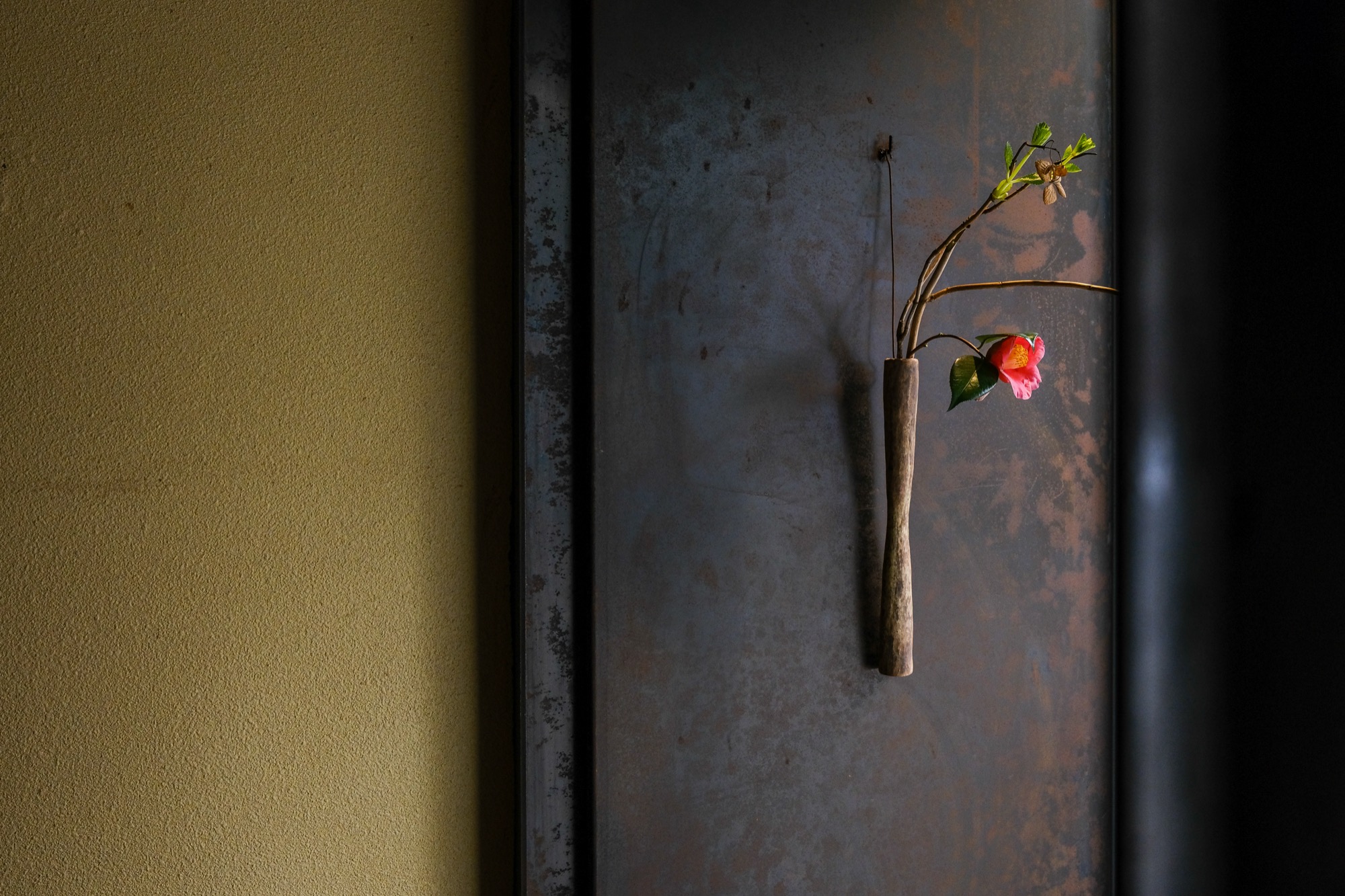
With the current Yohaku, I actively limit the number of students so that I can do best as an instructor.
After giving birth, I have realised that arranging flower is no different from raising a child. Each one has its own characteristics and parents cannot force them into what they do not want. We observe the child and the flower to know what they want. This does not mean leaving things as they are. The kid might not need to follow a setting from parents but we should aim to promote their potential within.
Yohaku has been operated for a while now but I still feel as new as its first days. My tomorrow duty is the same as today, keeping myself and the life at Yohaku under observation to see what I can do next.