
Edit
Tàn Nhang
Interview
Anh Nguyên
Abe Hanna
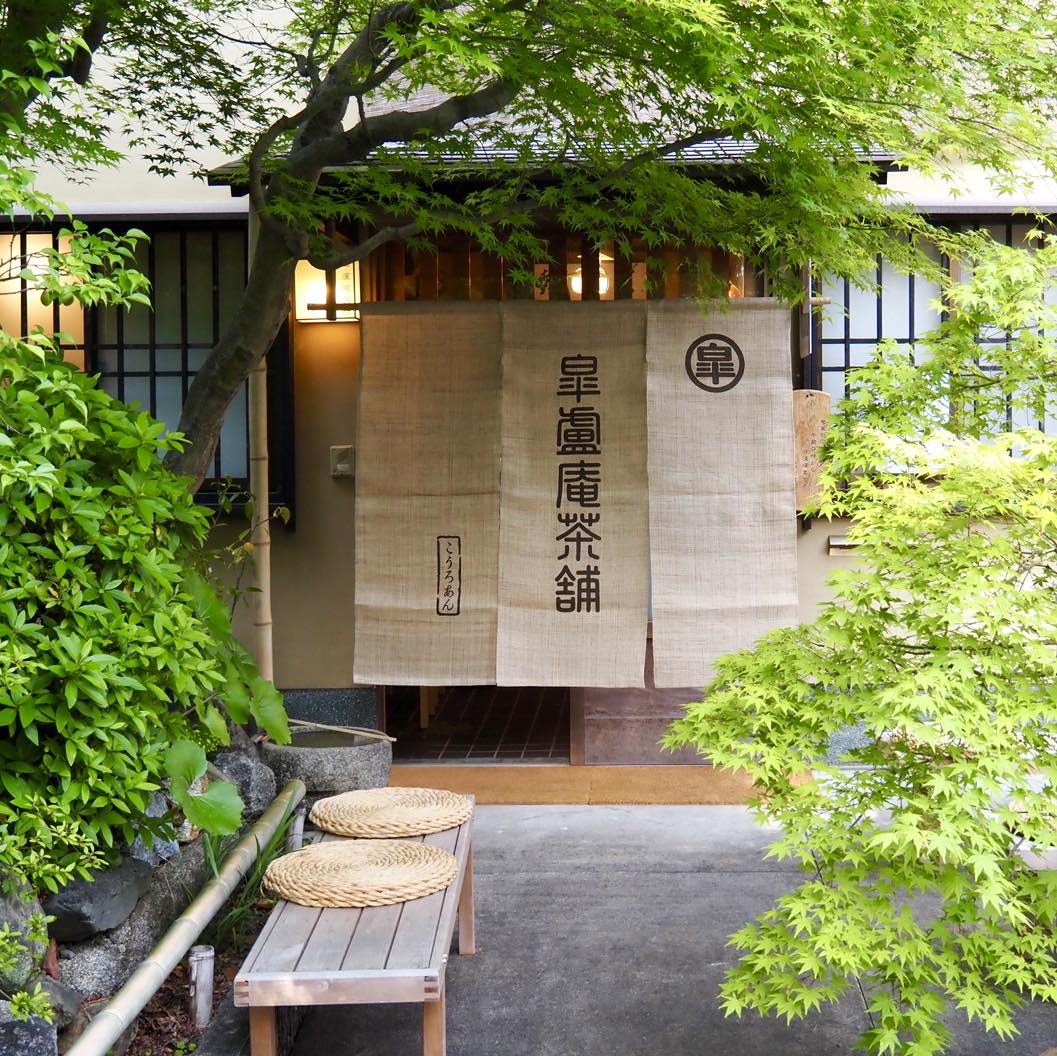
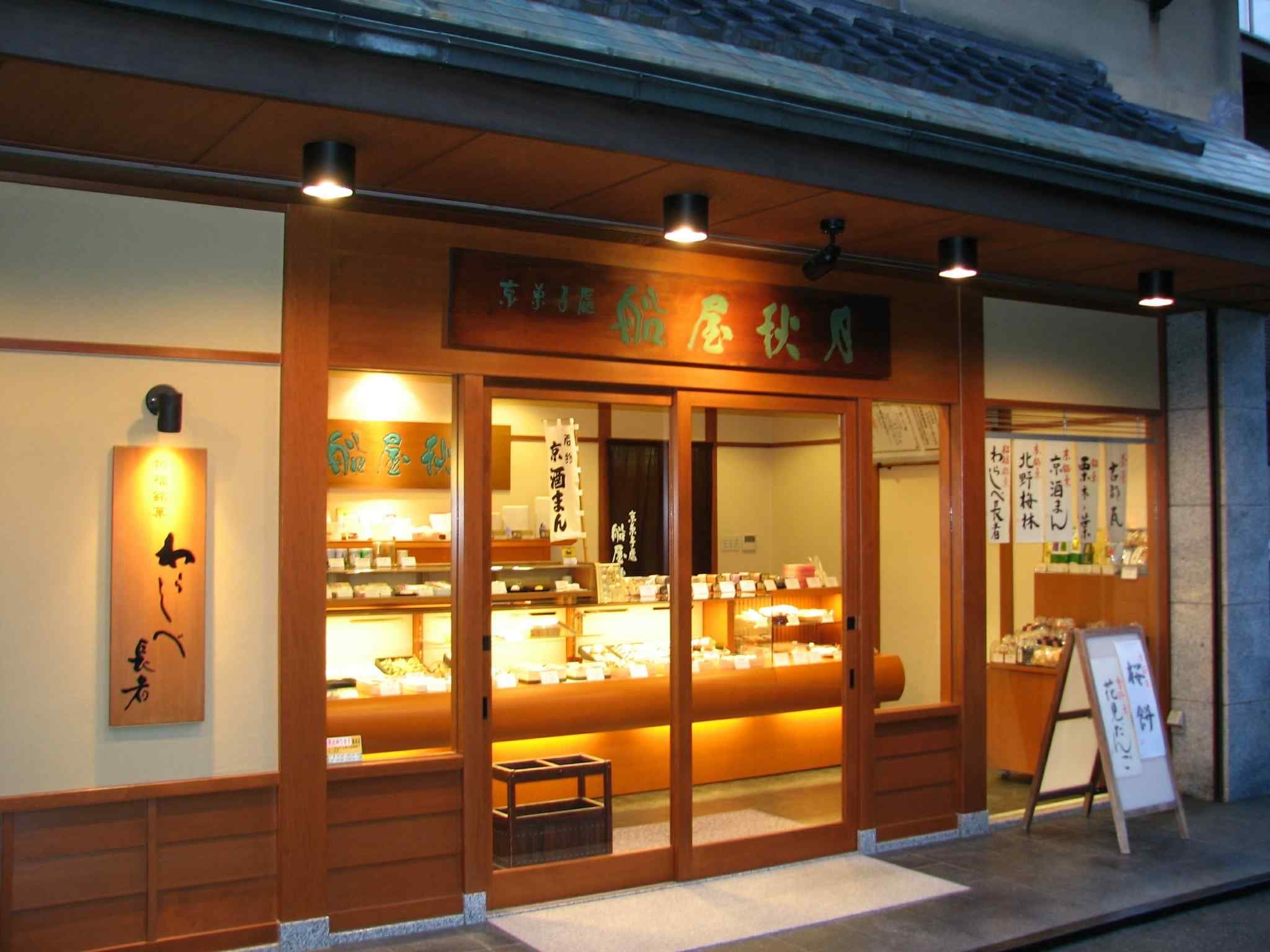
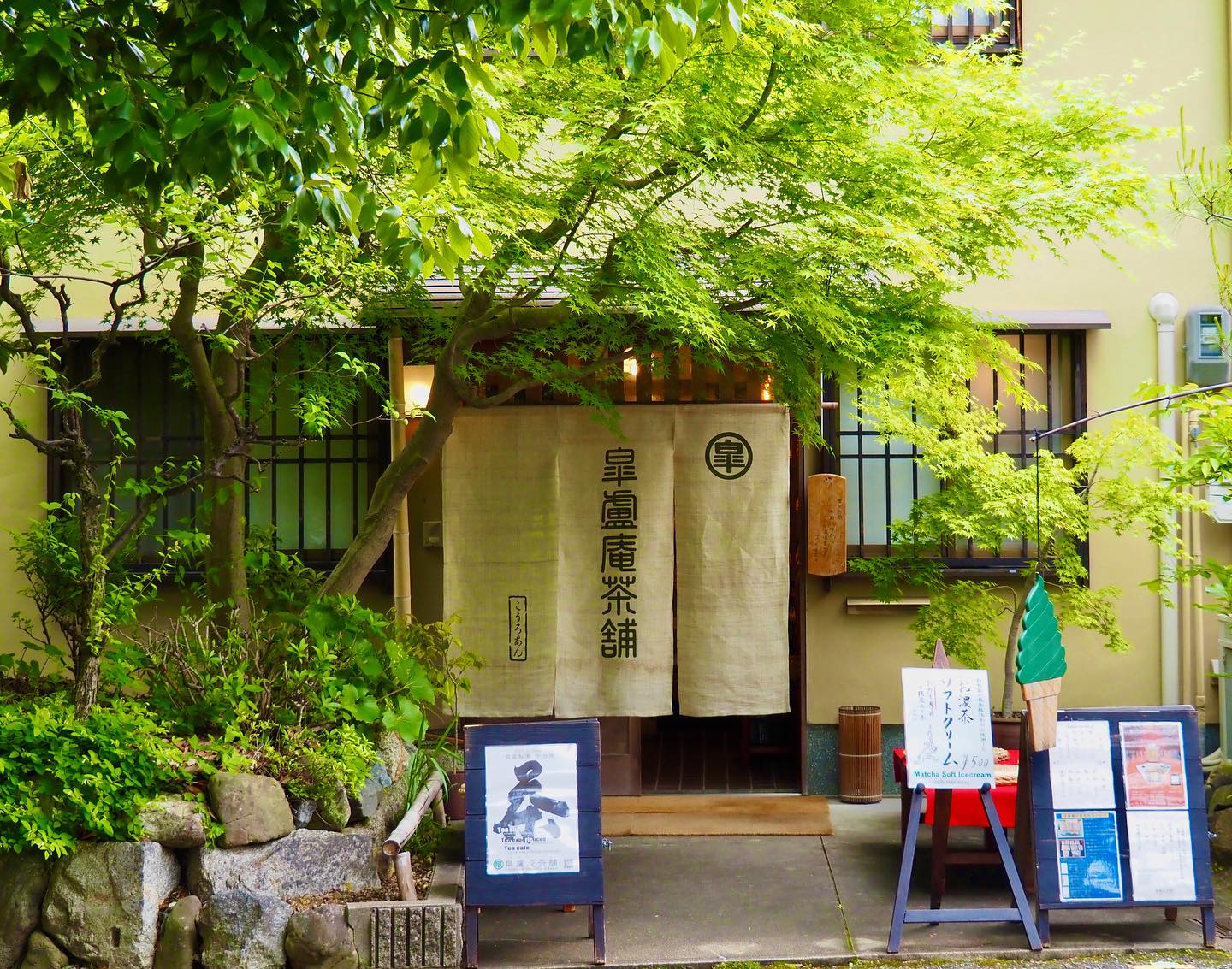
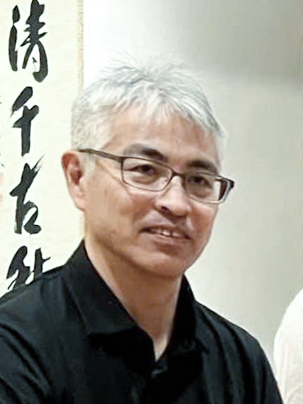
In the old streets of Kyoto, where wagashi and the tea ceremony have long been cultural icons, I met with wagashi artisan Sakai Toshihiro, owner of Funaya Shugetsu, and tea master Kanda Yasuaki, owner of Kouroan. Our conversation unfolded into a journey deep into the spiritual roots of Japan.
They spoke not only about the delicate sweets that capture the essence of the seasons and the memories tied to them, or the green tea leaves carefully nurtured from root to final cup, but also about the fragile balance between preserving tradition and adapting to modern life. From the pride of Kyogashi to the “subtractive” aesthetic of Rinpa, and even the global craze for matcha, their words revealed how wagashi and tea continue to find meaning in today’s world.
This nearly two-hour dialogue was made possible thanks to Yohaku, with the generous support of Abe Hanna, founder of Yohaku in Vietnam, who joined as interpreter and guide.
Anh Nguyên: Sakai Toshihiro, could you introduce Funaya Shugetsu to us?
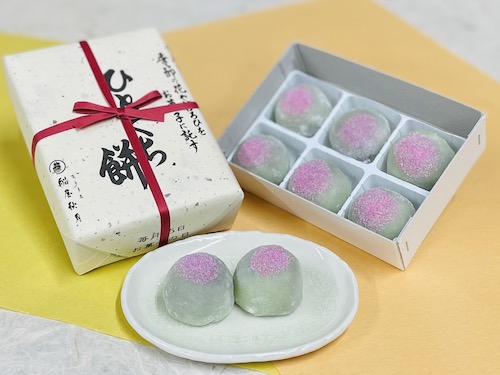
Sakai Toshihiro: Our confectionery shop is in Kyoto, close to Tenmangu Shrine, which is dedicated to Sugawara no Michizane, known in Japan as Tenjin-sama, the god of learning. I am the second generation to carry on the shop after my father. When he first started, he had only a small amount of sugar, and with such limited ingredients he created a special sweet called Warashibe Choja. The name comes from a folktale about a man who turns a single piece of straw into a great fortune through a series of lucky encounters.
We began on a very modest scale, saving every bit we earned to keep making and selling sweets. Over time, the shop grew, but what mattered most to us was the bond with our customers and neighbors. That is the true meaning of Warashibe Choja – and it remains the pride of our shop to this day.
Abe Hanna: How did you continue after your father passed away?
Sakai Toshihiro: My father laid the foundation for Funaya Shugetsu, and after his passing I felt a responsibility to carry on his legacy. I don’t seek to make the shop larger or grander; what matters to me is keeping it here in Kyoto, preserving it as a place that stays close to people’s lives. Making sweets is not just a profession. For me, it is a way of sustaining the connections my father built, from loyal customers to all those who value the taste of tradition.
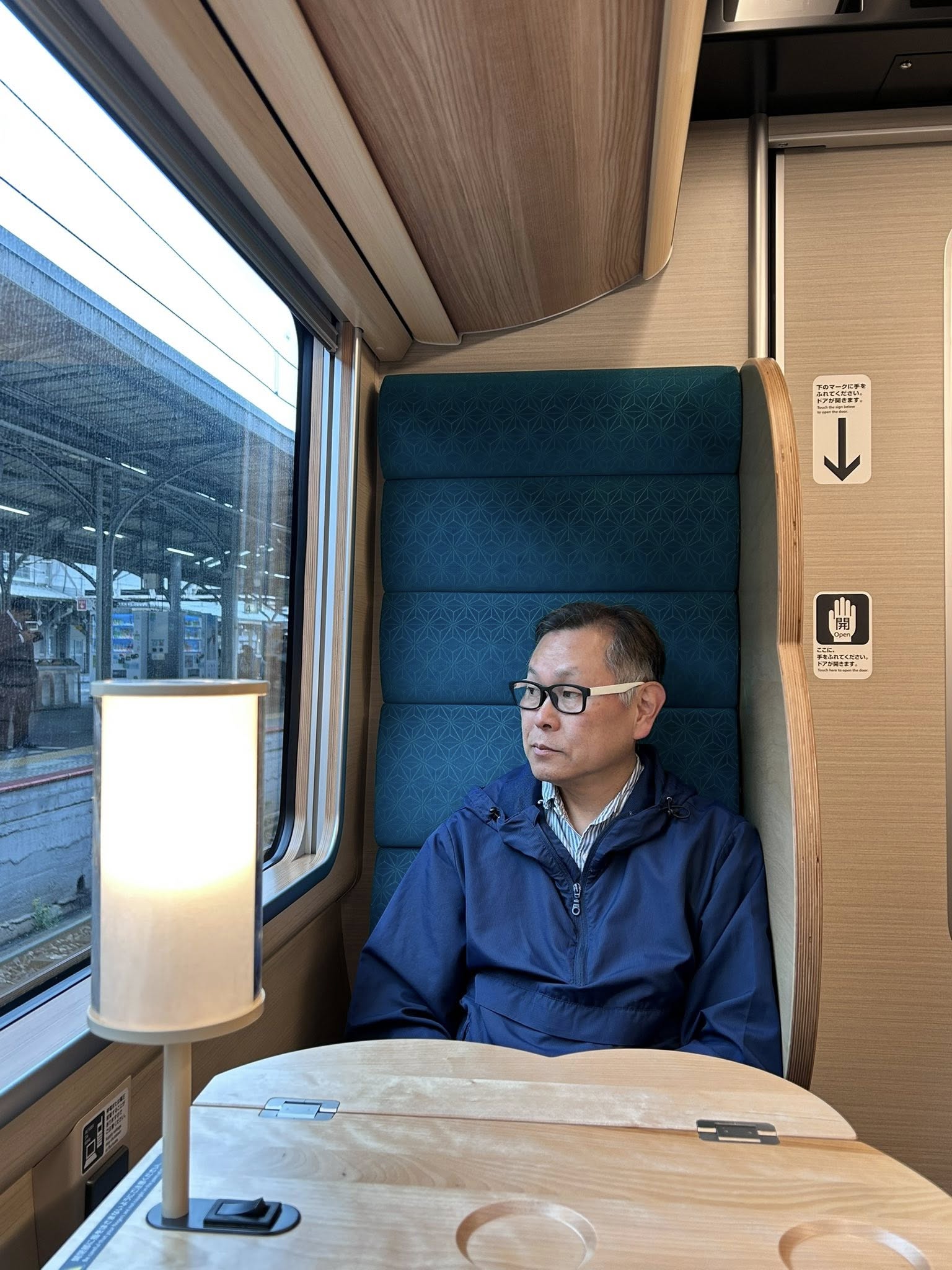
Anh Nguyên: What makes your tea shop, Kouroan, different from others, Kanda-san?
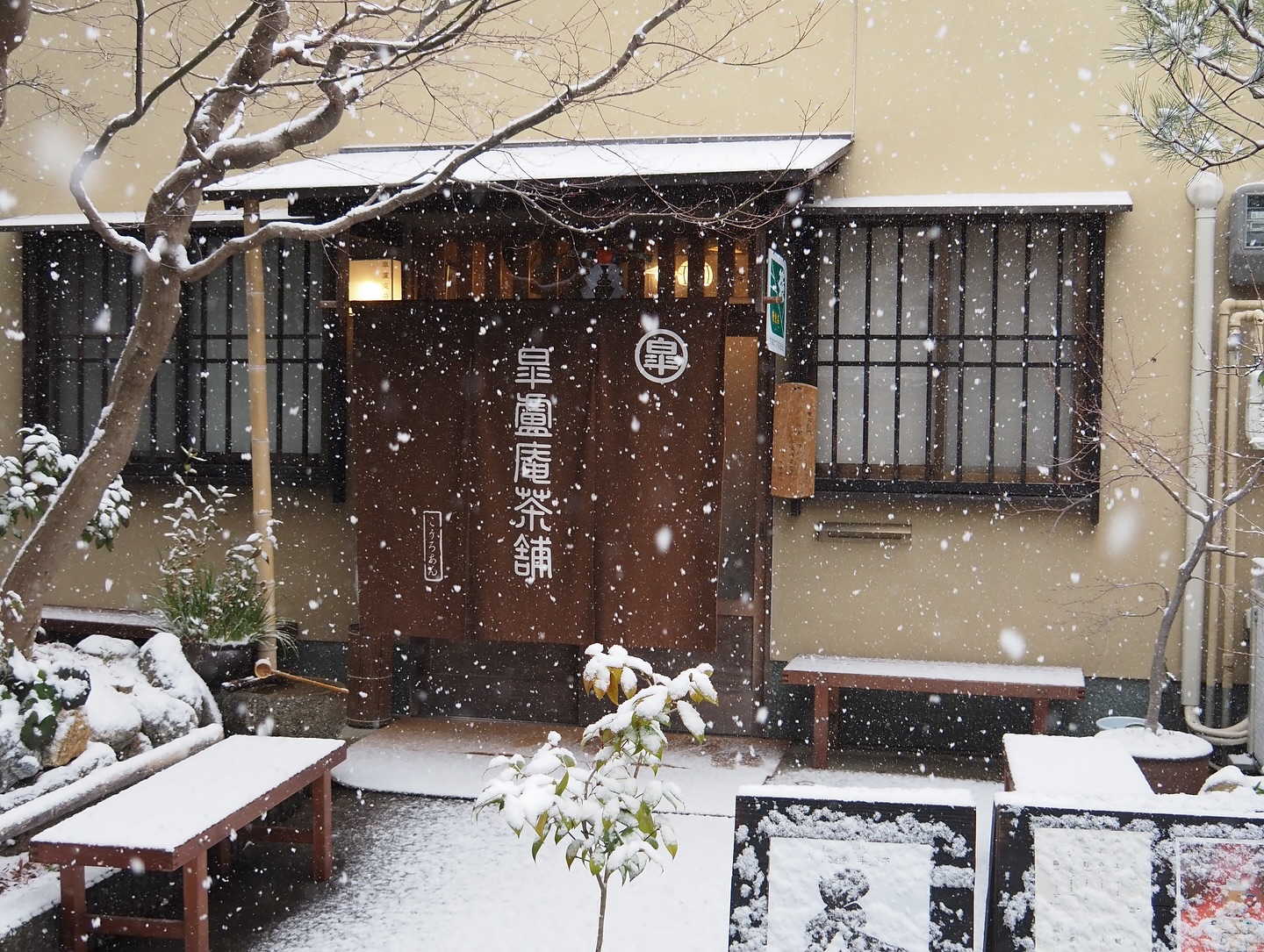
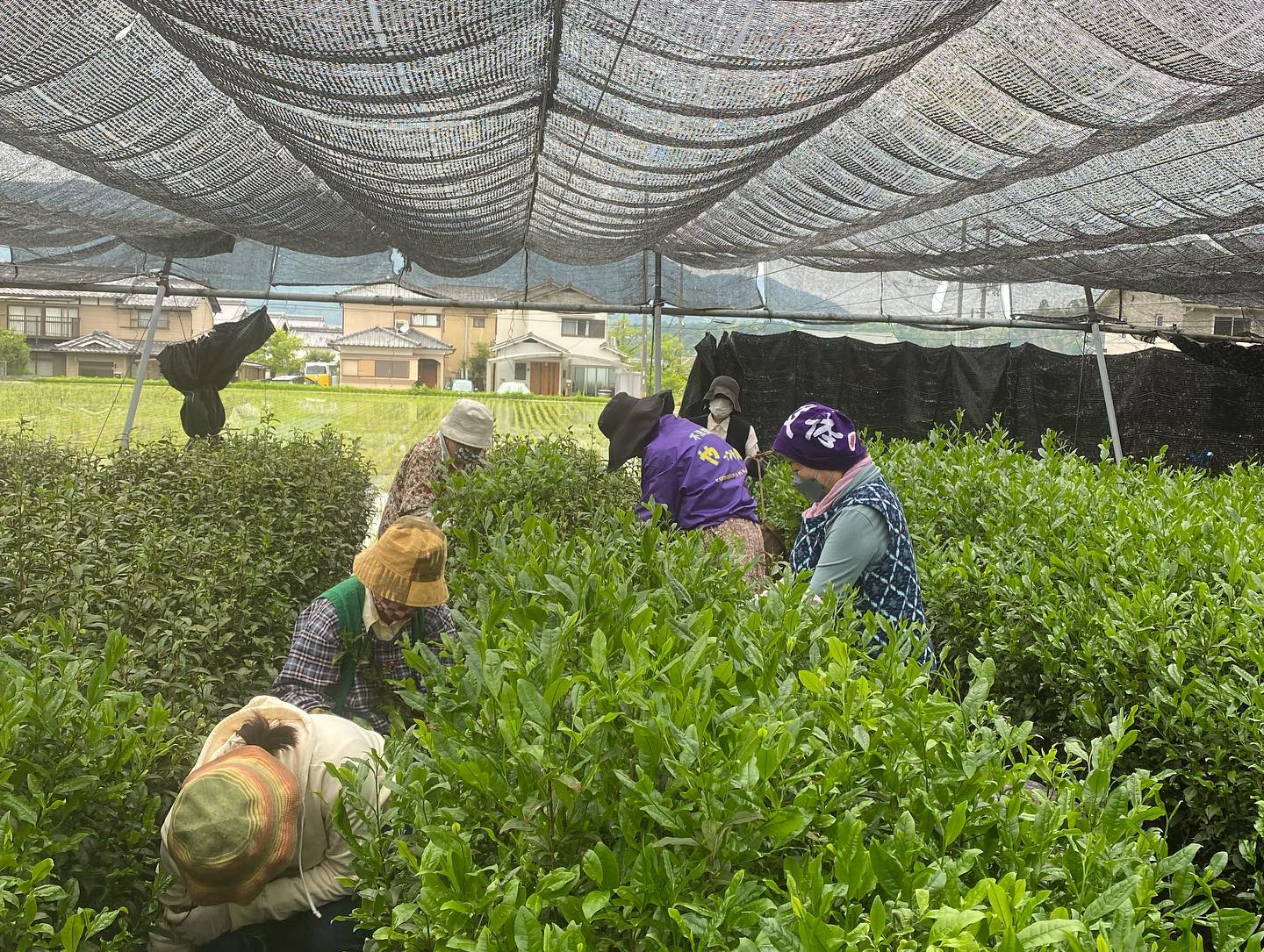
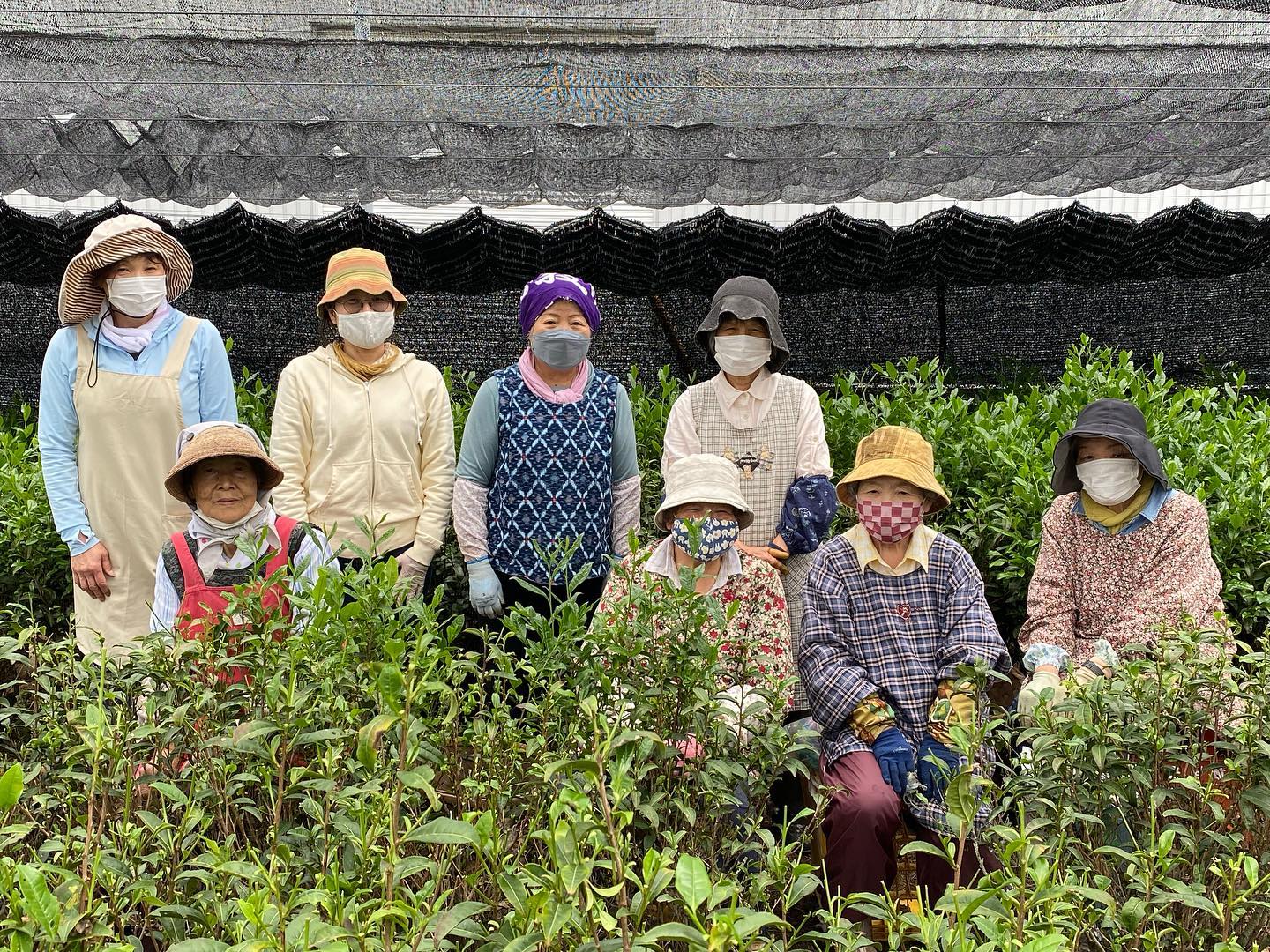
Kanda Yasuaki: In Japan, the tea industry is usually divided into three parts: farmers who cultivate the plants, processors and wholesalers, and finally the retail shops. At Kouroan, we are different because we take care of everything ourselves. From planting and nurturing the tea bushes to processing the leaves and serving the final cup, we follow the entire journey.
This approach allows us to preserve not only the quality of the tea but also its spirit at every stage. Kouroan is more than just a tea shop. It is a place where each cup carries the story of the land, the people, and the living traditions of Kyoto.
Anh Nguyên: What meaning do the tea and wagashi hold in modern life?
Kanda Yasuaki: People often imagine tradition as something far away, like Mount Fuji standing through the centuries or the old temples at the heart of Kyoto. But I believe that even in the rush of modern life, when people are busy with work and distractions, the act of tea whether in a formal ceremony or simply enjoying a cup offers a rare moment of stillness. It is not only about drinking tea; it is about slowing down, feeling a quiet connection with nature and with yourself. In the same way, wagashi may not be as essential as rice or water, but it enriches life. It provides a pause in the day, a small comfort that brings joy.
In the past, tea and wagashi were even considered medicine, believed to support health and longevity. That meaning has shifted over time, yet tea still feels like a medicine for the soul. Made from refined ingredients such as green tea leaves or red beans, both tea and wagashi continue to nourish not only the body but also the heart, helping us find balance and peace in today’s world.
Sakai Toshihiro: I feel the same as Kanda-san. Long ago, when medical knowledge was limited and life was fragile, sweets often carried a sacred role. They were offered in rituals as prayers for health, long life, or a good harvest. In today’s society, where people are more conscious of health issues, like sugar, cholesterol, diabetes and religious offerings are less common, sweets have become more like everyday snacks. But even so, they remain food for the soul. For tea masters or those who uphold tradition, wagashi is still an important part of ceremonial practice. For me, it is a way to nourish the spirit, something that adds depth and meaning to daily life.
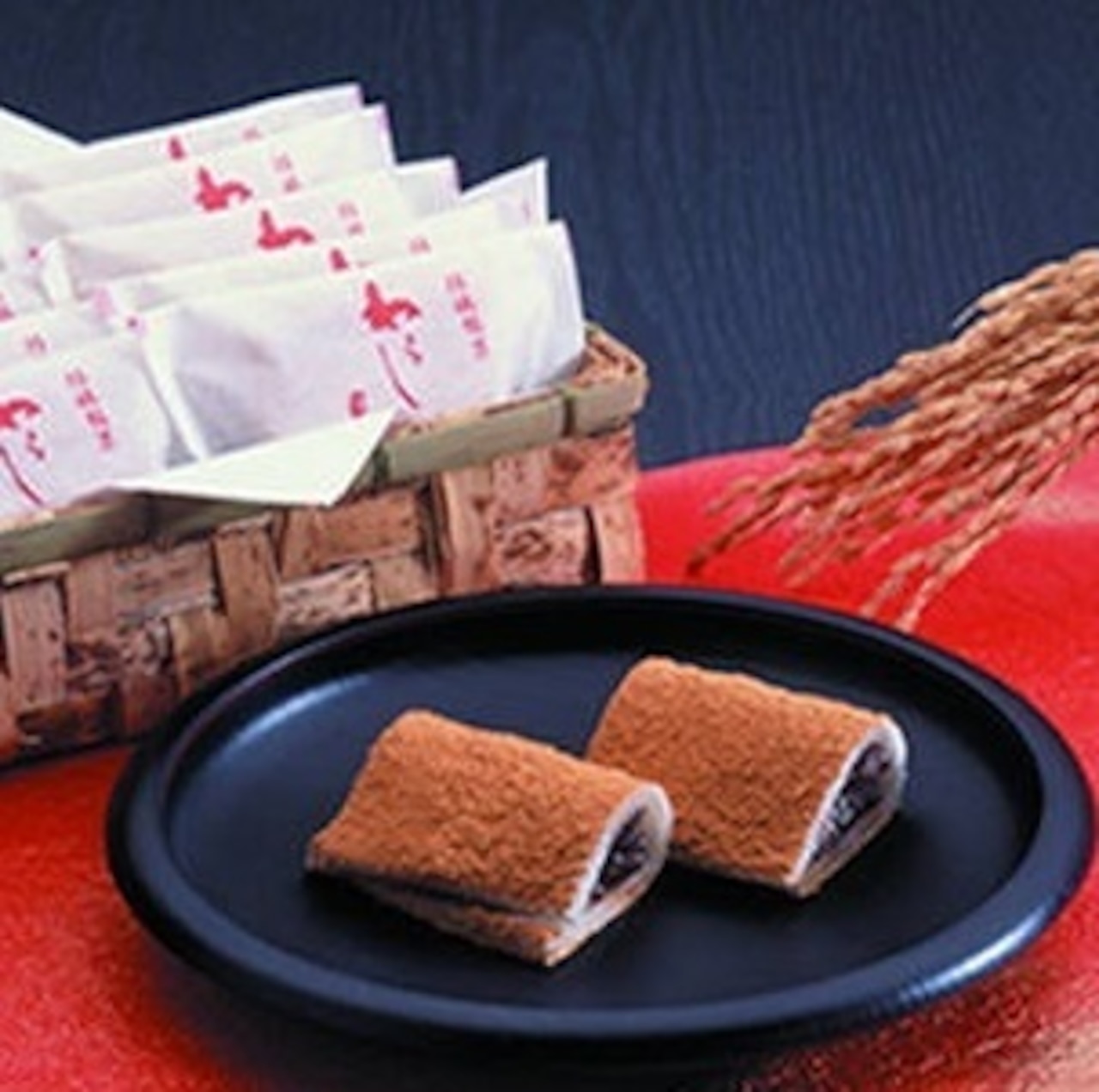
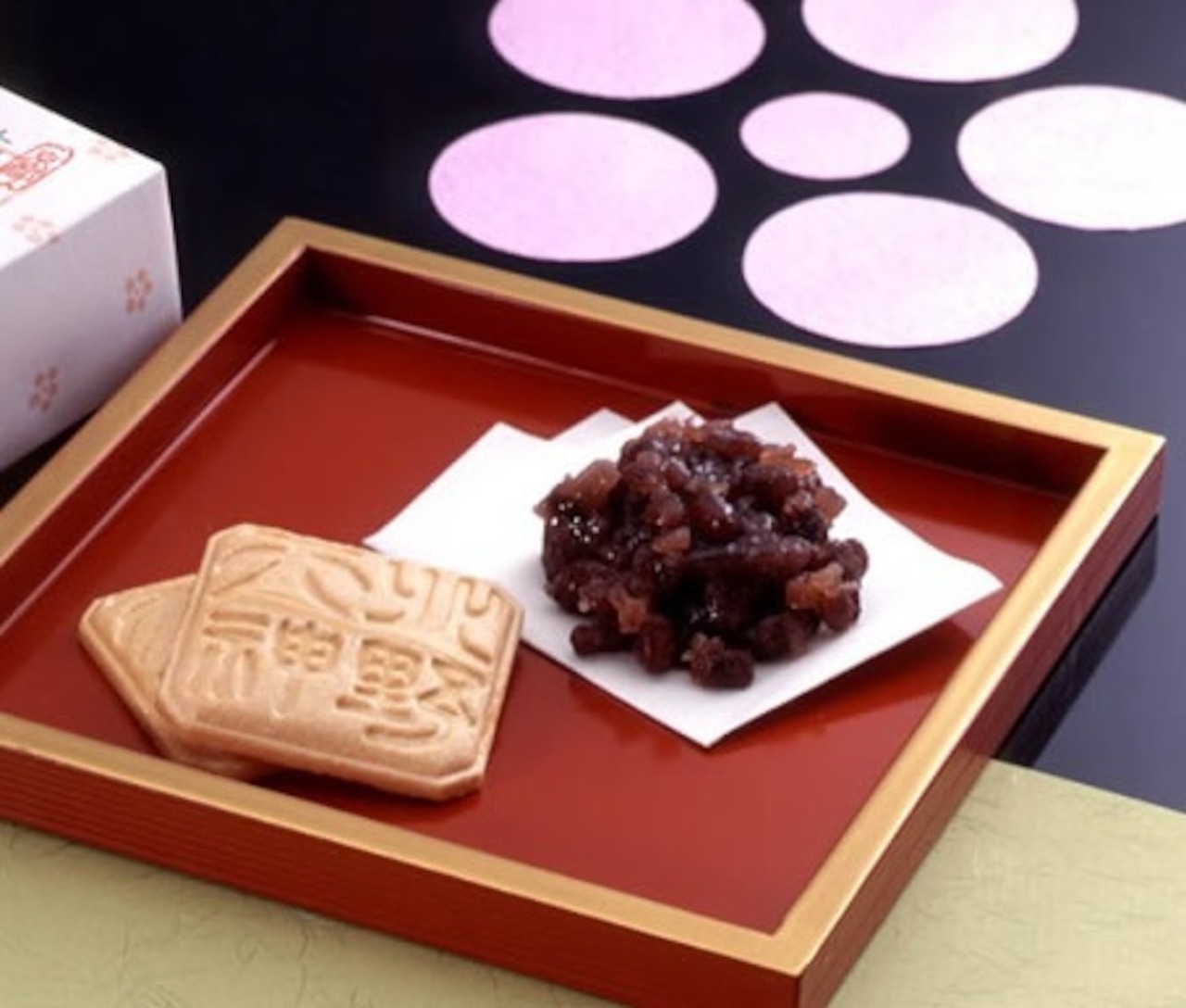
In the past, tea and wagashi were even considered medicine, believed to support health and longevity. That meaning has shifted over time, yet tea still feels like a medicine for the soul.
Kanda Yasuaki
Anh Nguyên: How does a wagashi usually begin: with an idea, ingredients, or its form?
Sakai Toshihiro: Customers rarely tell me exactly what kind of wagashi they want, but their vague requests give me hints that spark ideas. For wagashi used in tea gatherings, the maker often weaves in a message or an emotion. When I design a piece, I always aim to create a moment of surprise, something the customer can feel through the shape, the name, or the way the sweet reflects the season. The greatest joy comes when they understand the meaning hidden inside.
I often discuss ideas with tea masters, but ultimately my goal is to create wagashi that makes people exclaim, “Ah, I see!”
Anh Nguyên: In the process, which step do you consider the most important in giving wagashi its soul?
Sakai Toshihiro: Every wagashi has its own decisive moments, from selecting ingredients to shaping the final form. But wagashi made for a tea gathering is never just a stand-alone sweet; it is part of the larger context, carrying the message the host wishes to convey. For me, forming the core idea is the most important and the most difficult step. It takes time, but it is what defines the soul of the wagashi. Beyond that, the attitude of the maker, pouring care and feeling into every step, is what truly gives life to the sweet.
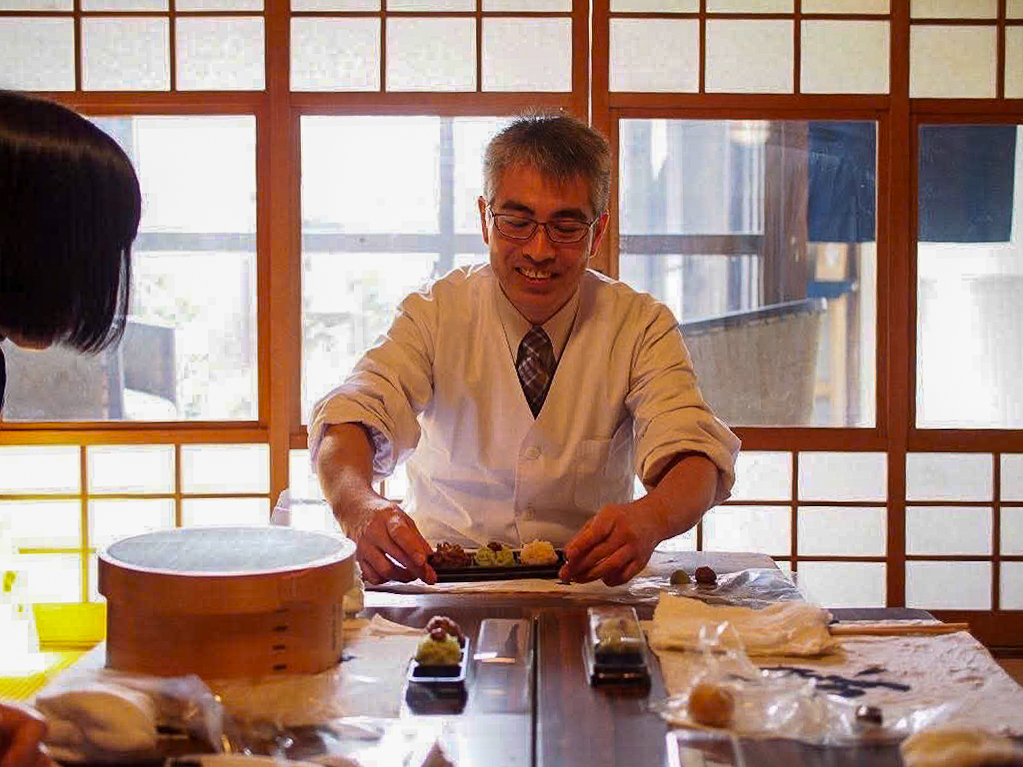
Anh Nguyên: Wagashi changes with the seasons. How do you choose ingredients and colors to reflect the four seasons?
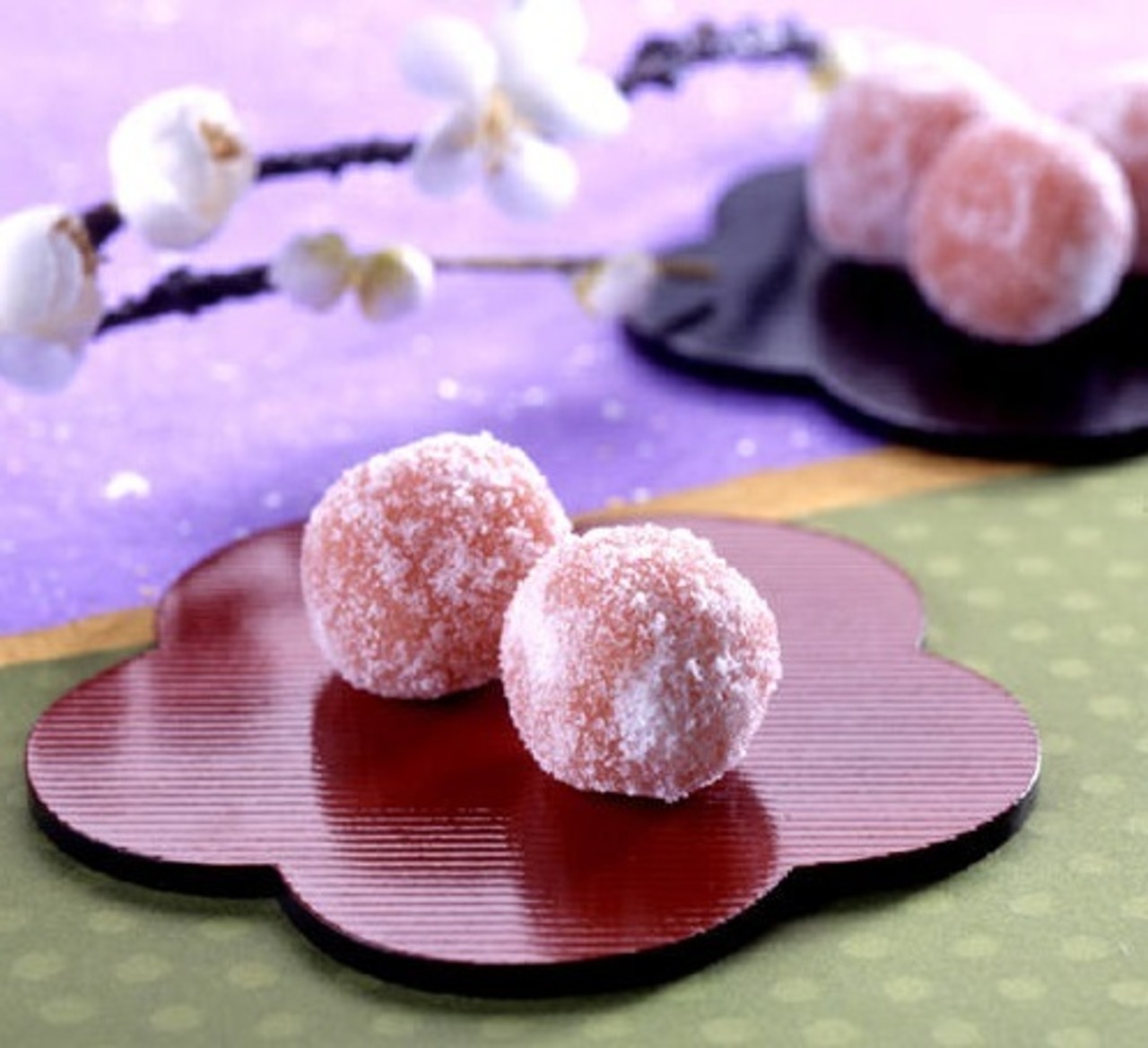
Sakai Toshihiro: The basic ingredients of wagashi are surprisingly few: sugar, red beans, rice, flour, and kudzu starch. Depending on the season, we might add chestnuts or yuzu, but we still work within this familiar palette. What really matters is how we approach colors, names, and forms.
I often draw inspiration from the Rinpa school of art, where the idea of “subtraction” is central, removing what is unnecessary so that simplicity itself speaks. Within that simplicity, colors, shapes, names, timing, light, even the sensation of the season’s air, all come alive. Sometimes just a circle, a balanced line, or a name that suggests the season is enough to create a complete experience.
To bring out that moment of “Ah, I see!”, I try to capture not only the rhythm of the four seasons but also specific moments: the chill of dawn, the glow of twilight, the warmth of skin. I want all these impressions to flow into the wagashi, from its name to its taste. To achieve that refined simplicity while still moving the heart, that is the true challenge.
Anh Nguyên: In today’s context, is it difficult to source traditional ingredients?
Sakai Toshihiro: Yes, it is becoming increasingly difficult. Many ingredients are harder to find, and prices keep rising. For example, the bamboo leaves we use for chimaki suddenly became unavailable when the bamboo in the Kurama region flowered and withered all at once. On top of that, with Japan’s aging population and the risk of bears in the mountains, going into the forest to collect leaves has become a real challenge. Camellia leaves, cherry blossom leaves, and kashiwa (Japanese oak) leaves face similar problems.
Even chestnuts, such a familiar taste of autumn, are becoming scarce in high quality. This challenge is not unique to my shop. Take korimochi, a special powder that gives wagashi its glossy coating: today it may only be produced by a single supplier in all of Japan. If that source were to disappear, we would have no choice but to seek a substitute, and that would change the wagashi itself. For example, the warabi powder now sold on the market no longer meets the standards I look for.
We are gradually being pushed to look for alternatives, but the traditional ingredients are vanishing. For me, this is not only a matter of production; it is a deep concern about losing the original flavor and spirit of wagashi.
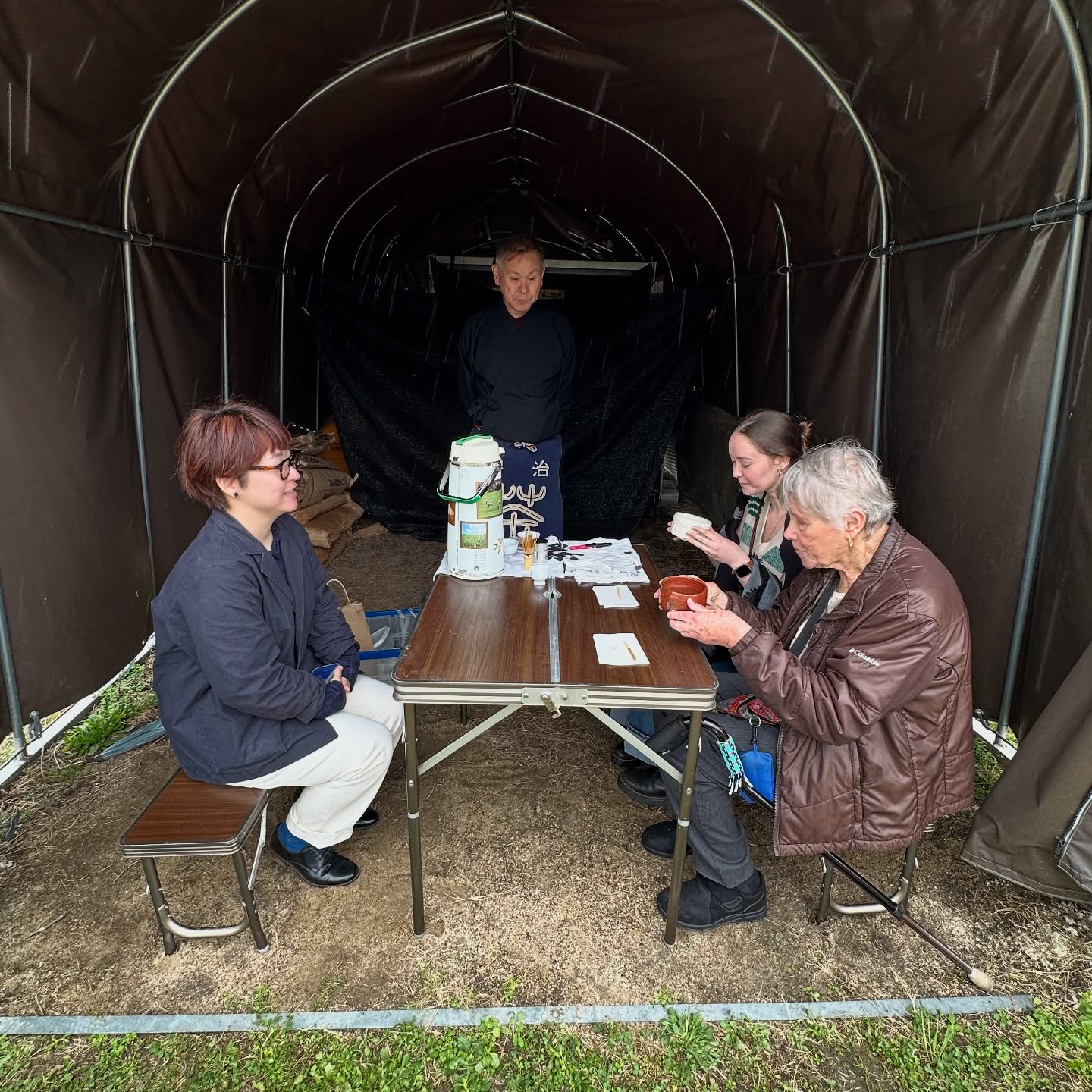
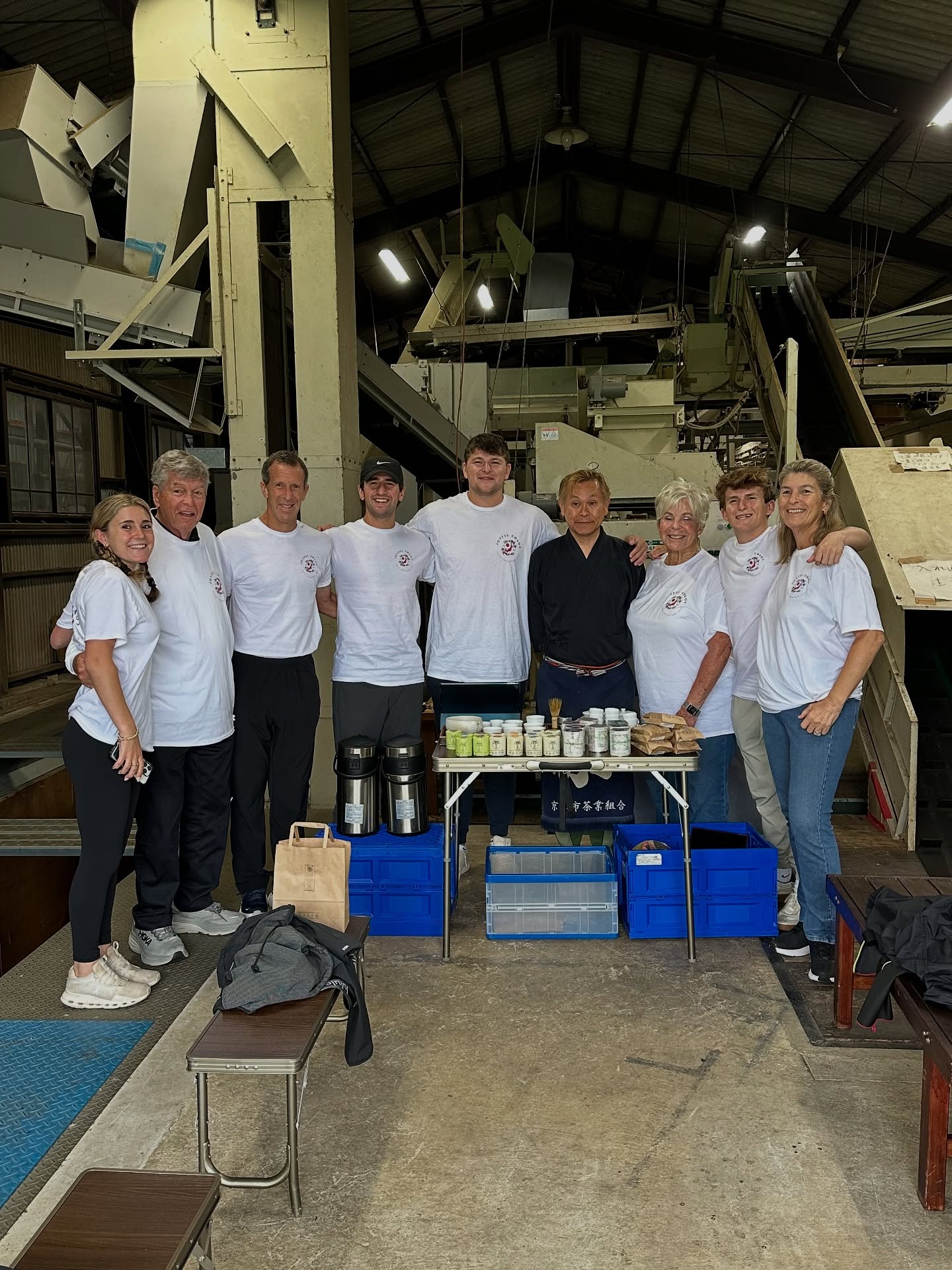
Anh Nguyên: With Kouroan, is the tea mainly grown in Japan or elsewhere? I understand that Kouroan produces organic tea themselves, but not all imported tea is organic.
Kanda Yasuaki: All of our tea is grown in Japan, and it all comes from Kyoto.
Personally, I prefer not to come into contact with pesticides, which is why I choose to produce organic tea. That said, I don’t believe the use of pesticides is entirely bad. Many teas, including those imported, are still grown using traditional farming methods that involve pesticides. I think it’s better to have a range of choices, for both the farmers and the tea drinkers.
In Japan, pesticide standards are very strict. A pesticide may kill certain insects one day, but the next day a different species may appear, rendering it ineffective. Most pesticides only target specific insects, so their use is limited. If another species comes, a different pesticide must be used. But when multiple types are combined, the leaves can wither, this is what we call “pesticide damage.” So in practice, they cannot be overused. And in reality, residues are not as severe as people might imagine, because under sunlight and ultraviolet rays, many pesticides naturally break down.
What is crucial is that every use of pesticides must be recorded and transparent. In Japan, surprise inspections are common. If residues exceed the permitted levels, the entire batch is immediately stopped. And when that happens, it’s not just one farmer who is affected, everyone sharing the same processing facility faces the consequences. That is why I believe pesticides themselves are not the problem. The real issue lies in management and strict adherence to standards.
Anh Nguyên: One of the reasons you came to Vietnam is because many consumers here often have incomplete or inaccurate information about tea. Even in workshops, people sometimes struggle to tell whether matcha is made from the first, second, or third flush of tea buds, or they are unsure of what exactly is inside it. Is it necessary to establish clear and understandable standards for consumers about where the tea comes from, what it contains, and its intended purpose? And what does that transparency mean for tea drinkers today?
Kanda Yasuaki: I believe it is very necessary. Of course, not every situation requires extremely detailed standards, but what matters most is whether the quality matches the price.
If someone is simply looking for inexpensive tea, then lower quality is acceptable as long as they understand what they are buying. The problem arises when information is not transparent and consumers lack accurate knowledge. In such cases, they can be misled or even face health risks. If something like that were to happen with Japanese tea, it could damage the reputation of the entire industry. That is why accurate knowledge is so important.
When people understand the differences in quality, they can choose tea that truly suits them and judge whether the price is fair. Clear, transparent standards give consumers confidence in their choices, and in turn, make the act of drinking tea a more meaningful experience.
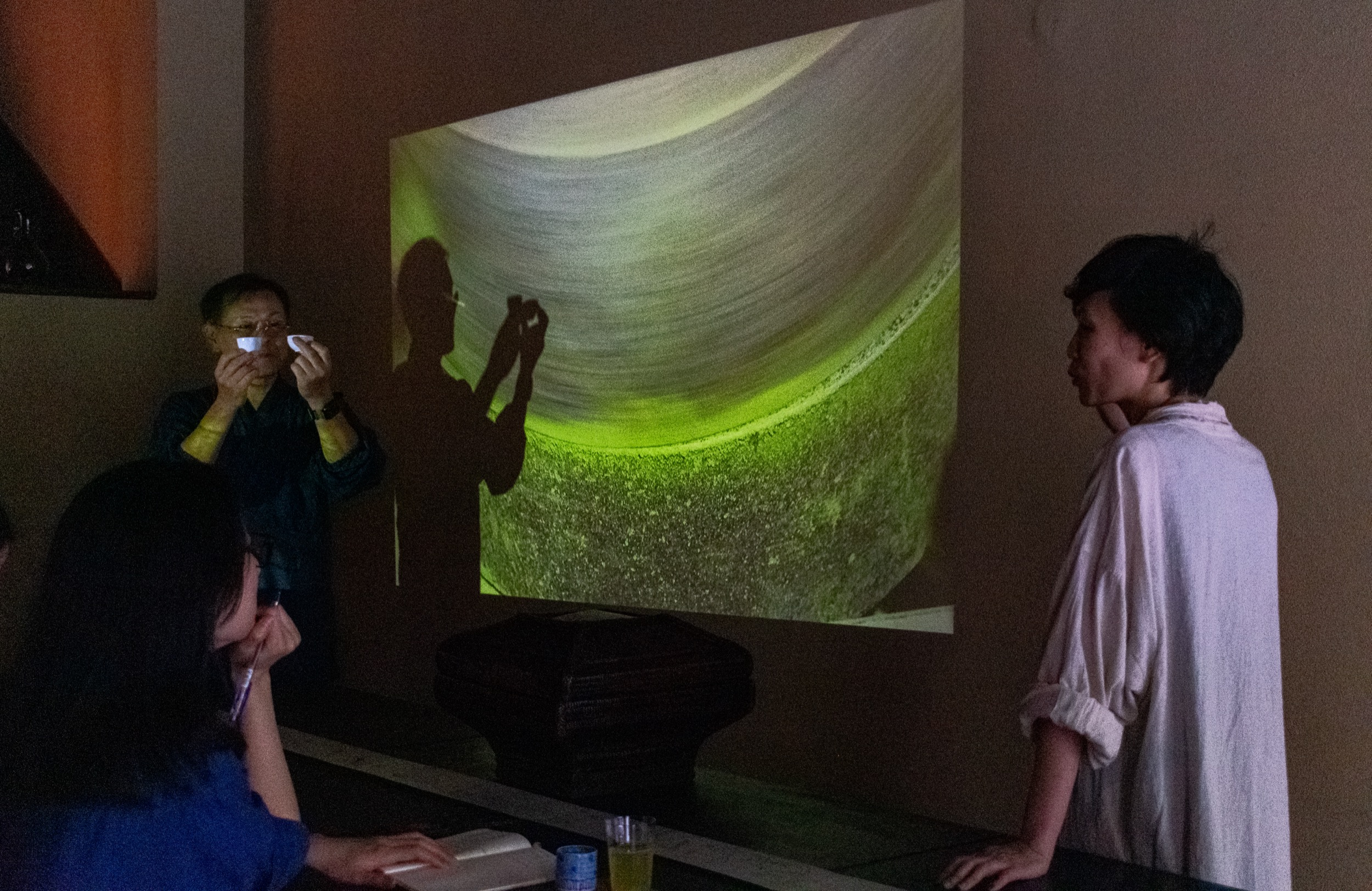
Anh Nguyên: Wagashi today must both preserve tradition and adapt to contemporary life. What boundaries need to be respected?
Sakai Toshihiro: It is very difficult today. Even here in Kyoto, many confectionery shops must adapt in order to survive the wave of foreign tourists and their demands. For those who truly understand, Kyogashi – Kyoto’s traditional sweets remain deeply cherished. But as Kanda-san once said, to appreciate the beauty of simplicity and the spirit of “subtraction,” you need a certain foundation of knowledge. Without it, a wagashi may seem like nothing more than a plain white circle, ordinary and unremarkable.
In reality, only the elderly, those who study the tea ceremony, or people of refined taste truly grasp its value. Because of this, the audience for traditional wagashi is slowly narrowing. At this year’s confectionery exhibition in Asahikawa, which takes place every four years, the top prize did not go to a Kyoto shop. Instead, it went to colorful, elaborate sweets with ornate details. Kyogashi, which is small in scale and values emptiness and restraint, was not selected. Even in Japan, tastes are shifting. What is easy to understand, bright in color, and appealing for social network is now what sells best.
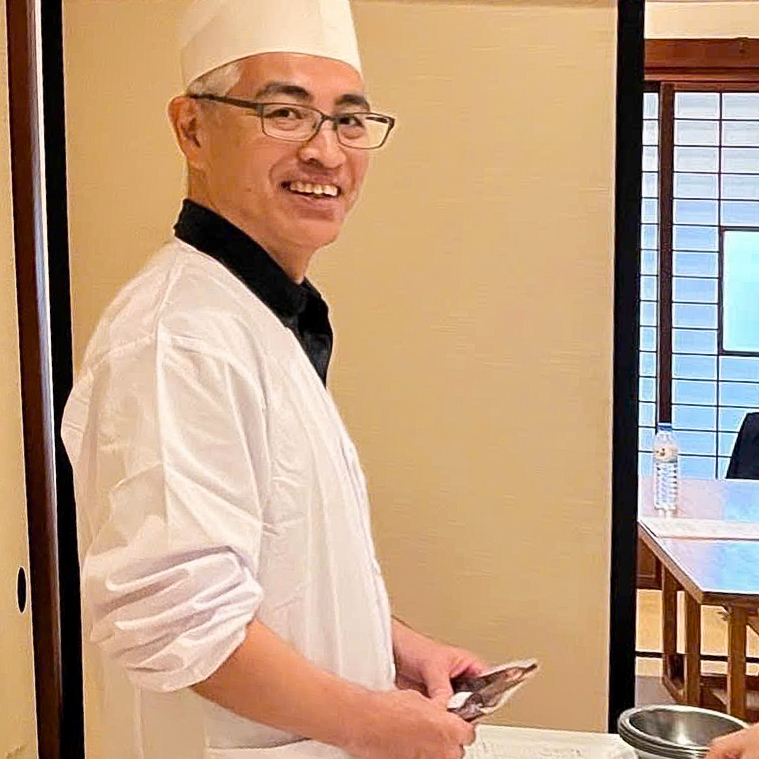
In that context, it becomes very difficult to know how far we should preserve tradition and how much we should change in order to survive. I believe it is possible to take one step outward, to adapt a little. But if we take both feet out, we risk losing our identity and that is what worries me the most.
Sakai Toshihiro
Abe Hanna: Personally, I admire the “subtractive” philosophy in wagashi making, and I think that’s the boundary that needs to be preserved. But with traditional ingredients becoming harder to source, should we consider incorporating new ones, like milk or alcohol, for example?
Sakai Toshihiro: I think that is entirely possible. In fact, wagashi has always absorbed influences from outside: namban-gashi (sweets introduced from the West), or castella and konpeito from Portugal, which over time were naturalized and became part of wagashi. These days, butter or milk rarely appear in sweets used for tea ceremonies, but when it comes to sweets sold in shops, I believe it is acceptable.
For me, the focus is not on chasing rare or expensive ingredients. What matters is using what is available around Kyoto to create sweets that are delicious, approachable, and safe. Ideally, I want to rely on ingredients from Kyoto, or at least from Japan. Milk or butter may not suit wagashi for the tea room, but in shop sweets, they can contribute to wagashi evolving with the times. Still, there must be a boundary. We can step out a little, but wagashi must not become entirely Western. If both feet step out, wagashi risks losing its identity.
Abe Hanna: In summary, how should we properly understand Kyogashi?
Sakai Toshihiro: Kyogashi is deeply connected to the way it is made, to the “subtractive” philosophy I mentioned earlier. It exists within the broader world of wagashi, but the boundary between the two is difficult to define. I call my creations Kyogashi, but in the end, whether a shop is seen as a Kyogashi shop depends on the customers.
When tea masters or elderly patrons who visit regularly feel that “the sweets there are Kyogashi,” then for them, it truly is. In Kyoto, simply making sweets here may already qualify as Kyogashi, and being part of the Kyogashi Association further reinforces that. But honestly, if I insist my sweets are Kyogashi yet the customers do not feel so, then they are not.
In the end, it all comes down to the relationship with the customers. Kyogashi is not just sweets made in Kyoto, it is sweets defined by the bond between the maker, the customers, and the tea ceremony.
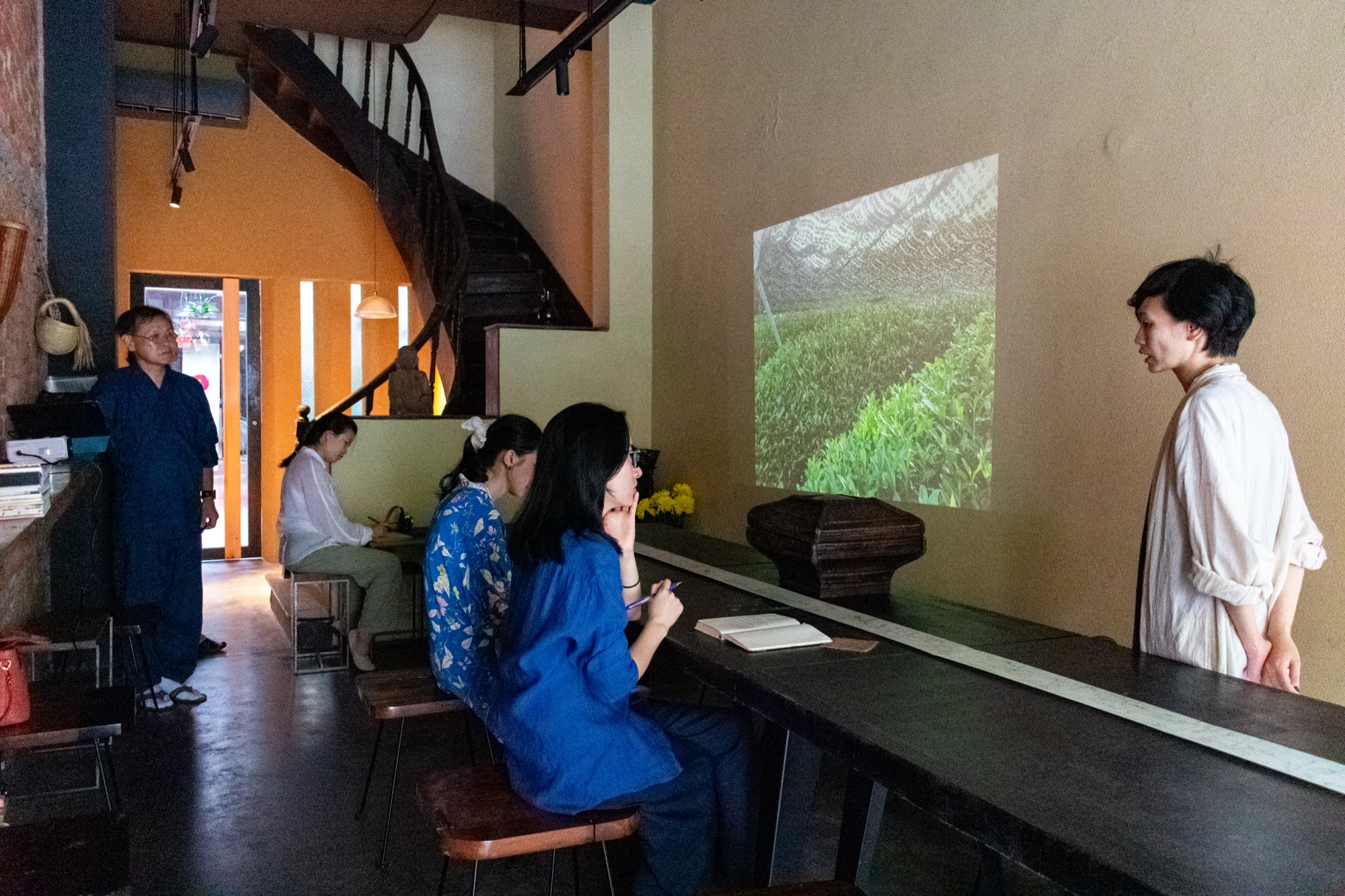
Abe Hanna: You’ve been to Vietnam several times, and these days not only here but around the world we are witnessing a “Japanese tea craze.” Matcha, sencha, and gyokuro are all gaining attention, but matcha in particular has become a trend. As a tea maker, what do you think about people in countries with no historical connection to matcha embracing it so enthusiastically?
Kanda Yasuaki: As I’ve mentioned before, matcha has long been tied to the tea ceremony, whisked with a bamboo whisk, and was once considered a luxury, far from the reach of ordinary people. But thanks to matcha-flavored sweets and the influence of social media, matcha has been promoted as a superfood, something good for health and well-being, and this has quickly spread its popularity.
What I find interesting is that most people enjoy matcha today through lattes or sweets. For me, this is not a problem at all, it is actually a wonderful starting point. I remember when bottled tea first appeared in Japan, both the public and people in the tea industry reacted strongly, saying, “That is not real tea.” But now, almost everyone, even tea professionals, drinks bottled tea. And from there, some began asking, “Then what is real tea?” That question encouraged them to discover authentic tea.
Matcha today is similar. People may begin with lattes or sweets, but then they become curious about experiencing matcha in its traditional form and learning about the tea ceremony. From a tea shop’s perspective, the important thing is that matcha is being enjoyed in any form and is reaching people. If that interest leads them to fall in love with matcha, to appreciate the tea ceremony, and to engage more deeply with Japanese culture, that is ideal. So I see nothing negative about the “matcha craze” happening abroad.
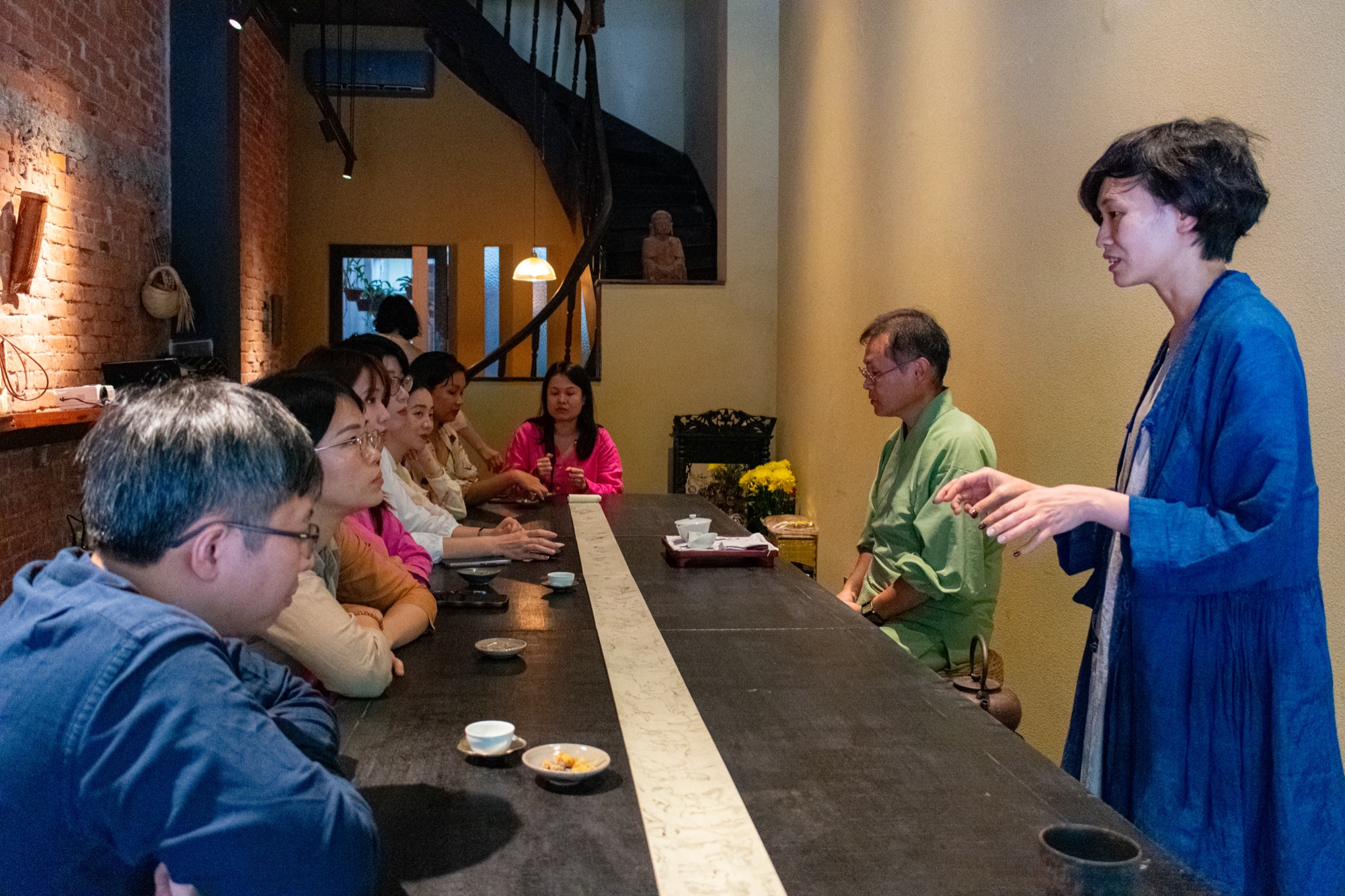
After many years of making wagashi and tea, what have you learned?
Sakai Toshihiro: I inherited this wagashi shop from my father. At first, I thought my role was simply to carry on the family tradition. But over time, I realized that the real joy lies in the act of making the sweets themselves. For me, this shop is not just a wagashi or Kyogashi store—it is the place where I truly belong.
When high school students come to visit and ask me about my work, I simply tell them, “This is where I belong.” To know that people in the Fukuoji neighborhood of Kyoto think, “There’s that man who makes sweets,” brings me great happiness. In my life, this shop is proof that a wagashi maker exists here, in this community.
Making wagashi is not just a job. It is how I live in this world, how I share joy with those who know this place. I don’t think about making more money or reaching some grand goal. I only want to continue making sweets here, in this small shop. That, for me, is fulfillment.
Kanda Yasuaki: I entered the world of tea almost by chance. At first, it was just a side job, but as I became more involved, I realized how much I didn’t know. I asked myself: am I the only one who is unaware, or is the whole world unaware too? From these questions, little by little, I built up knowledge and experience.
Coming to Vietnam gave me the chance to share what I have learned with people who are still unfamiliar with tea. In this industry, many people are reserved, and sometimes invisible walls exist between tea shops. I am different: my family was never in the tea business, and I started from nothing. That is why I feel free to share openly the love I have for tea, and that brings me great joy.
I don’t know how many people will embrace it, but I believe sharing my knowledge, techniques, and experiences is only natural. Beyond my personal perspective, I think about what the world asks of tea—its history, its cultural habits, and how it has evolved. I hope people can find the tea they love, along with the traditions and stories that belong to it.
This is not only for Japanese people. I want to share with people in Vietnam, in America, everywhere, that true tea can take many forms. Vietnamese lotus tea is tea. Even a matcha latte, if made with care and quality ingredients, is, in my view, a part of tea.
Tea and the tea ceremony are often seen as rigid, but that is not their essence. For me, tea should be free. And to discover that freedom, we must first understand tea’s true nature, taste it in its authentic form, and then have the courage to create something new.
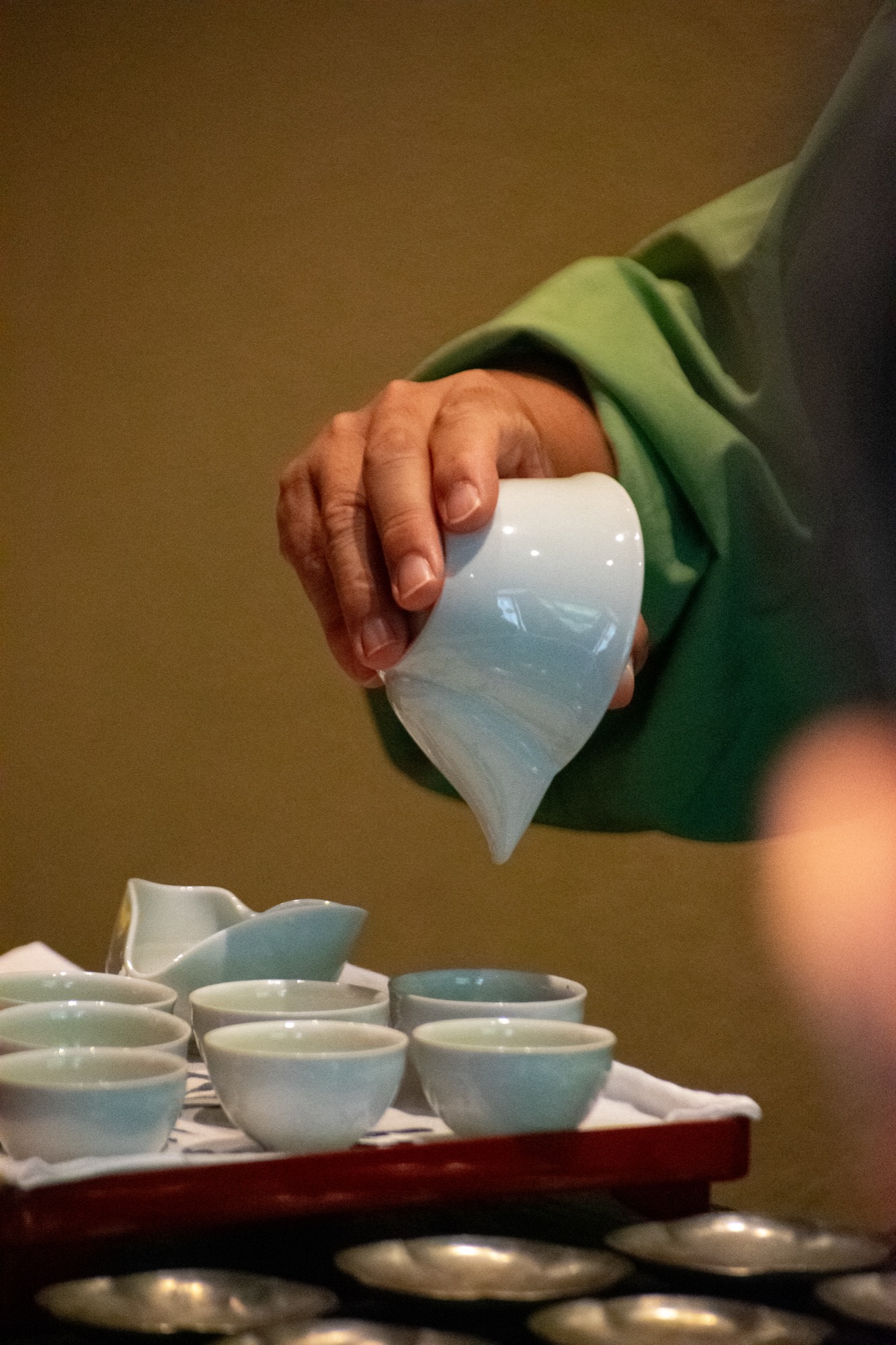
You are free to make the kind of tea you want without worrying about others. So, what kind of tea do you truly want to create?
Kanda Yasuaki: I’m drawn to the idea of Looking back at the past to discover something new. It may sound abstract, but what I aim for are teas that carry a sense of nostalgia.
I often wonder if, during the Edo, Meiji, or Taisho periods, people might have made teas that were more flavorful than what we have today. Perhaps they had a deeper understanding of what makes tea truly delicious. So I ask myself: how was tea made back then? With modern technology, it has become easy to produce good tea, but I believe something precious has been lost along the way. What I want is to bring these elements together: the techniques of today and the spirit of the past.
Abe Hanna: Do you do that by referring to documents?
Kanda Yasuaki: Of course, I consult books and written records. But surprisingly, the most valuable knowledge comes from the stories of the elder farmers who have spent their entire lives with tea plants. I listen to them explain why certain things were done in the past, compare those methods with modern practices, and then test and verify them myself. Through that process, I find my own path for tea today.
Anh Nguyên: Thank you both so much for this conversation, and my gratitude also goes to Yohaku for bringing us together. This autumn, it has been a great pleasure to meet you both here in Hanoi.