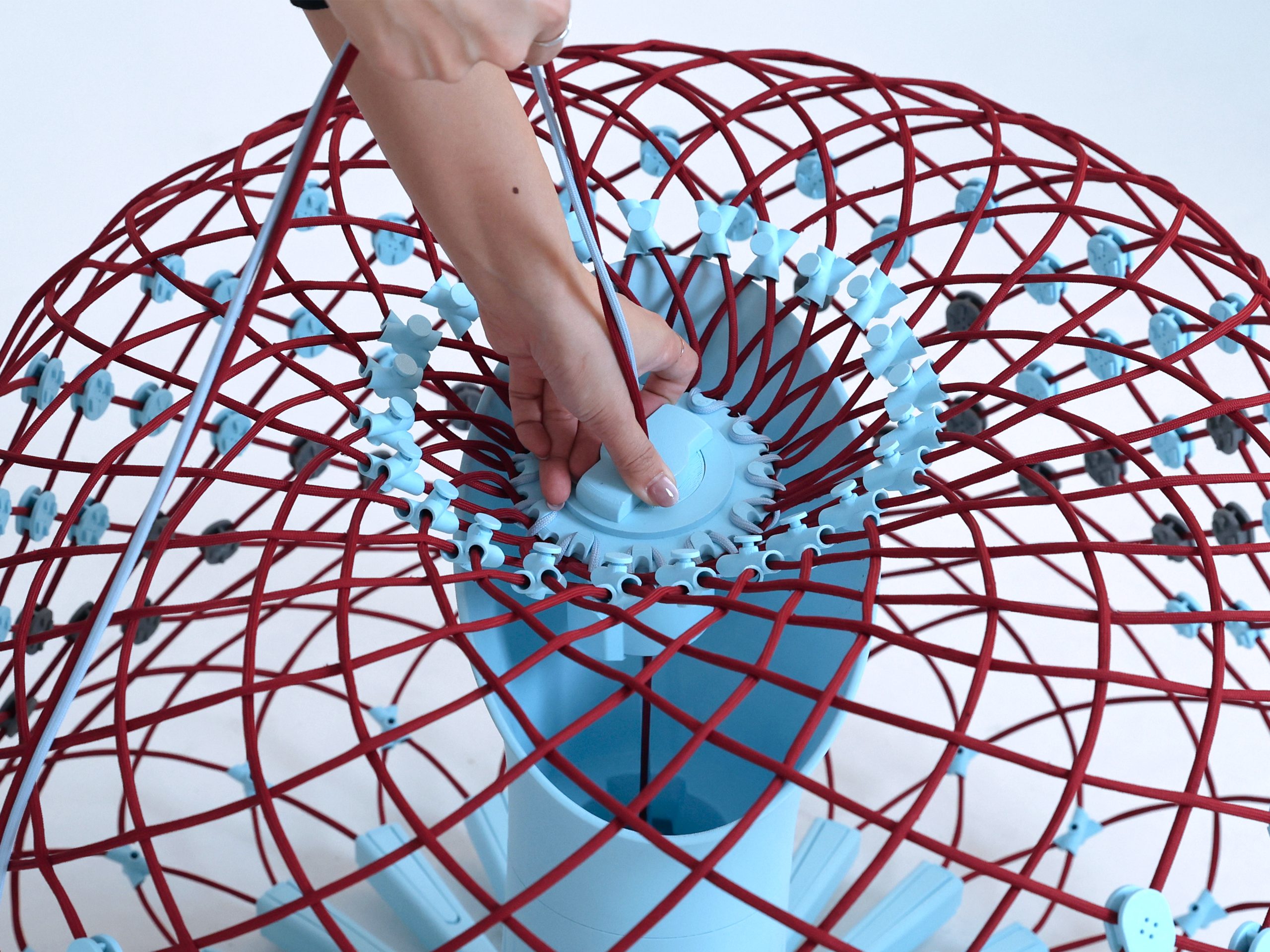
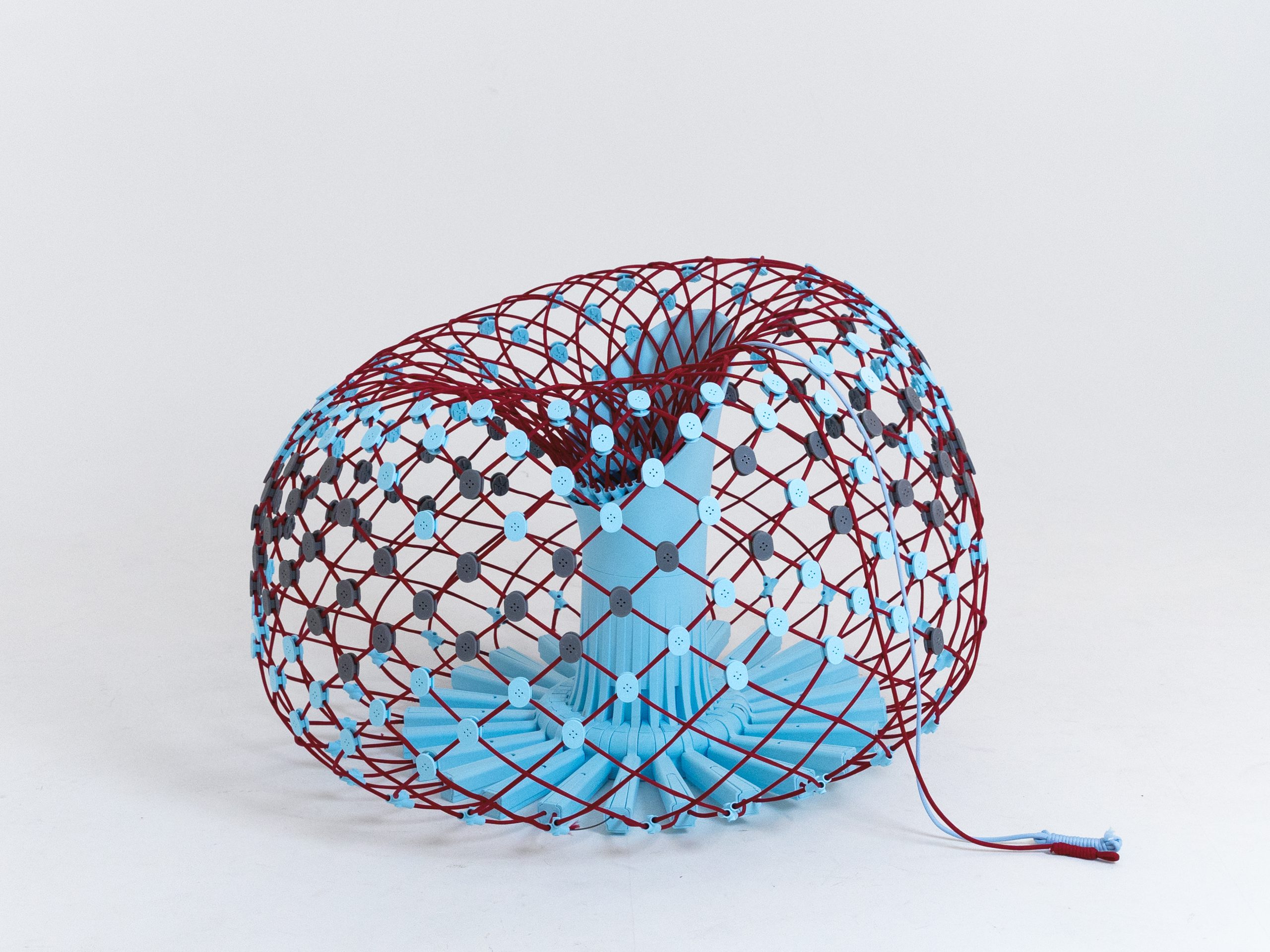
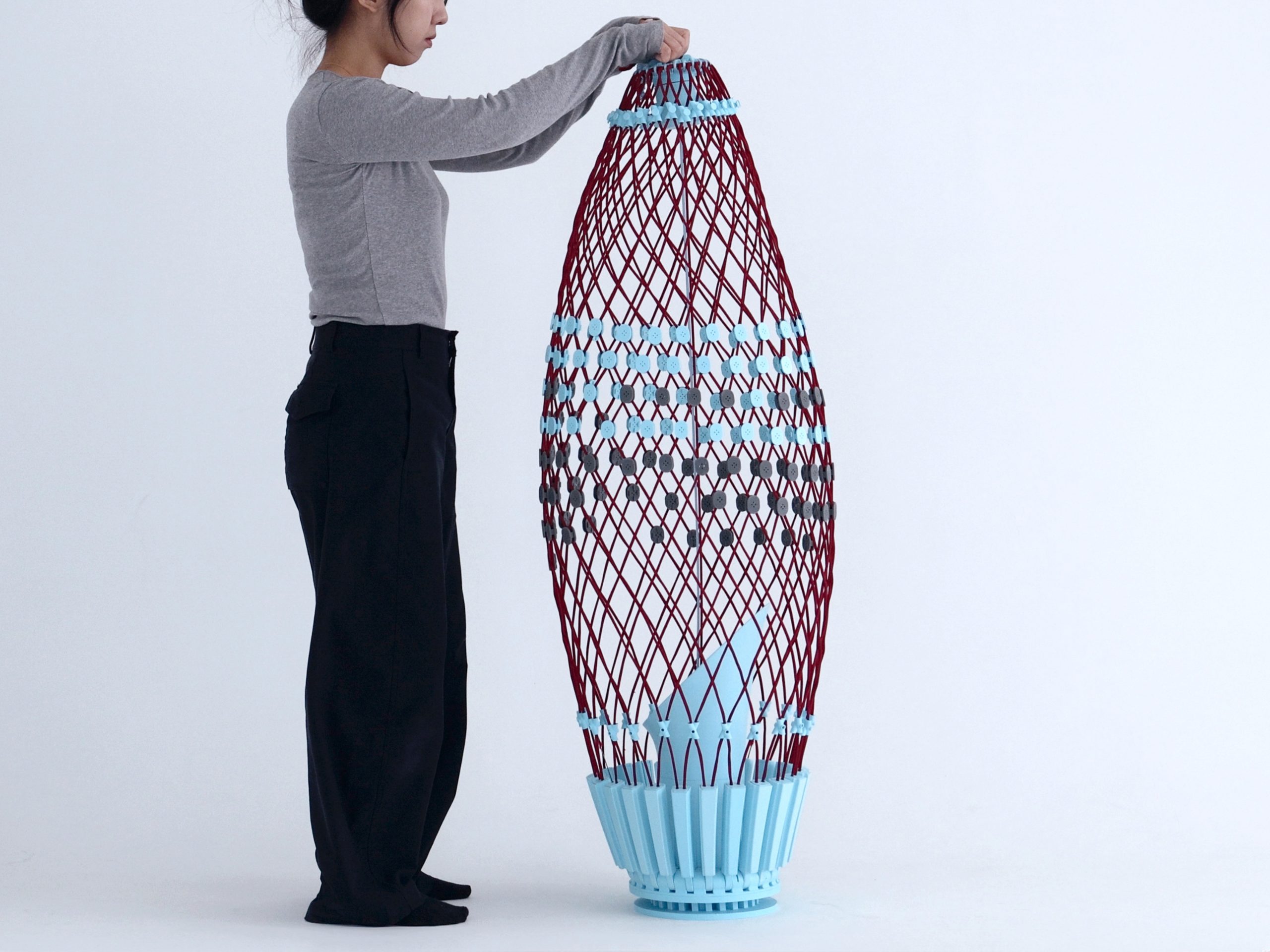
Re-Flat Pack Sofa is a lounge seat designed to collapse into a narrow vertical form and deploy again in a single motion. Instead of trying to compress conventional upholstery, the project removes foam entirely and rebuilds the sofa around a material more commonly associated with medical and aerospace applications.
The structure uses Nitinol, a nickel-titanium shape-memory alloy selected after testing glass fibre, steel wire, nylon rope, polypropylene and carbon rod. According to the project description, Nitinol was the only material that combined load-bearing strength, impact resistance, elasticity and low weight. In this application, the same network performs the work of both frame and cushion.
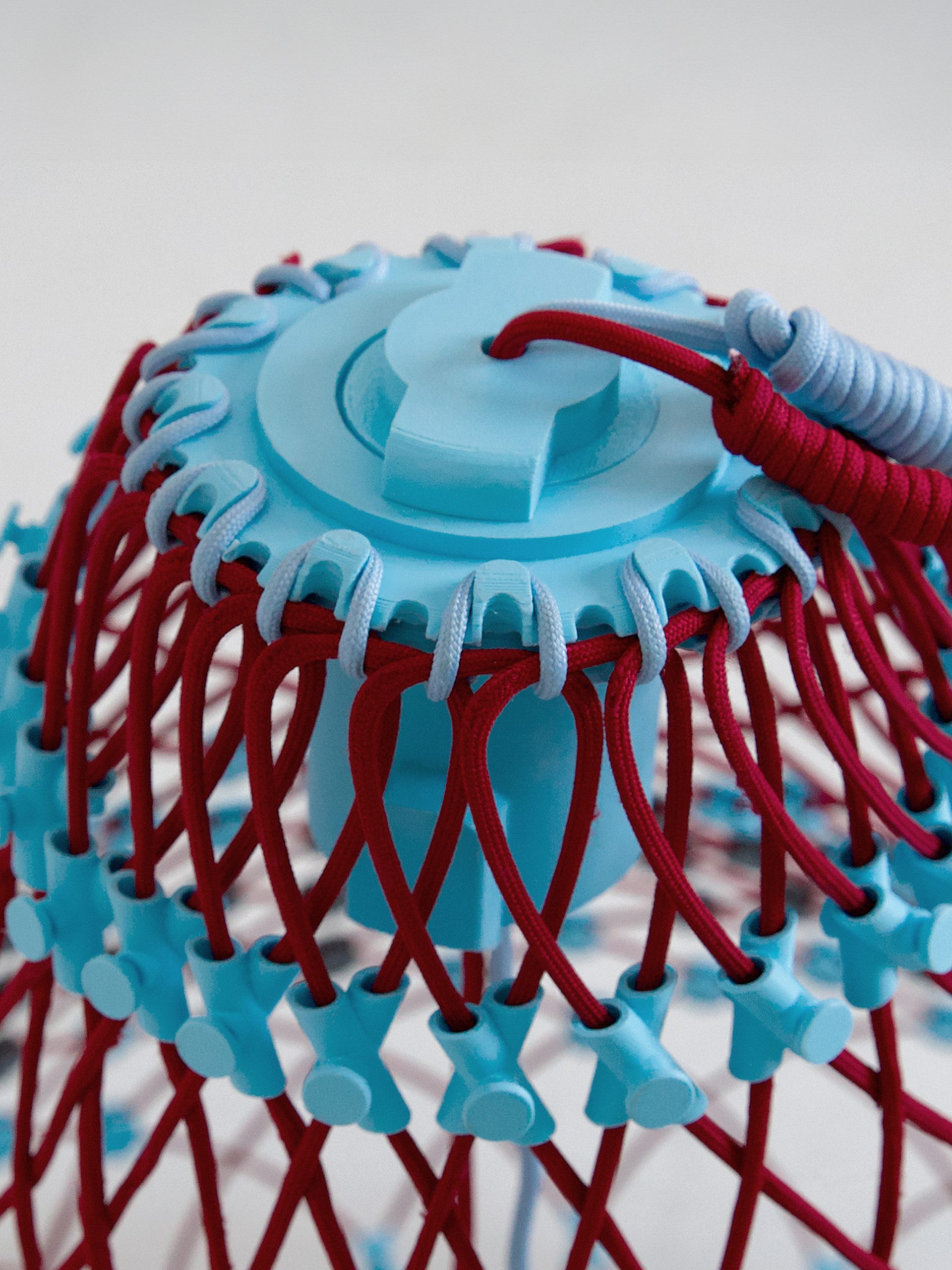
Its opening mechanism takes a cue from the umbrella. A cord runs through the structure as a fixed guide, and pressing down along it expands a slim column measuring 250 millimetres in diameter and 1,430 millimetres high into a lounge seat approximately 700 millimetres in diameter and 600 millimetres high. A 3D-printed central hub regulates the tension of the Nitinol wires and locks the expanded form in place.
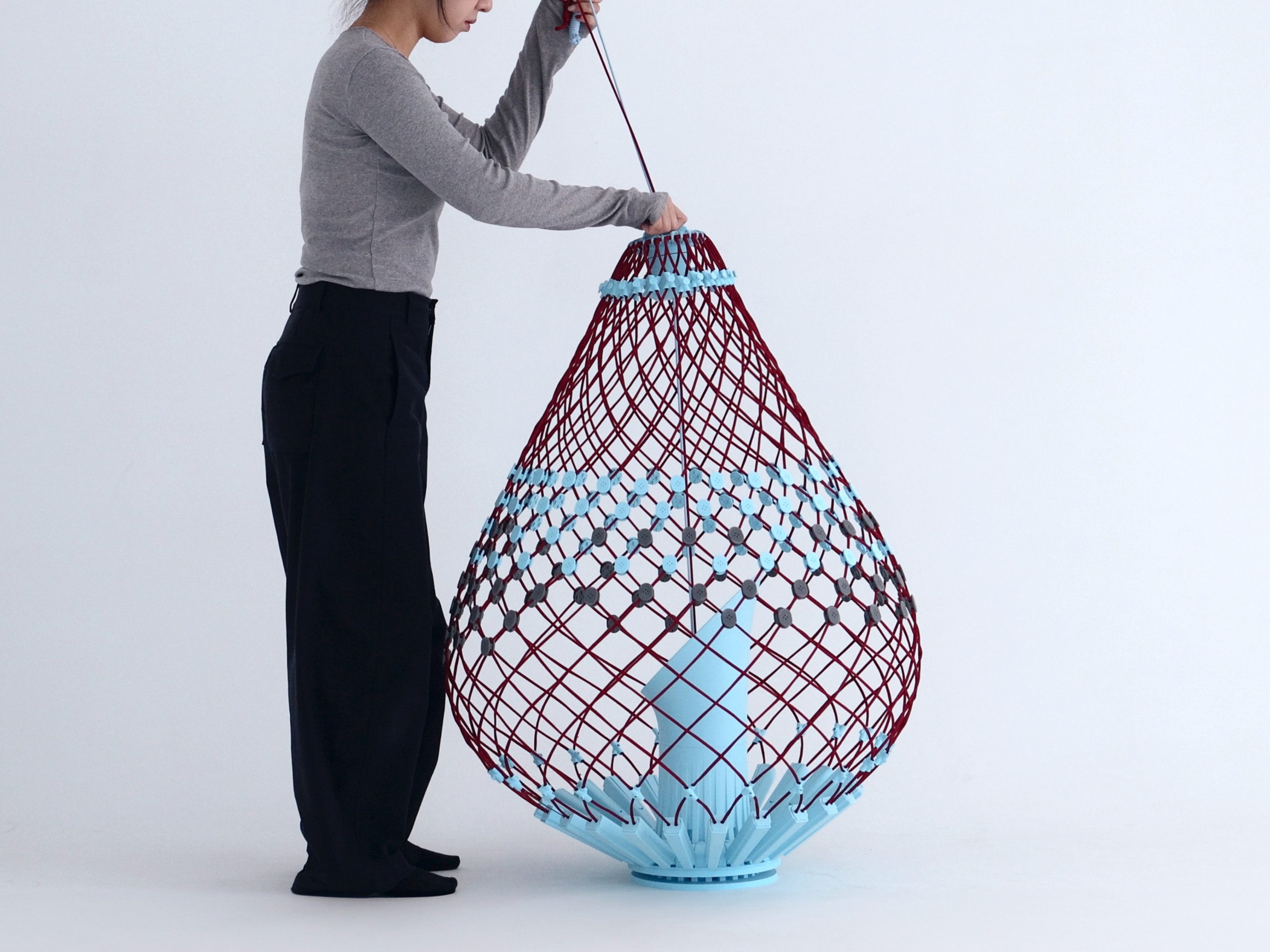
The complete prototype weighs 7 kilograms. Packing it away simply reverses the deployment sequence, allowing the furniture to return to its compact form rather than becoming permanently assembled after delivery.
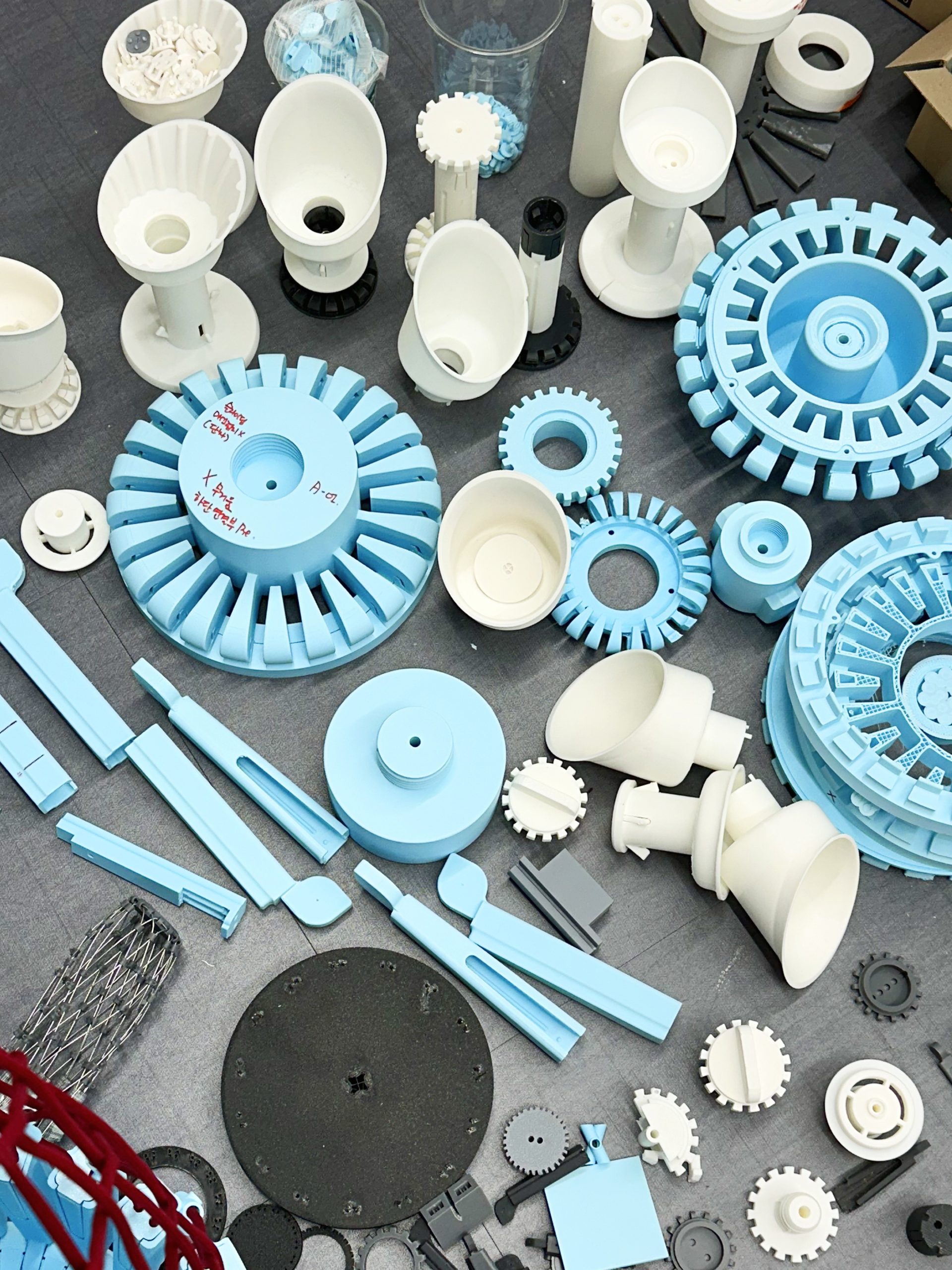
No adhesives are used in the assembly. Each Nitinol wire is threaded through a red fabric cord, then hand-woven and laced into 3D-printed PLA joints. Rather than relying on a single rigid frame, the seat carries body weight through the collective tension of the woven structure.
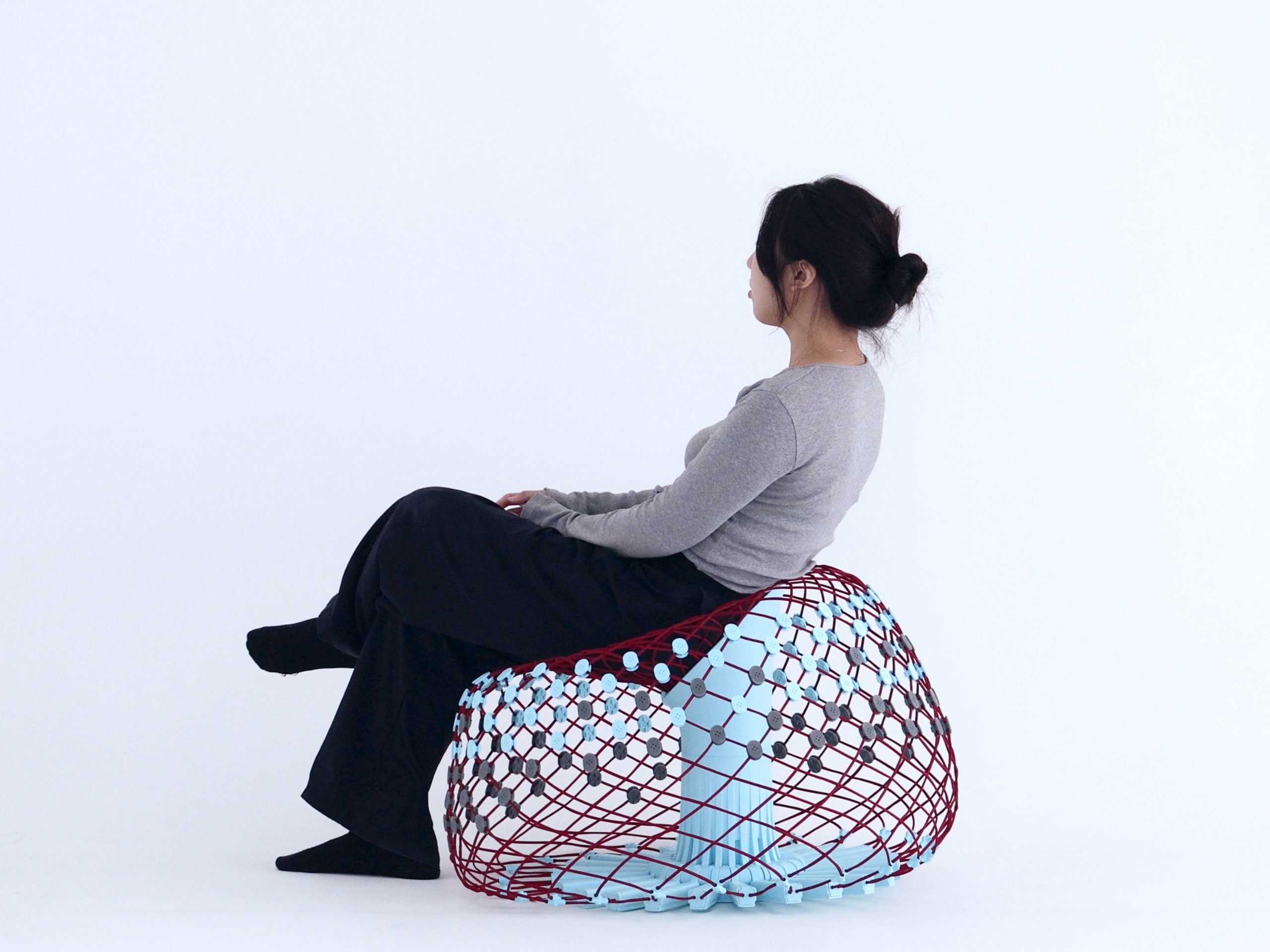
The project developed over 1.7 years of research and prototyping. It premiered at Design Korea 2025 as a finalist for the Korea+Sweden Young Design Award, was later shown in No Space for Waste during Milan Design Week 2026, and received the SIT Furniture Design Award 2026 in the Couch & Sofa category. The piece remains a working prototype under continued development.