
Editor: Anh Nguyen
Text: Hạnh Nguyễn
Time: 03.2020
It is known that over the past three years you’ve traveled extensively across Vietnam, photographing modernist structures. You’ve compiled these images into Ghé 01 and now Ghé 03. Your dedication suggests a deep fascination with modernist architecture in Vietnam. Could you share more about this focus? Why do you photograph these buildings?
Triệu Chiến: In the beginning, most of my travels were purely for leisure. I wasn’t consciously documenting the architecture I encountered along the way. Everything changed in 2016, when I lost all my photo archives from a hard drive crash, the images from my earliest days with a camera were completely erased. At that same moment, in my hometown of Nam Định, a French colonial-era factory was being torn down. I was fortunate enough to step inside one final time before demolition, but I hadn’t photographed it properly. The space was magnificent, and to this day I regret not recording it with my camera. Only a few phone snapshots remain.
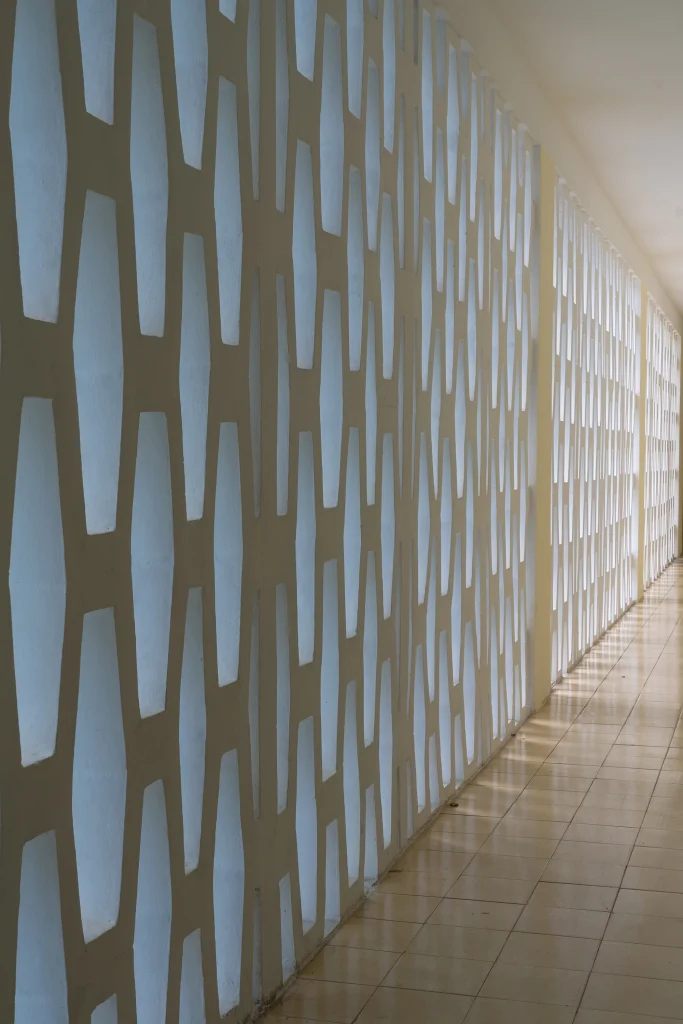
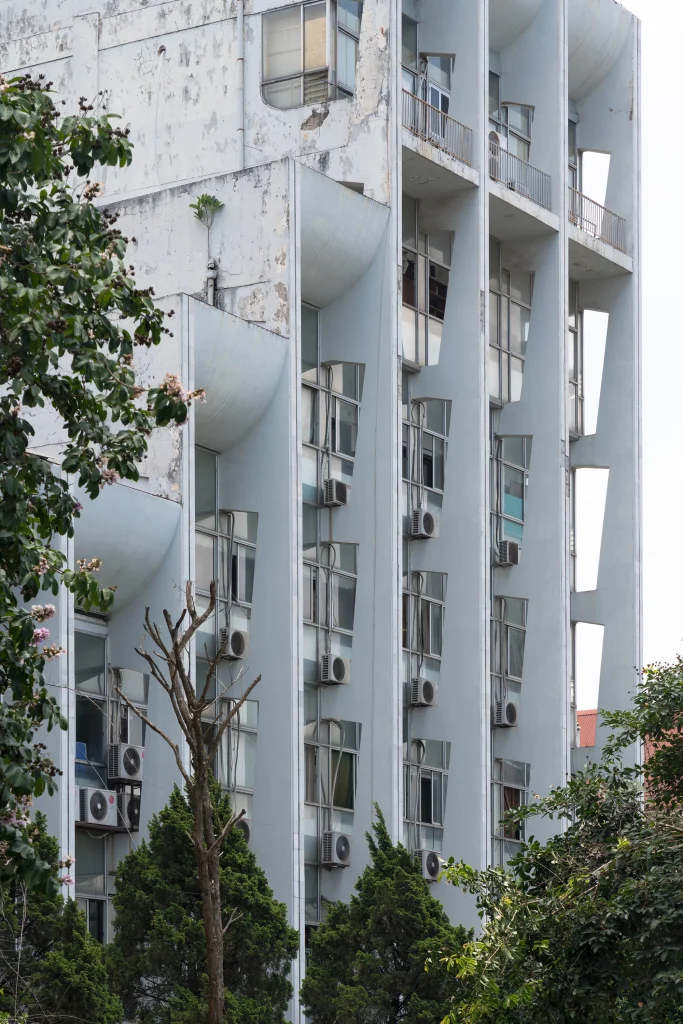
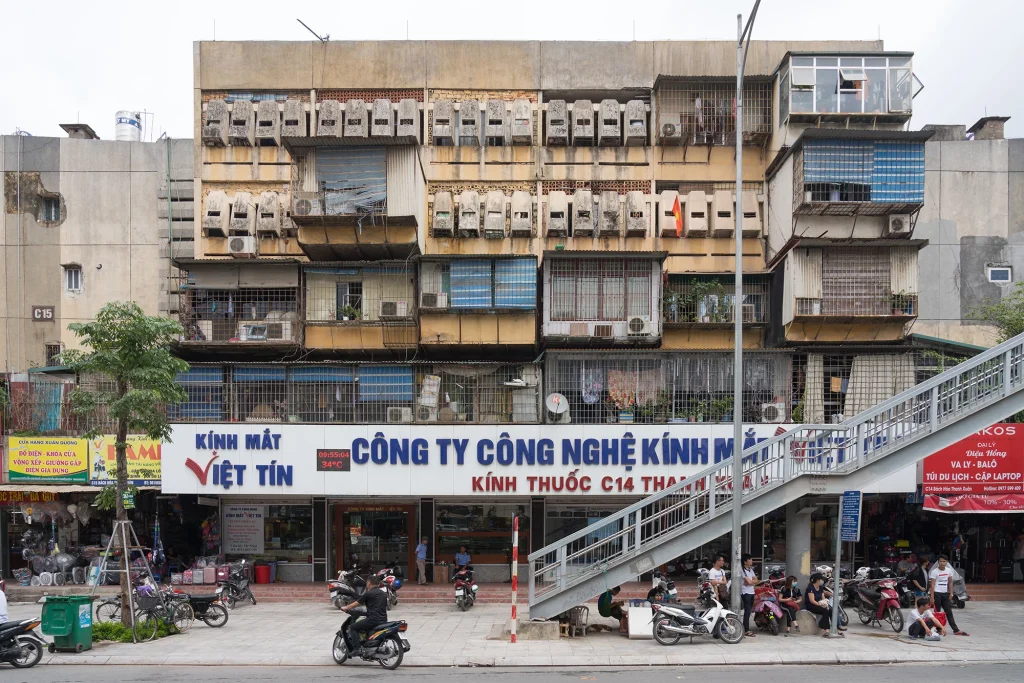
That loss pushed me to let go of the past and begin anew, with a clear intention: to document the structures I encountered. My lens is not limited to modernist buildings, but I’m especially drawn to them, their bold volumetric forms, the rhythm of modular façades, the raw honesty of exposed aggregate or plain concrete. In today’s rapidly transforming cities, many of these structures no longer meet contemporary demands. They are adapted, dismantled, converted to storage, or left to decay when no reuse is found.
Most were built between the 1970s and 1990s, which makes them part of my own generational memory. Watching them vanish fills me with regret, but my response is to record them while I still can so that there will be something to look back on later, when they are gone.
Looking back, I remain grateful for the events of 2016. That sudden erasure, and that demolished factory, gave me the determination to photograph with urgency and purpose.
Could you tell us more about the process of capturing these photographs? Did you encounter any particular difficulties or advantages?
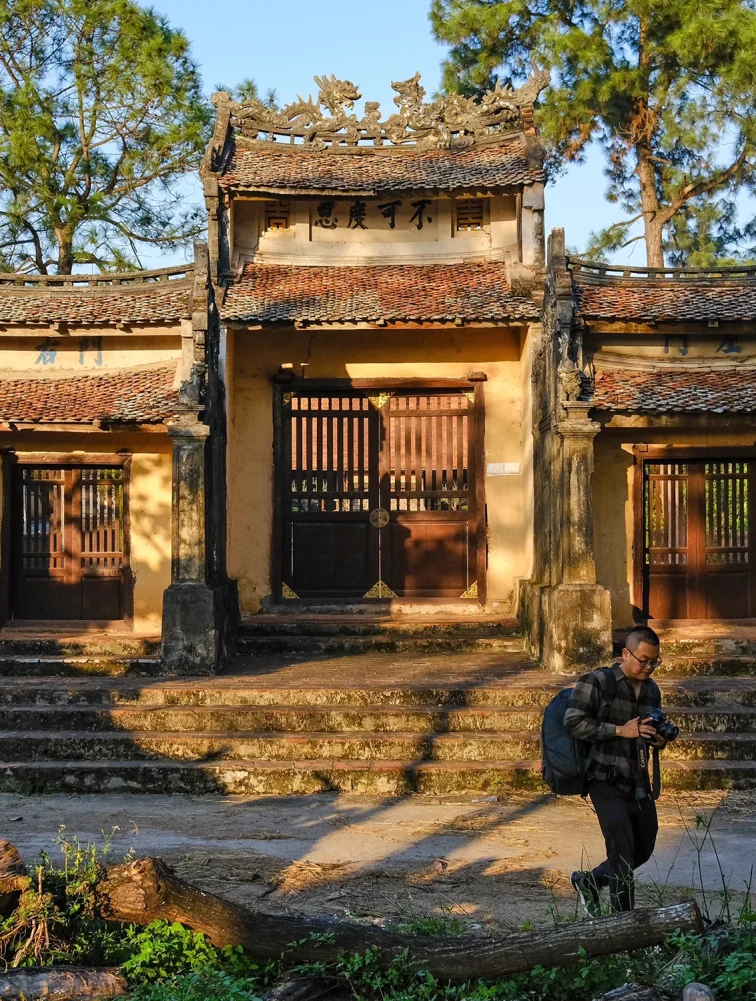
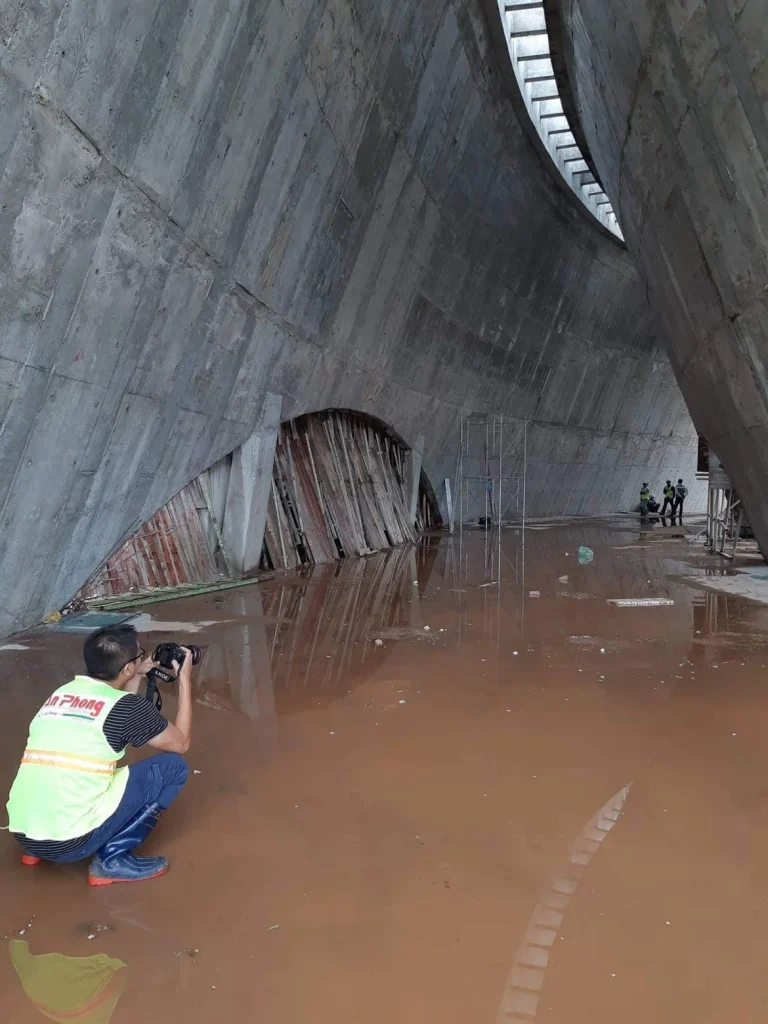
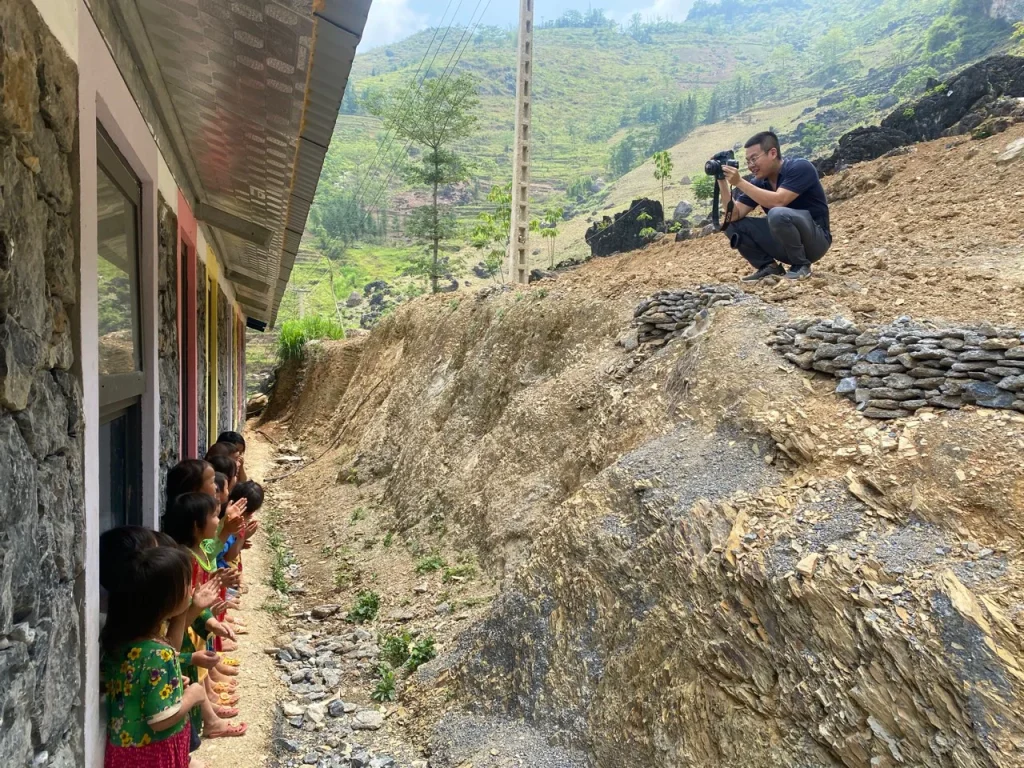
Triệu Chiến: For me, photographing these buildings is always a joy, though access is rarely straightforward. Many of the structures I document are state-managed properties, and as a freelance photographer I don’t have official permits. Often it takes persistence, sometimes pleading with security guards who, at best, allow me to shoot from the perimeter. When that fails, I look for alternative vantage points, which often means climbing neighboring rooftops. Those rooftop adventures have left me with plenty of bittersweet memories.
I still recall photographing the Russian Embassy: the only way to capture a proper overview was to climb to the 15th floor of the National Children’s Hospital. The images I took from that height were thrilling. But in the rush of excitement, I forgot to wedge the rooftop door open, and it locked automatically behind me. I wandered around until I found a way out through a small window. Another time, I squeezed through a square opening barely fifty centimeters wide to reach the roof of an old apartment block, just to frame the Hanoi Television Station across the way. By the time I got the shot, my lens was badly scratched.
These moments are part of the process, equal parts challenge, risk, and exhilaration. And they remind me that the act of documenting is never only about preservation, but also about the lived experience of pursuit.
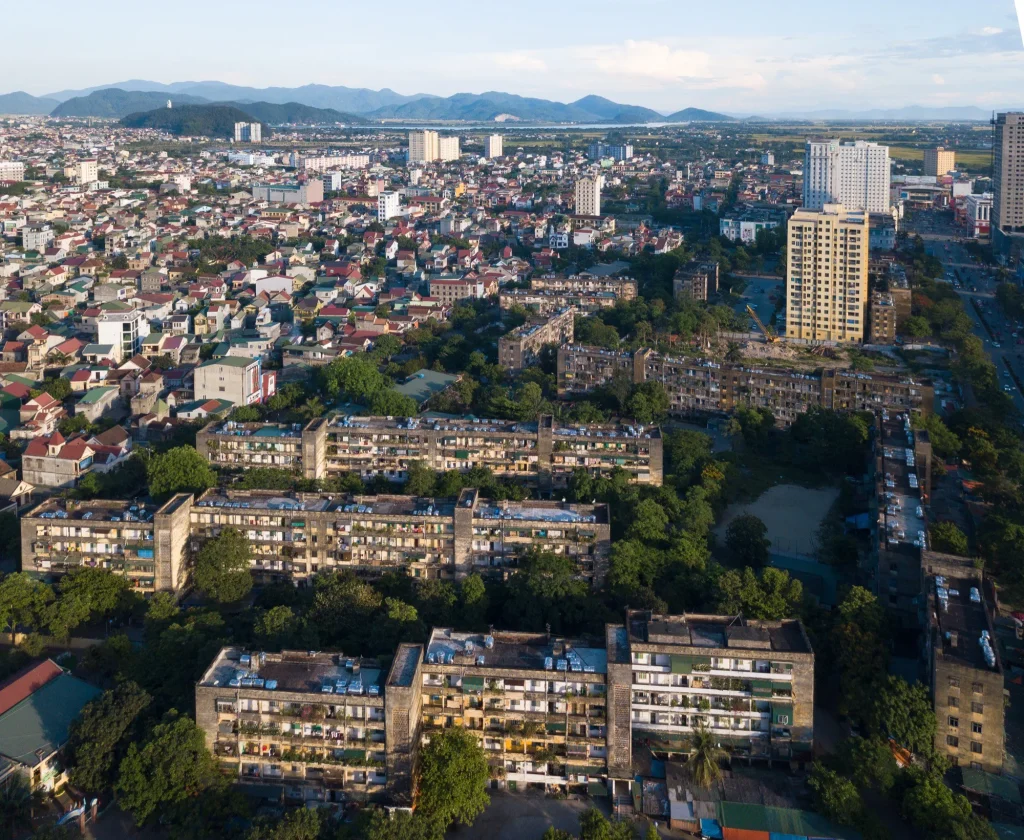
Shooting abandoned structures often attracts mixed reactions, people say, “It’s been derelict for ages, what’s left to photograph?” Some locals are curious and stop to chat; others chase me away.
The most memorable site for me is the Nam Định Museum of Antiquities, designed by architect Nguyễn Cao Luyện. As a child, I used to play in Tức Mạc Park and always wondered why that massive rock formation stood so strangely in the middle of it all. It wasn’t until 2018, when I began researching and discovered references to a museum of antiquities at Truyền Thống Lake in Nam Định, that I realized the connection.
That revelation reshaped my perspective. Now, I often recall a line from rapper Đen Vâu: “Some things hold value but don’t sparkle.” For me, that perfectly captures the quiet significance of these overlooked, forgotten structures.
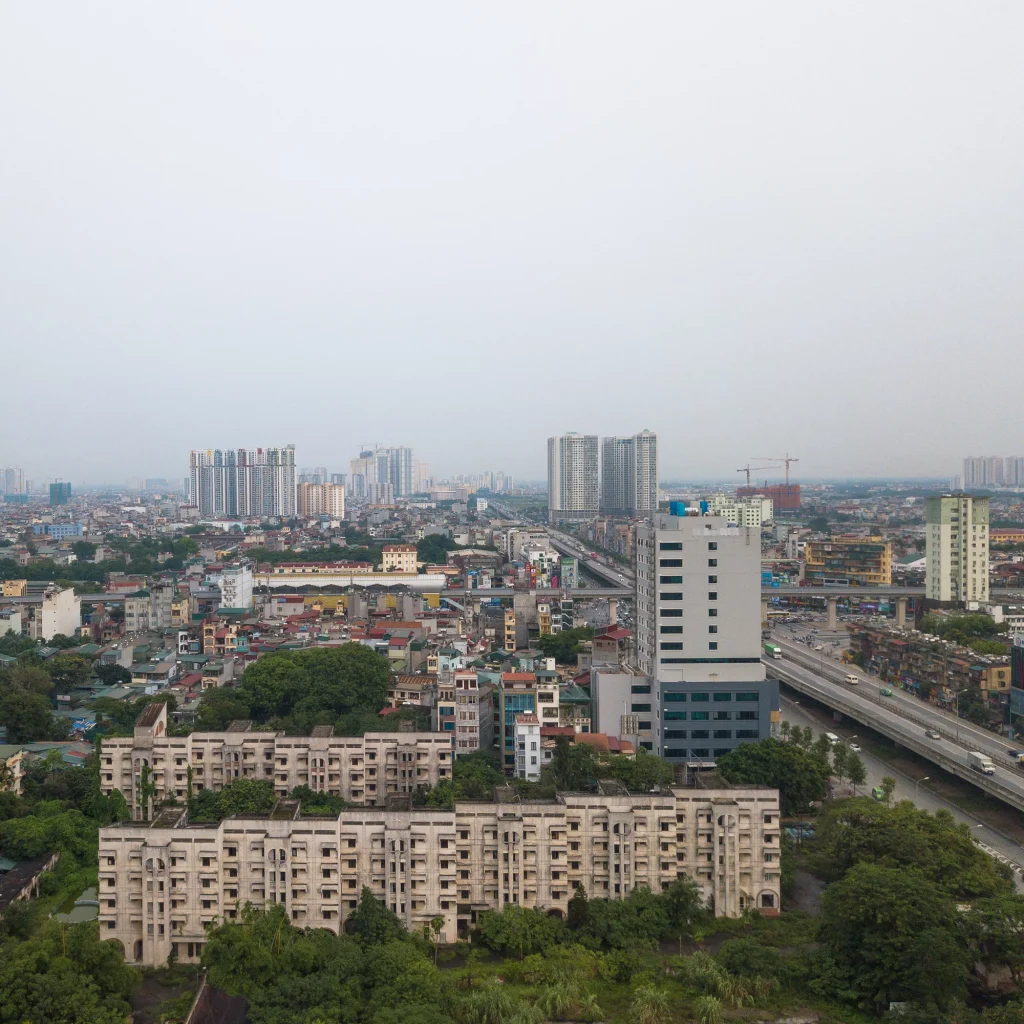
What are your impressions of the work by earlier generations of architects compared to those practicing today?
Triệu Chiến: It’s difficult to make a direct comparison. I’ve had the chance to meet and work with contemporary architects, but the older generation has either passed away or grown too elderly, so my understanding of their work comes largely through books and archival materials.
What I’ve observed, especially in photographing modernist structures, is a shared spirit shaped by circumstance. These buildings emerged in the post-war reconstruction era, when architects faced severe limitations in both materials and construction methods. Within those constraints, they had to innovate, often producing works that were materially modest yet striking in their volumetric expression.
Today, the conditions are very different. Architects have access to a vast reservoir of online information, advanced construction technologies, an abundant supply of materials, and, importantly, the monumental legacy of traditional architecture to inherit and reinterpret. Every era brings its own challenges and advantages, but each one also produces individuals whose work defines their time.
Are there any modernist structures in Vietnam or internationally that you’ve yet to photograph but would like to?
Triệu Chiến: Across Vietnam there are still countless modernist buildings I haven’t encountered, and others I know of but haven’t been able to photograph because there’s so little information available online. That scarcity pushes me to explore on my own, and honestly, I prefer it that way. If everything were already documented, the experience wouldn’t carry the same sense of discovery.
Globally, the list is endless. But I’d like to approach it methodically, focusing on the works of major figures, as Le Corbusier, Louis Kahn, Kenzo Tange, Paul Rudolph, John Portman. What fascinates me is not only photographing these icons but observing how their buildings have aged, how they stand in today’s urban landscapes, and what kinds of life surround them now. To document an architect’s body of work in sequence would offer me a deeper understanding of their trajectory, something I didn’t grasp fully during my years in school.
What initially sparked your interest in becoming an architectural photographer, and what keeps you going to this day?
Triệu Chiến: When I graduated from university, choosing between architecture and photography was a difficult decision, both were passions of mine. In 2015 I committed to architectural photography, which at the time was still a relatively new field in Vietnam.
The more I photograph, the more I realize how much I have yet to learn. Each trip feels like a lesson in observation, history, and space. What sustains me is simple: a profound love for architecture, and the endless curiosity it inspires.
In your view, what makes a beautiful architectural photograph?
Triệu Chiến: Early in my career, I was fixated on beauty. Praise thrilled me; criticism discouraged me. With time, I came to realize that producing “beautiful” images is almost expected of photographers. What matters more is whether a photograph or an entire series, delivers meaning and value. That shift in perspective has allowed me to approach buildings with more openness; aesthetics are no longer the sole measure.
Are there any photographers you’re currently following, and how have they influenced your work?
Triệu Chiến: Three names inspire me on a daily basis: Iwan Baan and Hufton + Crow. They’re far ahead in their careers, traveling the world to capture everything from vernacular traditions to cutting-edge contemporary works. Their breadth of documentation is a model for my own practice here in Vietnam.
What are your plans for the near future?
Triệu Chiến: Plans? There are many but at the heart of it, I’ll just keep photographing. Only after I’ve captured something do I know what comes next.
Thank you for this conversation.