design by ELSE
time 2025
location Dolomiti, Italy
photo Gustav Willeit, Elisa Cappellari
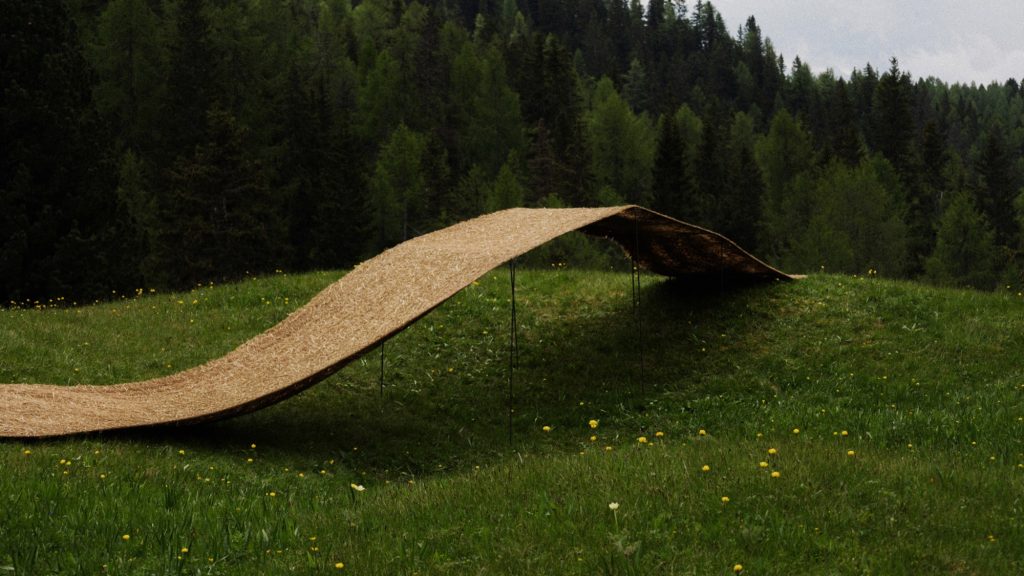
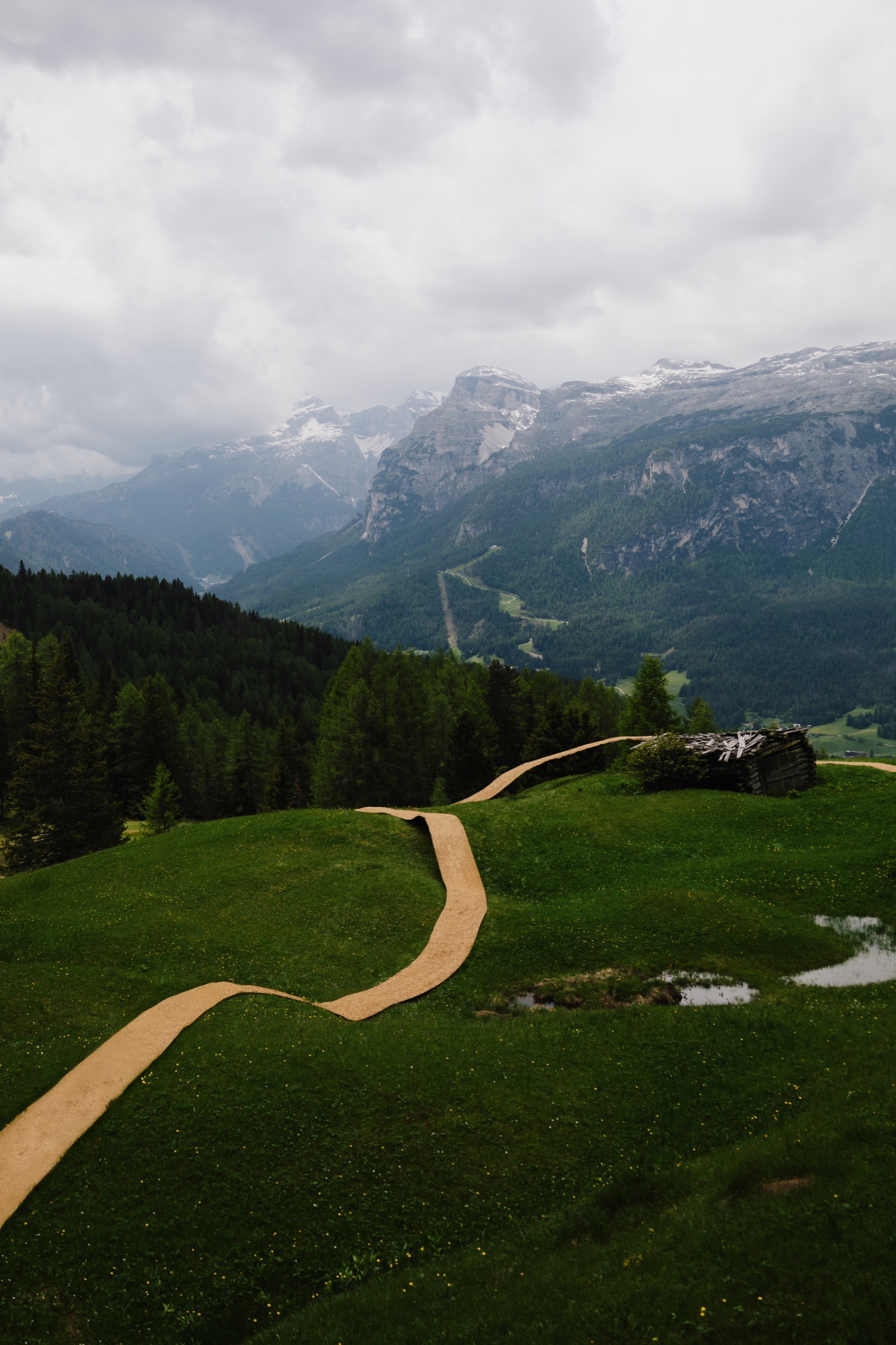
At the SMACH 2025 International Outdoor Art Biennale in La Crusc, ELSE studio presents the installation Trace of Land. The project is not framed only as an artwork but also as a reflection on agricultural labor, tools of production, and the cycles of land regeneration, in line with this year’s theme, la cu (Ladin for “whetstone,” a symbol of sharpening harvesting tools). Installed in the Armentara highland meadows in Val Badia, Trace of Land uses the image of hay bales to form a winding pathway that invites visitors to move, pause, and interact directly with the landscape.
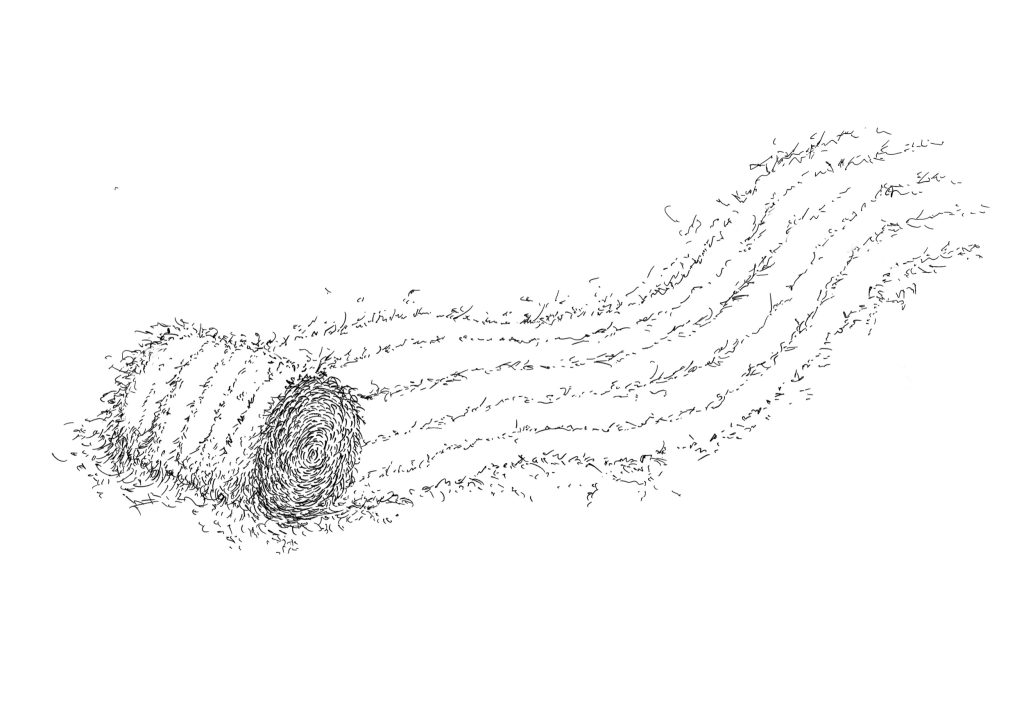
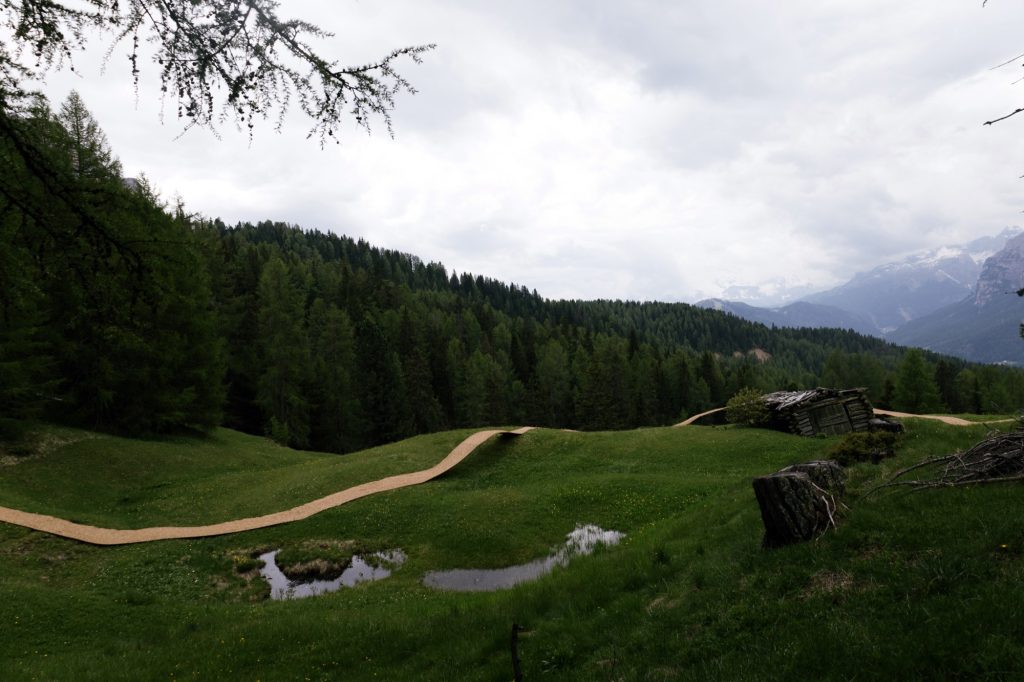
The concept begins with the image of a hay bale rolling across the Armentara slopes – climbing, sliding, bouncing, and leaving a trace of grass behind. This becomes a canopy that follows the ground, a continuous path built from dismantled hay bales stretched across the terrain.
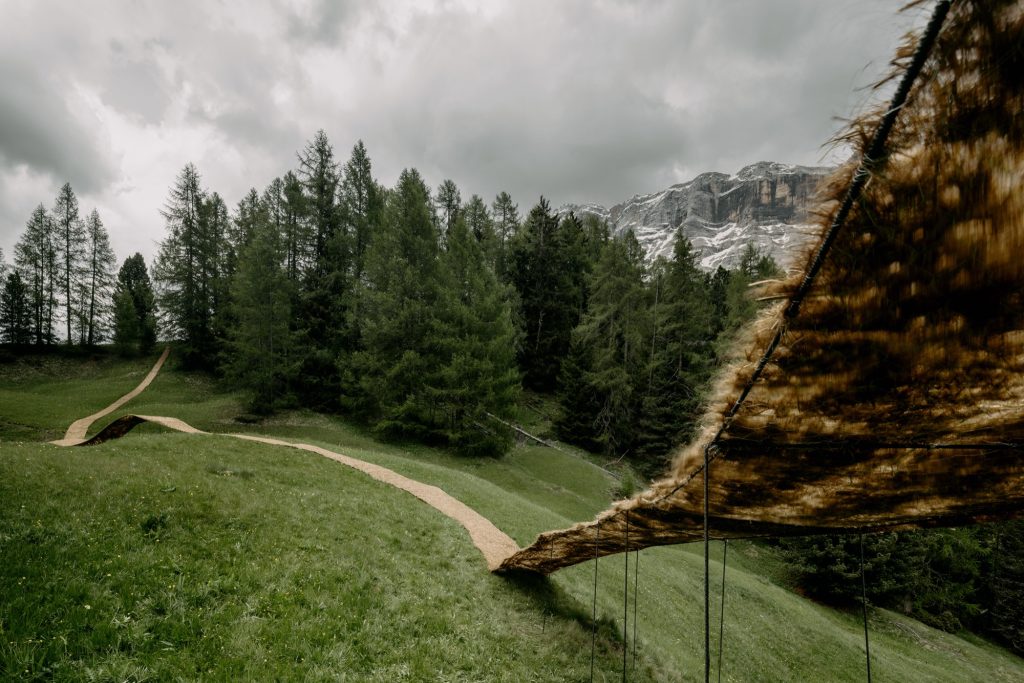
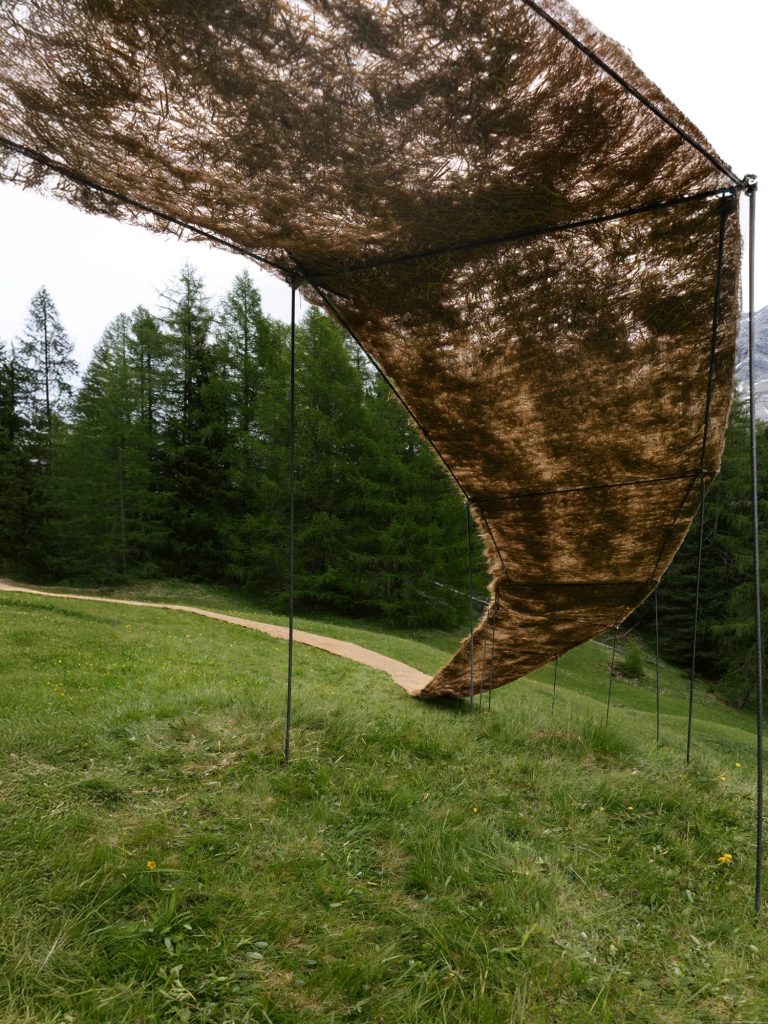
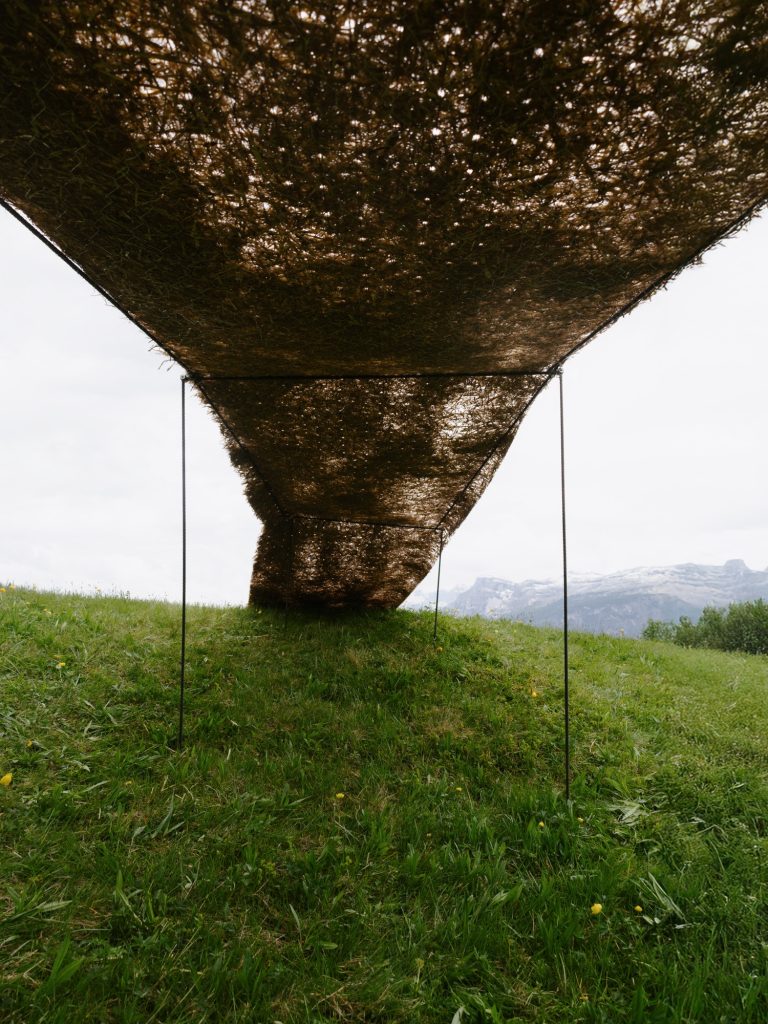
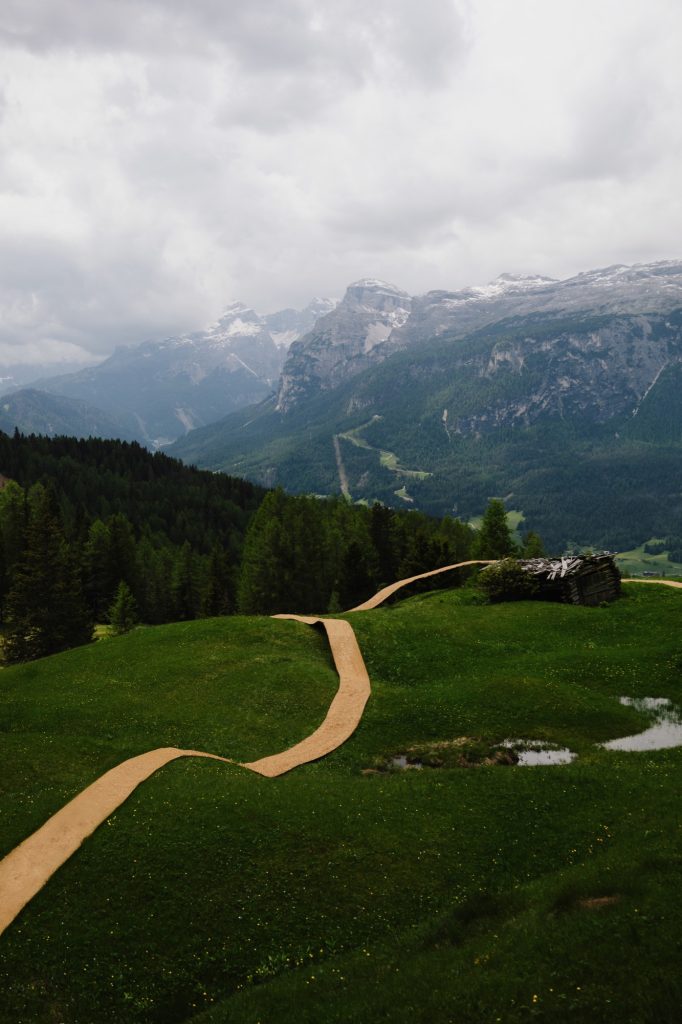
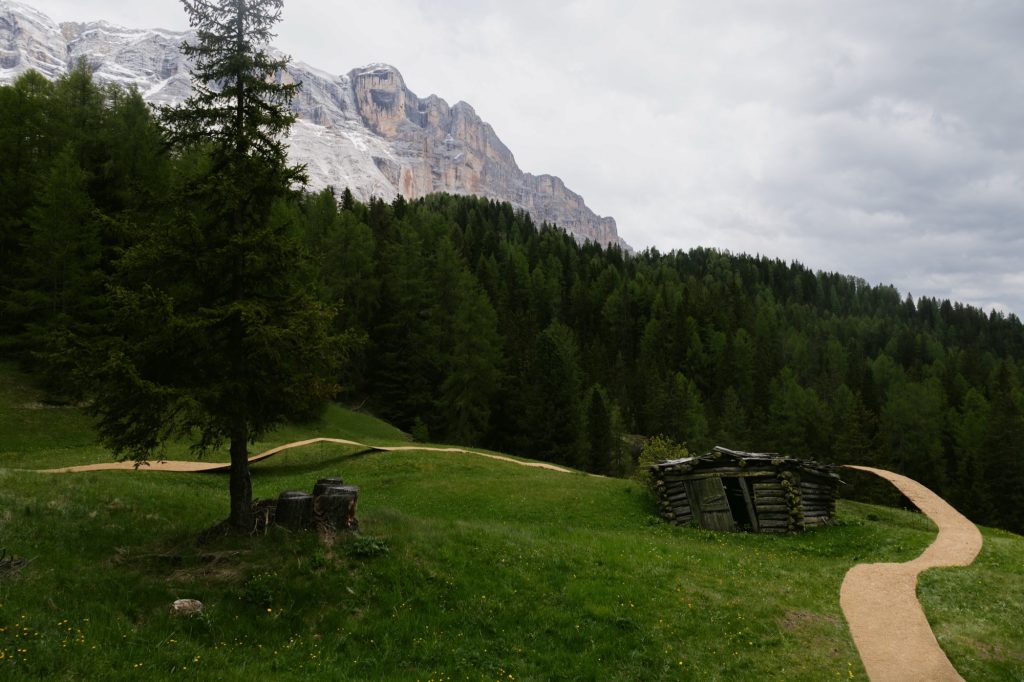
Seen from a distance, the hay path blends into existing mountain trails, while its rising and falling geometry echoes the Dolomites’ peaks. ELSE studio reinterprets the hay bale as a sculptural element, shifting it away from function and placing it within a dialogue between labor, tools, and nature.
Hay bales are often seen as rural symbols, but they are also products of industrialized processes: compressed, transported, and stored with mechanical precision. Trace of Land works with this duality in relation to the la cu theme, underlining the link between human labor and the land. Once released from their bound form, the hay spreads out to draw a path across the meadow, sometimes lying flat, sometimes lifted to form shaded passages. The geometry follows the rhythm of the Dolomites while softening the divide between the artificial and the natural. The installation also engages with the tablà – traditional Ladin wooden barns – anchoring it in local. culture and setting.
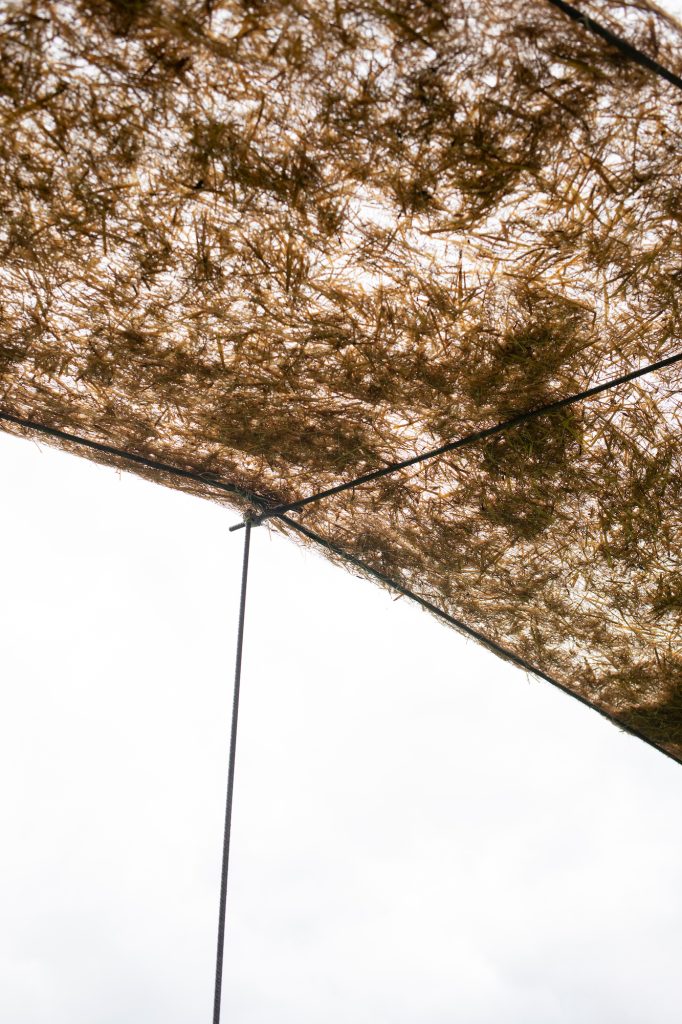
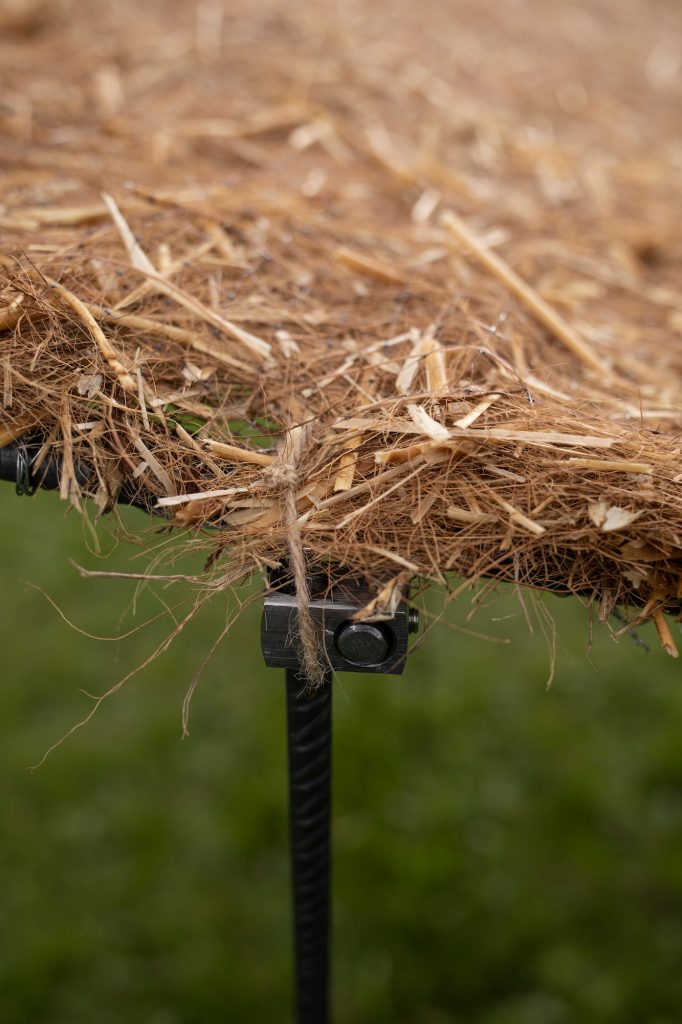
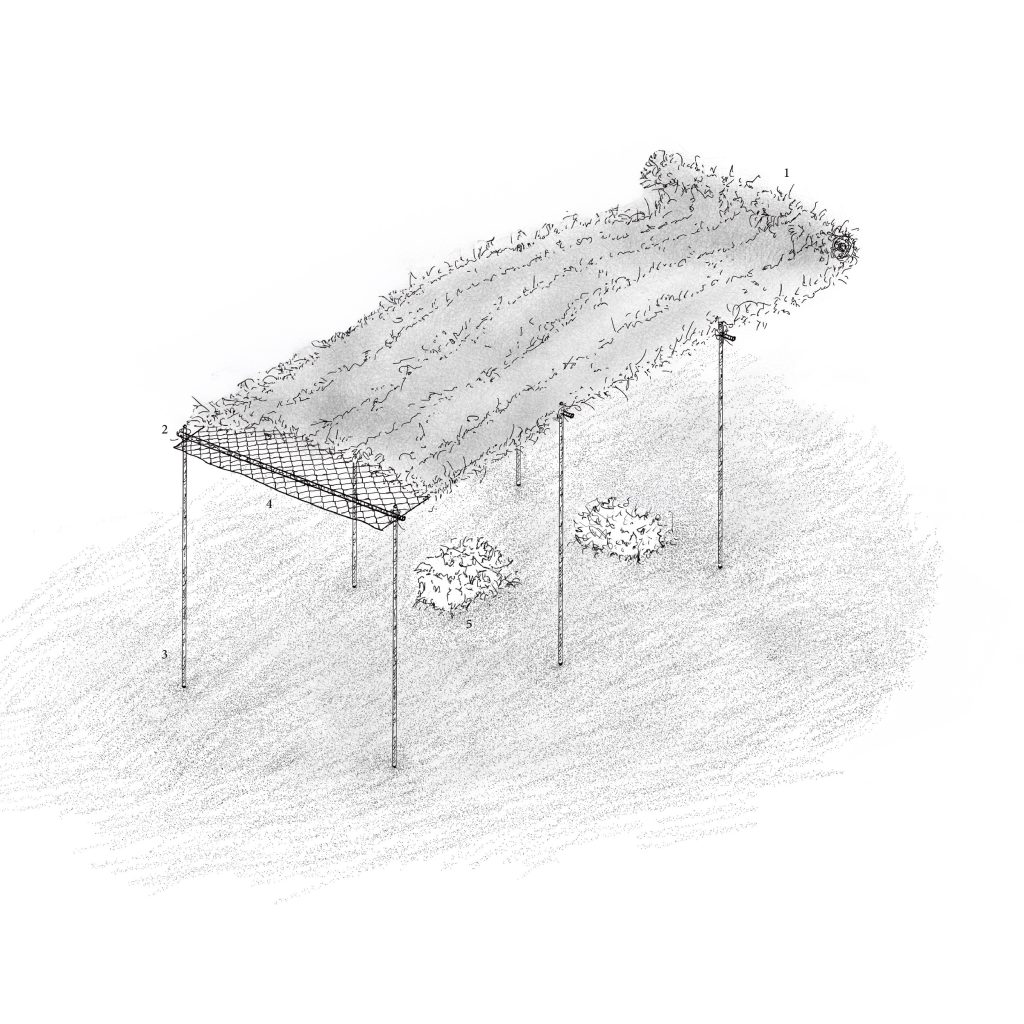
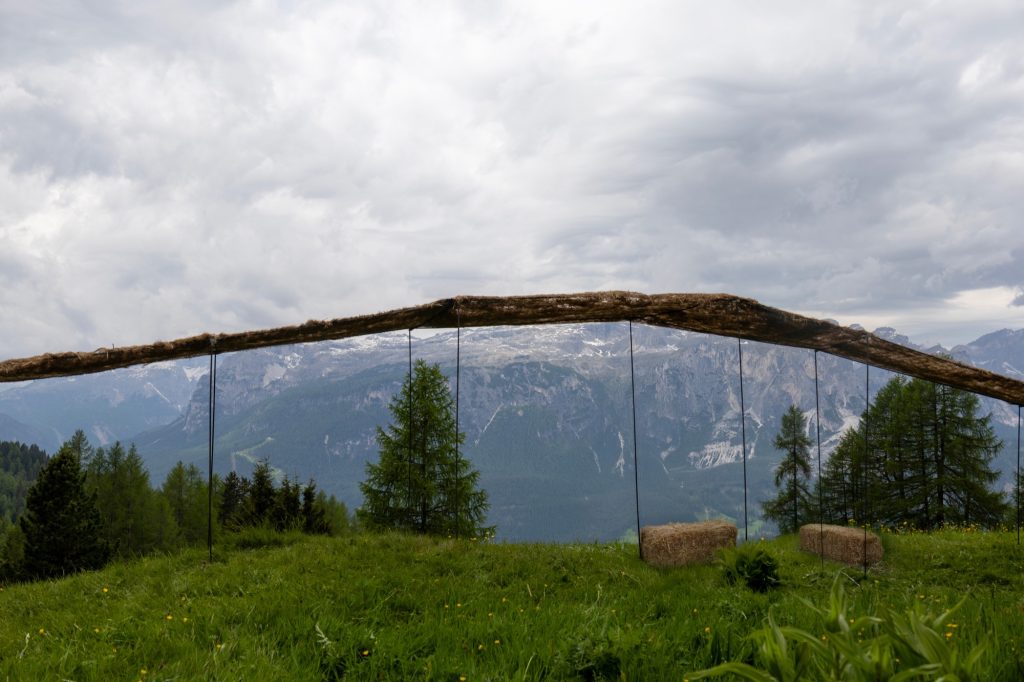
Technically, Trace of Land is built with simple, sustainable methods for outdoor installation. Vertical steel rods are set in the ground and linked with horizontal bars to form a light frame. A steel mesh holds the hay, secured with grass ropes, reducing environmental impact. The canopy can shift with the terrain, stretching to different lengths and merging with the meadow. Up close, the hay’s layered fibers filter light through the canopy, revealing a material presence shaped by touch and use.
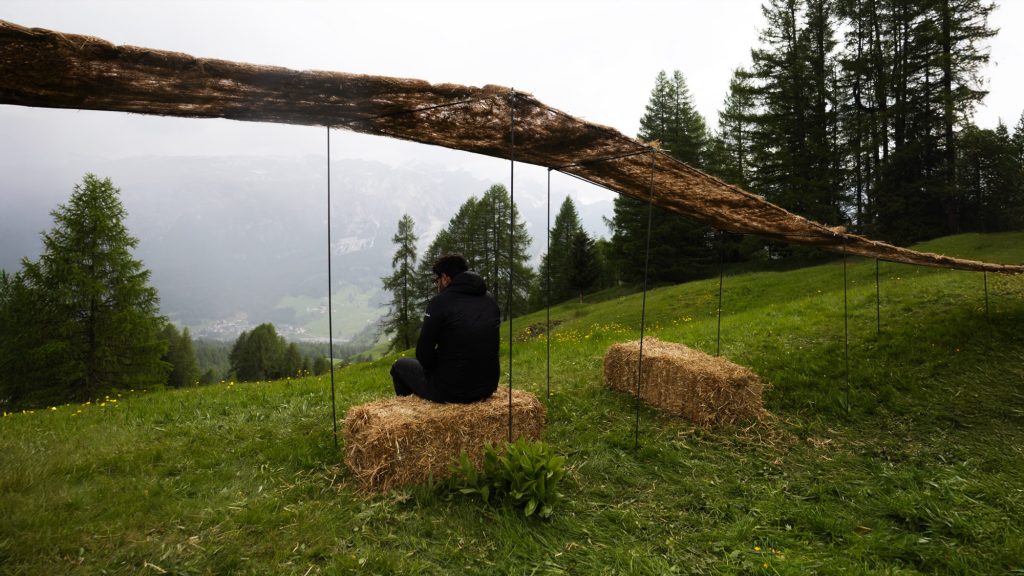
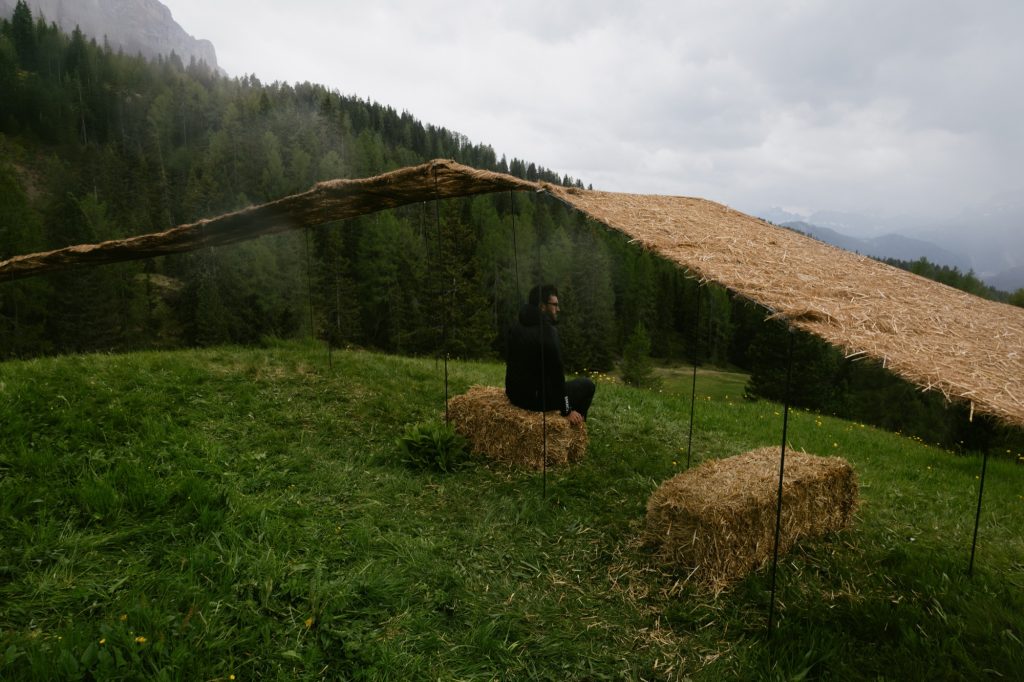
The project also encourages participation. Visitors are invited to walk along and beneath the canopy, following the slope to gather, rest, and engage with the space. Rectangular hay bales are used as seating, bridging practical use with artistic expression. As the hay breaks down and returns to the soil, the installation completes a cycle of use and renewal, raising questions about sustainability in the context of climate change and urbanization.
At SMACH 2025, Trace of Land shows how art and architecture can reframe the relationship between people and the land. For architects and designers, it opens a line of thought on how local materials can be reworked into interventions that are both grounded in context and open to new meaning.